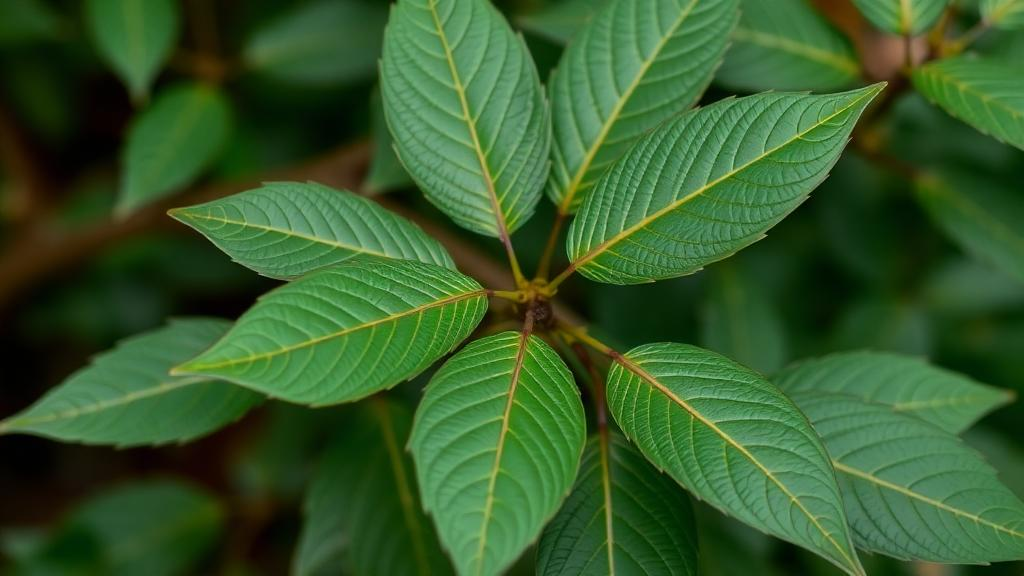
In a laboratory in Ethiopia, researchers have turned the leaves of a tree long prized in traditional medicine into a chemical factory for making bacteria-killing nanomaterials. A team at Injibara University reports that leaf extract from Millettia ferruginea, a native African tree known locally as Birbira, can steer the formation of zinc oxide nanoparticles on bentonite clay, producing a composite that outperformed both of its individual ingredients at inhibiting bacterial growth. The work, published in Current Research in Biotechnology, offers a greener route to functional nanomaterials and adds scientific weight to the ethnomedicinal reputation of a species that Ethiopian communities have relied on for generations.
The choice of plant was no accident. Millettia ferruginea is a member of the legume family found across Ethiopia, Kenya, and Tanzania, where its seeds serve as a natural purgative and deworming agent, its leaves are used against inflammation and malaria, and its bark and roots feature in remedies for fever and infections. The tree is also an ecological workhorse: fast-growing and hardy, it anchors reforestation and agroforestry programs, combats soil erosion, improves soil fertility, and provides shade and habitat for wildlife. Its durable timber supports furniture-making and construction, and its seeds yield oil used in medicine and cosmetics. Crucially for the chemists, its leaves are rich in phenolic and flavonoid compounds, molecules whose hydroxyl, carbonyl, and carboxyl groups can grab onto metal ions and coat growing crystal surfaces.
That chemistry is exactly what green nanomaterial synthesis requires. The team used a hydrothermal method, in which reactions run in water inside a sealed, Teflon-lined stainless-steel autoclave at elevated temperature and pressure. Dissolved zinc nitrate was mixed with filtered leaf extract and treated bentonite clay, the pH was adjusted to 6.5, and the mixture was heated for three hours at 125 to 138 degrees Celsius under autogenous pressure of about 9.87 atmospheres. After cooling, filtration, centrifugation, washing, and drying at 325 degrees Celsius, the result was a powder in which zinc oxide had formed in the presence of the clay and the plant’s phytochemicals.
An important subtlety lies in what the plant extract actually does. Unlike silver or gold nanoparticles, where plant chemicals reduce metal ions to metal atoms, zinc ions are not reduced by phytochemicals; the standard reduction potential of the zinc couple is far too negative. Instead, zinc oxide forms through hydrolysis of zinc ions to zinc hydroxide followed by dehydration into ZnO. The researchers therefore assign the extract a different role: its phenolics, flavonoids, tannins, coumarins, and alkaloid nitrogen atoms chelate zinc ions and act as capping and stabilizing agents, shaping nucleation and growth rather than supplying electrons. The team even worked out why pH 6.5 works: at the zinc concentration used, the solubility equilibrium of zinc hydroxide predicts precipitation beginning near that pH, and the hydrothermal treatment then drives further hydrolysis, dehydration, and crystallization.
Characterization confirmed the product. X-ray diffraction showed the characteristic reflections of hexagonal wurtzite zinc oxide, matching the standard reference card for that structure, alongside peaks from montmorillonite, the main mineral in bentonite. Applying the Scherrer equation to the strongest zinc oxide reflection gave a crystallite size of about 14.6 nanometers, a measure of coherently diffracting domains rather than whole particles. Infrared spectroscopy of the composite retained the clay’s silicate bands, with a small shift of the silicon-oxygen band from 1030 to 1025 wavenumbers hinting at weak surface interactions, though the authors caution that this alone cannot prove covalent bonding between the oxide and the clay. Scanning electron microscopy revealed irregular agglomerates several micrometers across, each likely containing many nanoscale crystallites, and energy-dispersive X-ray analysis detected zinc, oxygen, silicon, aluminum, and sodium, consistent with zinc oxide on an aluminosilicate support.
Before making the composite, the team profiled the leaf extract itself. Standard colorimetric screening detected alkaloids, flavonoids, tannins, phenolics, terpenoids, coumarins, glycosides, and saponins, a broad pharmacological toolkit that provides a scientific rationale for the tree’s traditional uses. Quantification by the Folin-Ciocalteu method, calibrated against gallic acid, yielded a total phenolic content corresponding to about 105 milligrams of gallic acid equivalents per liter in the assay solution, while the aluminum chloride assay gave a flavonoid level of roughly 32 milligrams of catechin equivalents per liter, and a gelatin precipitation method put tannins at about 28 milligrams of tannic acid equivalents per liter. In a DPPH radical scavenging test, the extract neutralized 56.92 percent of the stable purple radical at a single tested concentration of 21.3 parts per million, a performance comparable to ascorbic acid standards in the 30 to 40 parts per million range, whose own half-maximal inhibitory concentration was 33.8 parts per million.
The antibacterial results were the most striking. Using the agar well diffusion method against four bacterial strains, two Gram-positive and two Gram-negative, the researchers applied a fixed 20 micrograms of each material per well. Bentonite alone showed essentially no inhibition, with zones smaller than 5 millimeters. Plain zinc oxide produced zones of 12 to 17 millimeters. The composite, however, generated zones of 20.2 to 21.0 millimeters against Escherichia coli and Klebsiella pneumoniae, and, remarkably, 28.0 to 28.6 millimeters against Staphylococcus aureus and Streptococcus pyogenes. Against the Gram-positive strains, the composite even outperformed the gentamicin antibiotic control, which produced a 23.7-millimeter zone, and exceeded tetracycline, which showed no measurable inhibition under the test conditions.
Why would anchoring zinc oxide on clay boost its antibacterial punch? The authors propose that the composite’s activity stems from the intrinsic antibacterial properties of zinc oxide, potentially amplified by the clay’s large surface area and adsorption capacity, which may concentrate material at the bacterial surface. Zinc oxide nanoparticles are thought to kill bacteria partly through the generation of reactive oxygen species and physical damage to cell membranes, although the team notes these mechanisms were not directly probed in this study. The strong showing against Gram-positive bacteria is notable, since those organisms lack the outer membrane that partially shields Gram-negative species from many antimicrobial agents.
The researchers are candid about the limits of their data. The extract’s antioxidant result is preliminary, based on a single concentration, so no dose-response curve or IC50 value could be derived for the extract or the composite. The antibacterial assay used only one applied amount, so minimum inhibitory and bactericidal concentrations remain undetermined. Electron microscopy and elemental mapping could not show whether the zinc oxide sits on the clay surface, within the particles, or as a separate phase, and the available spectra cannot establish the detailed interface between the two components. Notably, some follow-up measurements, including additional X-ray diffraction, diffuse reflectance spectroscopy, BET surface area analysis, transmission electron microscopy, and X-ray photoelectron spectroscopy, could not be performed because the relevant laboratory facilities were damaged during the civil war in Ethiopia, a sobering reminder that scientific infrastructure is often among conflict’s quiet casualties.
Even with those caveats, the study stakes out a genuinely novel claim: this is, to the authors’ knowledge, the first report of a Millettia ferruginea-mediated zinc oxide/bentonite composite. Previous green syntheses used neem or tea extracts to make bare zinc oxide nanoparticles, and earlier zinc oxide-clay composites relied on conventional chemical routes without plant assistance. By combining a locally abundant bioresource with a widely used clay and a low-energy aqueous process, the work points toward antimicrobial materials that could eventually serve in environmental remediation, catalysis, or biomedical applications. The authors recommend that future studies include control syntheses without the plant extract, full dose-response and MIC/MBC testing, cytotoxicity and biocompatibility evaluation, detailed interfacial characterization, and scalability trials. For now, the humble Birbira leaf has demonstrated that traditional knowledge and modern nanotechnology can crystallize together, quite literally, into something more potent than either alone.
Subject of Research: Green synthesis of a ZnO/bentonite nanocomposite using Millettia ferruginea leaf extract and evaluation of its antioxidant and antibacterial activity
Article Title: Green synthesis and characterization of ZnO/bentonite composites using Millettia ferruginea leaf extract, determination of antioxidant and antibacterial activity
Article References: Gebrye, A. B., Gebrie, T. B., Alem, F. W., & Metto, M. (2026). Green synthesis and characterization of ZnO/bentonite composites using Millettia ferruginea leaf extract, determination of antioxidant and antibacterial activity. Current Research in Biotechnology, Article 100425. https://doi.org/10.1016/j.crbiot.2026.100425
Image Credits: AI Generated
DOI: Not provided
Keywords: green synthesis, zinc oxide nanoparticles, bentonite, Millettia ferruginea, hydrothermal synthesis, antibacterial activity, antioxidant, phytochemistry, nanocomposite, DPPH assay, Ethiopia, wurtzite ZnO
News Source: Drew Townsend. (October 10, 2026). Ethiopian Tree Leaves Help Grow Antibacterial Zinc Oxide Nanocomposites. Scienmag.