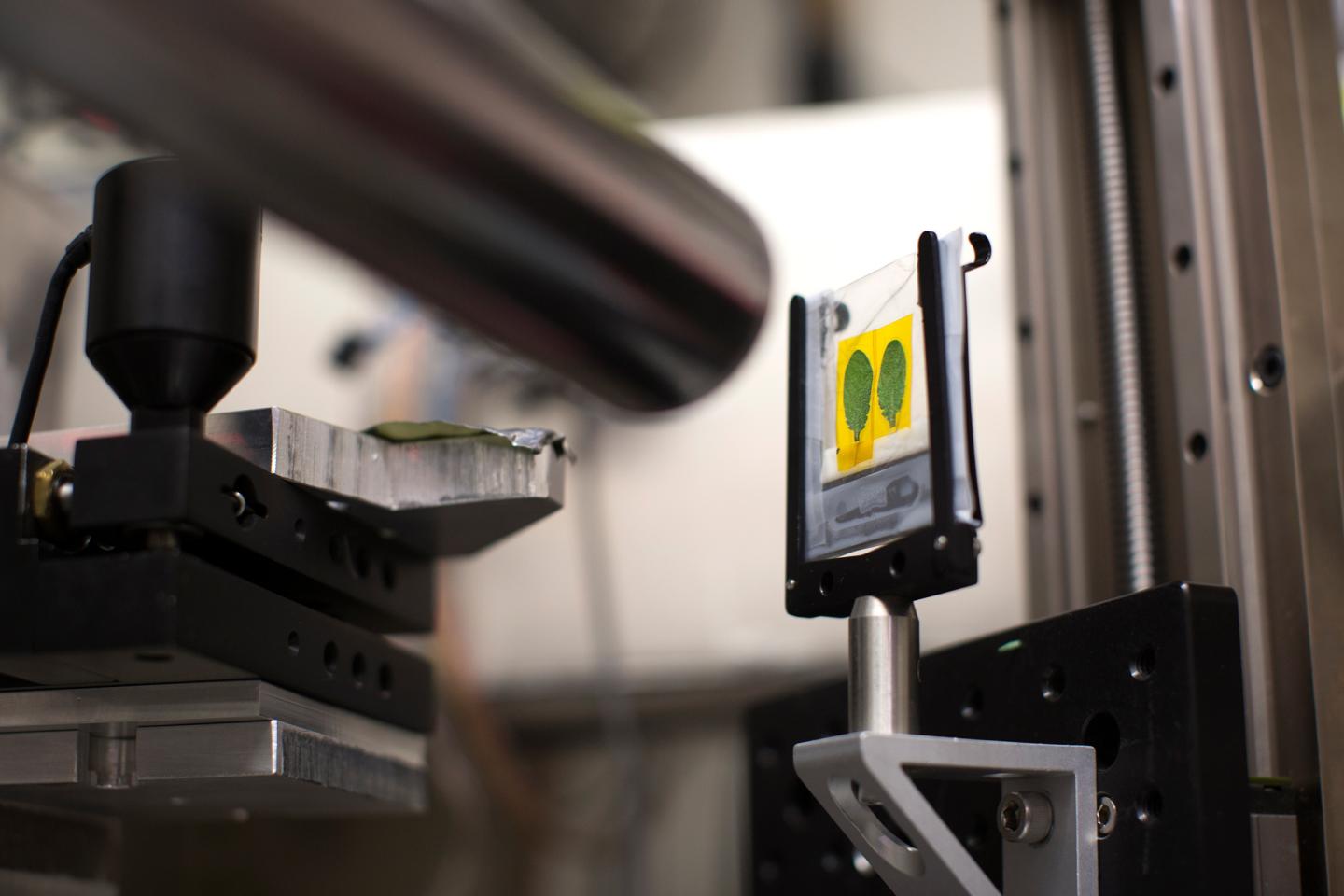
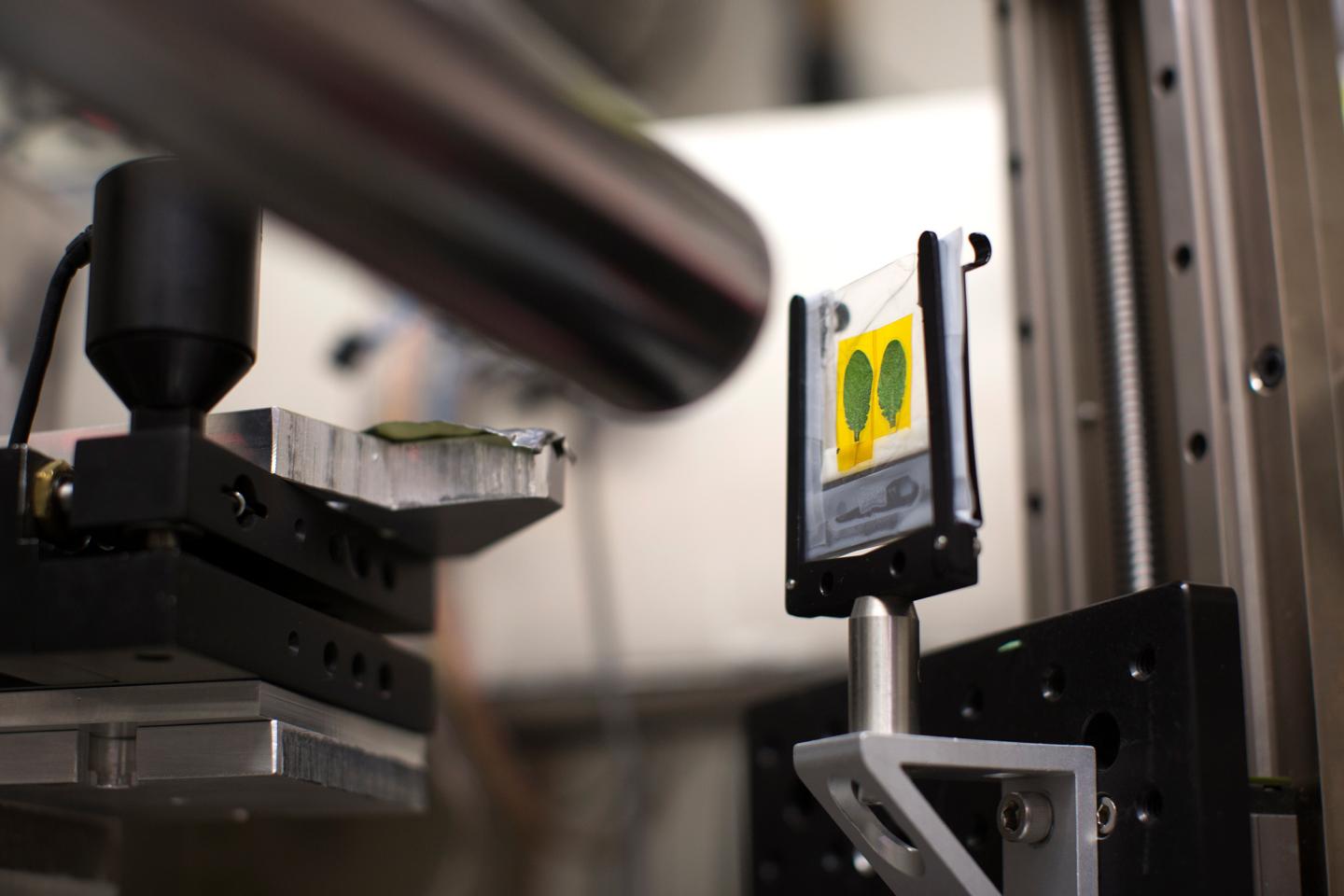
Credit: Cornell University
ITHACA, N.Y. – For the first time, Cornell University researchers are using imaging capabilities at the Cornell High Energy Synchrotron Source (CHESS) to explore how copper affects plant fertility. The work could provide key insights into how plants can be bred for better performance in marginal soils.
The human population is expected to surpass 9 billion by 2050, and meeting future food and energy needs requires increases in agricultural production by enhancing productivity on existing land or by increasing the amount of land used for production. Achieving these gains depends on adequate levels of soil micronutrients like copper, low levels of which can impact yield by reducing fertility and, in extreme cases, lead to total crop failure.
In the U.S., 206 million hectares of soil are classified as being potentially low in copper, with particular impact on major cereal crops. Copper deficiency can be remedied by the application of copper-based fertilizers, but this strategy has significant environmental costs.
Olena Vatamaniuk is an associate professor in the Section of Soil and Crop Sciences in the School of Integrative Plant Science at Cornell. Her investigation into copper uptake and distribution in plants, with a focus on how copper impacts pollen development and fertility, is funded by an $800,000 grant from the National Science Foundation. Characterizing the plant proteins that control these processes and identifying the genes responsible will guide development of plant cultivars that are better adapted to marginal, low-copper soils, according to Vatamaniuk.
Her research program in the College of Agriculture of Life Sciences has previously identified two proteins, SPL7 and CIT1, that are vital to this process. Visualizing subtle differences in copper uptake and distribution in response to genetic changes depends on imaging technologies, in which CHESS is a world leader.
"CHESS provides us an excellent opportunity to use high-precision, analytical tools to visualize and quantify the spatial distribution of copper in plants," Vatamaniuk said of CHESS's 2-D synchrotron-based X-ray fluorescence microscopy (2D-XRF). Because the procedure involves imaging of living tissue, the presence of the facility on the Ithaca campus minimizes plant transportation and maintenance.
"We hope that these studies will not only provide an answer for the long-standing question of how copper affects fertility of plants, but will also provide a paradigm for using X-ray fluorescence microscopy for addressing the role of mineral nutrients in plant reproduction," she said.
Biological imaging of this type is possible through advances in X-ray technology, said CHESS scientist Arthur Woll, a collaborator on the project. With the completion of CHESS-U, an upgrade to CHESS that advances the facility's X-ray microscopy, these tools will be available for a broad range of research questions. For the past two years, CHESS has been hosting biological imaging workshops focused on questions of interest to the plant science community.
Qi Sun, co-director of the bioinformatics facility at Cornell's Institute of Biotechnology, is co-principal investigator on the project. Along with Woll, other collaborators include Rong Huang, staff scientist at CHESS, and Lena F. Kourkoutis, assistant professor and the Rebecca Q. and James C. Morgan Sesquicentennial Faculty Fellow in the School of Applied and Engineering Physics.
###
Media Contact
Daryl Lovell
[email protected]
607-592-3925
@cornell
http://pressoffice.cornell.edu
Original Source
http://news.cornell.edu/stories/2017/07/chess-imaging-reveals-how-copper-affects-plant-fertility