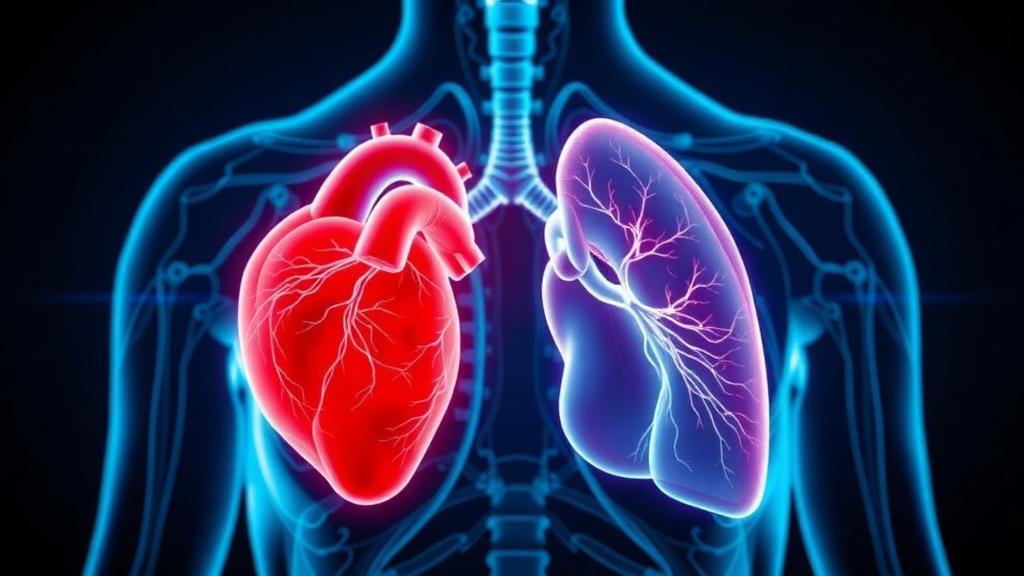
The humble stethoscope has been a physician’s companion for more than two centuries, but the skill of interpreting what it hears, the soft whoosh of blood through heart valves, the crackle of fluid in diseased lungs, has always depended on years of human training. Now, a pair of researchers at Saudi Electronic University in Riyadh have built an artificial intelligence system that learns to make those distinctions on its own, and that can explain exactly where in a recording it looked when reaching its conclusions. The framework, called XCardioPulmoNet, is described in the open-access journal Complex & Intelligent Systems and tackles a problem that has long frustrated the field of computer-aided auscultation: most existing systems analyze either heart sounds or lung sounds in isolation, and many rely on a single way of representing audio, leaving valuable diagnostic information on the table.
The team behind the system, Shimaa Nagro and Maha Helal of the College of Computing and Informatics, set out to close both gaps at once. Their approach begins with the raw audio of cardiopulmonary sounds, the acoustic signatures produced by the mechanical activity of the heart and the movement of air through the respiratory tract. Rather than choosing between the two dominant ways of turning sound into something a neural network can digest, XCardioPulmoNet uses both. The first representation is the Mel spectrogram, a time-frequency image that mimics aspects of human hearing by compressing frequency onto a scale that emphasizes the ranges most relevant to perception. The second is the Wavelet transform, which decomposes a signal into components at multiple scales and is particularly good at capturing brief, transient events, the sharp snap of a heart murmur or the fleeting crackle of an infected lung.
Each of these representations has complementary strengths. Mel spectrograms excel at encoding sustained spectral patterns across time, while wavelet-based images preserve fine temporal detail that can be smeared away by conventional Fourier-style analysis. XCardioPulmoNet therefore merges the information from both into a single hybrid image, a composite visual fingerprint of the sound that carries time-domain and frequency-domain cues side by side. This image-based strategy transforms the diagnostic problem into one that computer vision has already largely solved: classifying pictures. Any advance in image recognition architecture can, in principle, be brought to bear on the sounds of the body.
And that is precisely what the researchers did. At the heart of the framework sits EAGR_Net, a residual attention-guided convolutional neural network designed to squeeze maximal discriminative power out of the hybrid images. Residual connections, a now-classic deep learning innovation, allow very deep networks to train stably by giving signals shortcut paths around layers, so that each block of the network only needs to learn what remains to be corrected rather than relearning everything from scratch. Attention mechanisms then act like a spotlight within the network, weighting the feature channels and spatial locations that matter most for distinguishing, say, a normal heartbeat from one marred by valvular disease, while suppressing irrelevant background noise and artifacts.
The results reported in the paper are striking. Evaluated with five-fold cross-validation, a rigorous protocol in which the data are repeatedly split so that every recording serves in both training and independent testing, EAGR_Net outperformed both a baseline convolutional neural network and an attention-equipped CNN. On the heart sound dataset, the model achieved a ROC-AUC of 0.9851, a measure of how well it separates diseased from healthy cases across all decision thresholds, and a PR-AUC of 0.9558, which is especially informative when positive disease cases are relatively rare. On the lung sound dataset the performance climbed even higher, reaching a ROC-AUC of 0.9978 and a PR-AUC of 0.9917, figures that approach the practical ceiling of what a classifier can achieve.
But raw accuracy is only half the story, and it is arguably the less important half for medicine. Deep learning models have earned a reputation as black boxes: they produce answers without revealing their reasoning, a property that has slowed their adoption in clinical settings where doctors must justify every diagnosis. XCardioPulmoNet addresses this directly with Gradient-Weighted Class Activation Mapping, or Grad-CAM, a technique that produces heatmaps showing which regions of the input image contributed most strongly to the model’s prediction. In this framework, those heatmaps translate back to specific moments and frequency bands in the original sound, allowing a clinician to see, for example, that the network flagged a particular systolic interval as the telltale evidence for its classification.
This built-in explainability matters for more than just trust. By visualizing the discriminative regions, researchers can verify that the model is attending to physiologically meaningful features rather than exploiting spurious correlations, such as recording artifacts or sensor noise, that would not generalize to new patients and new devices. The interpretability layer thus doubles as a diagnostic tool for the diagnostic tool itself, exposing potential failure modes before the system ever encounters a real patient. In multiclass settings, where the model must distinguish among several categories of cardiopulmonary abnormality rather than simply flagging disease versus health, knowing which acoustic features drive each decision becomes essential for clinical credibility.
The unified treatment of heart and lung sounds is another notable departure from convention. Cardiology and pulmonology have traditionally run on parallel computational tracks, with separate models trained separately on phonocardiograms and lung sound recordings. By designing a single pipeline that handles both modalities, XCardioPulmoNet points toward integrated screening tools that could assess multiple organ systems from one examination. Because auscultation is inexpensive, noninvasive, and already embedded in routine clinical practice almost everywhere in the world, a reliable automated interpreter could extend specialist-level screening to clinics, rural health posts, and telemedicine consultations where cardiology and pulmonology expertise is scarce.
The implications reach into several of medicine’s most pressing challenges. Cardiovascular and respiratory diseases remain leading causes of death globally, and early detection is one of the most effective levers for improving outcomes. Heart murmurs, arrhythmia-related acoustic irregularities, wheezes, crackles, and rubs all leave characteristic traces in recorded sound, and a system that reliably characterizes them could triage patients, flag deteriorating conditions in hospital monitoring, or support large-scale screening programs. The authors suggest that the framework’s robustness, interpretability, and diagnostic potential make it a candidate for exactly these kinds of automated multiclass disease detection tasks, though translating laboratory benchmark performance into validated clinical deployment will require the usual gauntlet of prospective testing on diverse patient populations, varied recording hardware, and real-world noise conditions.
Published as open access on 9 October 2026, with the work received in June and accepted that September, the study arrives as part of a broader wave of research applying deep learning to medical acoustics, a field where machine learning techniques are reshaping everything from speech analysis to ultrasound. What distinguishes this contribution is its combination of complementary signal representations, a purpose-built attention-guided residual architecture, and a transparency mechanism woven into the pipeline from the start. The research, which the authors report received no external funding, offers a template for how medical AI systems might be built to earn the confidence of the clinicians who would actually use them: not just by being right more often, but by showing their work. If that combination proves durable in clinical validation, the stethoscope’s next two centuries may belong to a partnership between human ears and algorithms that can explain what they hear.
Subject of Research: Explainable deep learning classification of heart and lung sounds for cardiopulmonary disease detection
Article Title: XCardioPulmoNet: an explainable attention-guided residual framework for cardiopulmonary disease detection using sound classification
Article References: Nagro, S., & Helal, M. (2026). XCardioPulmoNet: an explainable attention-guided residual framework for cardiopulmonary disease detection using sound classification. Complex & Intelligent Systems. https://doi.org/10.1007/s40747-026-02539-2
Image Credits: AI Generated
DOI: 10.1007/s40747-026-02539-2
Keywords: deep learning, convolutional neural networks, heart sounds, lung sounds, Mel spectrogram, wavelet transform, attention mechanism, Grad-CAM, medical acoustics, cardiopulmonary disease, computer-aided diagnosis, explainable AI
News Source: Blake Davidson. (October 9, 2026). AI Listens to the Body: New Deep Learning Framework Detects Heart and Lung Disease from Sound. Scienmag.