When the gut lining breaks down, the brain often pays the price. People living with inflammatory bowel disease frequently report memory lapses, difficulty concentrating, and mental fatigue, and researchers have increasingly traced these cognitive problems to a chain of events that begins with a leaky intestinal barrier and an unbalanced gut microbiome. A new study published in npj Science of Food by a team at Nanchang University in China now offers one of the most detailed comparisons yet of how individual dietary compounds might interrupt that chain before it reaches the brain.
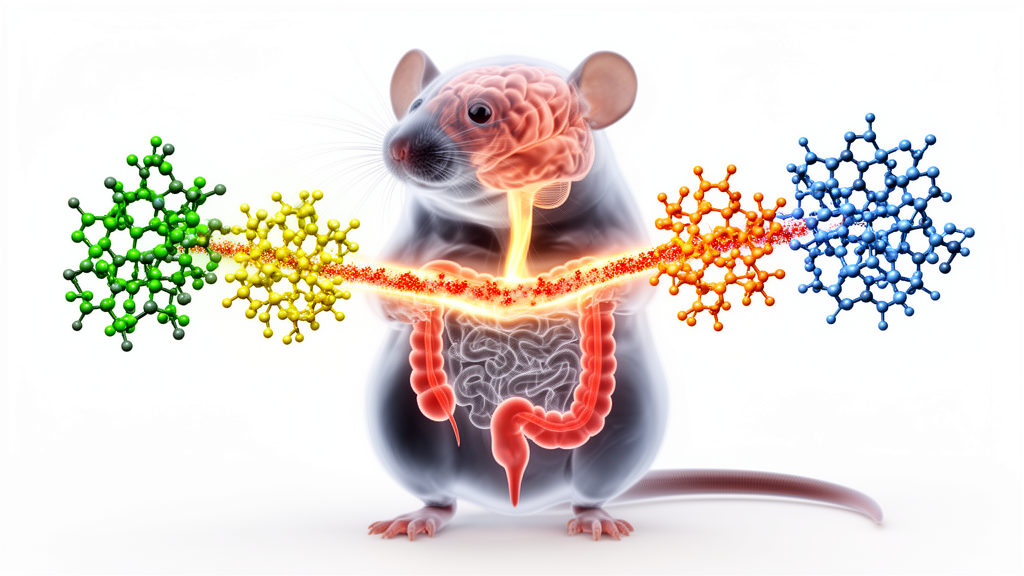
The research focused on four flavonoids, a family of polyphenolic compounds abundant in fruits, vegetables, and herbs: quercetin, kaempferol, luteolin, and apigenin. These molecules are structurally close relatives, differing only in the arrangement of hydroxyl groups on their carbon skeleton, yet the study found that they behave in strikingly different ways inside the body. Rather than acting as interchangeable antioxidants, each compound appeared to specialize in a different stage of the gut-brain cascade, a finding with real implications for how functional foods and supplements might be designed in the future.
To test the compounds, the researchers induced colitis in mice, creating an animal model that mirrors the intestinal inflammation and barrier disruption seen in human inflammatory bowel disease. The animals then received one of the four flavonoids, and the team measured everything from stool consistency and colon inflammation to the composition of the gut microbiome, the integrity of the intestinal wall, and the behavior of the mice in standardized memory tests. All four flavonoids eased the severity of colitis, but the picture became far more interesting when the investigators looked at the brain.
In tests of recognition memory and spatial working memory, specifically the novel object recognition test and the Y-maze, kaempferol and quercetin stood out as the most effective at rescuing cognitive performance. Mice treated with these two compounds explored novel objects and navigated the maze in ways that indicated their memory had substantially recovered, while untreated colitic mice showed the expected deficits. This separation between compounds that calm the gut and compounds that also rescue the brain suggests that suppressing intestinal inflammation alone is not sufficient to protect cognition.
Inside the brain, the team examined the cellular drivers of neuroinflammation. Microglia, the resident immune cells of the central nervous system, become overactivated during systemic inflammation and release signaling molecules that can damage synapses and impair learning. The flavonoid treatments suppressed this microglial activation, but apigenin showed a unique additional property: it was the only compound that reversed the overactivation of astrocytes, the star-shaped glial cells that support neurons but can become reactive and harmful during chronic inflammation. Meanwhile, quercetin and apigenin elevated levels of hippocampal synaptic proteins, molecular markers suggesting that the physical connections underlying memory were being preserved or rebuilt.
The mechanistic story continued in the gut itself. Apigenin and luteolin upregulated tight junction proteins, the molecular staples that seal the gaps between intestinal epithelial cells and prevent bacteria and their toxins from crossing into the bloodstream. Quercetin, for its part, produced a measurable drop in intestinal permeability, confirmed by a significant decrease in FITC-dextran flux, a standard laboratory technique in which a fluorescent sugar is fed to an animal and its appearance in the blood reveals how much leaked through the gut wall. A statistically significant reduction in this flux means the intestinal barrier was physically tighter in quercetin-treated animals.
Equally important were the changes in the gut microbiome. The four flavonoids reshaped the composition of gut bacteria in different ways, and here kaempferol emerged as the champion of microbial diversity, restoring the Shannon index, a standard measure of both species richness and evenness, to near-healthy levels with high statistical confidence. Quercetin and kaempferol both enriched beneficial genera, including Bifidobacterium and Lactobacillus, organisms long associated with anti-inflammatory effects and the production of short-chain fatty acids that nourish both the colon and, via the vagus nerve and the bloodstream, the brain.
To tie these threads together, the researchers used redundancy analysis, a statistical method that relates multiple environmental variables to community composition, and confirmed significant correlations between intestinal barrier integrity, microbiota structure, and cognitive scores. In other words, the mice with the tightest gut walls and the healthiest microbial communities were also the mice that performed best on memory tasks. This triangulated evidence supports the gut-brain axis model in which a compromised intestinal barrier permits inflammatory signals and microbial products to travel systemically, ignite neuroinflammation in the hippocampus, and erode cognitive function.
What makes the study conceptually significant is the demonstration that structurally similar molecules are not functionally interchangeable. Kaempferol excelled at rebuilding microbial diversity, quercetin at tightening the barrier and enriching probiotic bacteria, apigenin at calming astrocytes and boosting synaptic proteins, and luteolin at reinforcing tight junctions. The authors argue that these distinct yet complementary roles point toward a multi-targeted dietary strategy, in which combinations of flavonoids could simultaneously protect the microbiome, the intestinal wall, and the brain, rather than relying on any single compound to do everything.
The findings are, for now, confined to a mouse model, and the doses, timing, and long-term safety in humans remain open questions that will require clinical trials. Flavonoid bioavailability also varies widely depending on food matrix and gut metabolism, so translating these results into dietary recommendations will demand careful work. Still, the study adds to a rapidly growing body of evidence that what happens in the gut does not stay in the gut, and that everyday plant compounds found in onions, kale, celery, parsley, and citrus may hold precise, mechanistically distinct tools for protecting the brain from the downstream consequences of intestinal disease.
Subject of Research: Effects of dietary flavonoids on the gut microbiota, intestinal barrier, and colitis-driven cognitive impairment via the gut-brain axis
Article Title: Four dietary flavonoids differentially modulate the gut microbiota–barrier interaction against colitis-driven cognitive deficits
Article References: Li, Q., Qiao, S., Nie, X., Li, Y., Zhang, W., Chen, X., Xie, J., & Nie, S. (2026). Four dietary flavonoids differentially modulate the gut microbiota–barrier interaction against colitis-driven cognitive deficits. npj Science of Food. https://doi.org/10.1038/s41538-026-01191-x
Image Credits: AI Generated
DOI: 10.1038/s41538-026-01191-x
Keywords: flavonoids, quercetin, kaempferol, luteolin, apigenin, gut-brain axis, colitis, inflammatory bowel disease, gut microbiota, intestinal barrier, neuroinflammation, cognitive impairment
News Source: Cassandra Pierce. (October 9, 2026). Four Plant Flavonoids Show Distinct Powers Against Gut-Driven Brain Fog in Mouse Colitis. Scienmag.