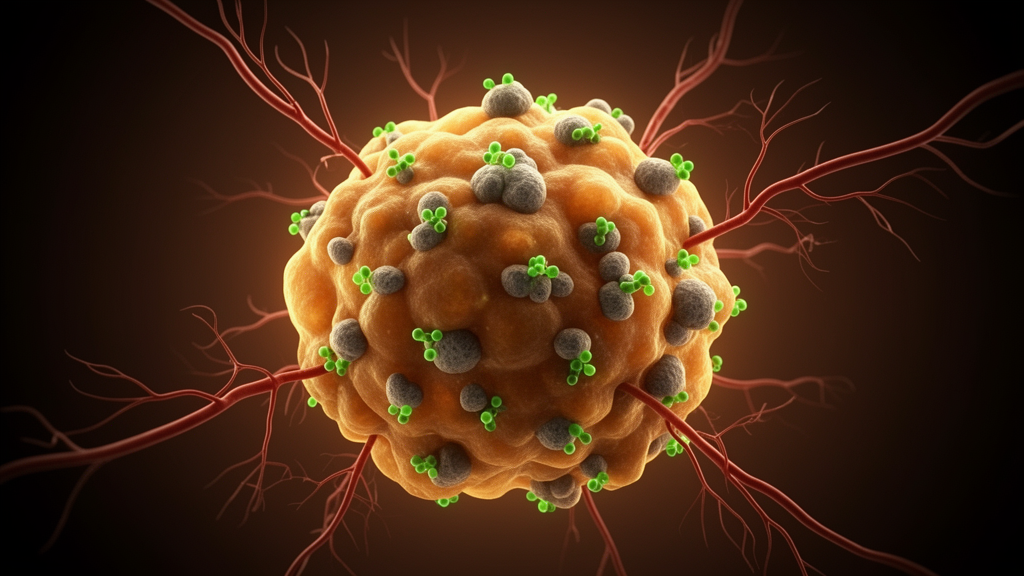
One of the most unsettling discoveries in modern cancer biology is that tumors do not always wait for the body to build them a blood supply. Some aggressive cancer cells can remodel themselves into tube-like structures that mimic blood vessels, creating their own primitive circulation networks inside the tumor mass. This phenomenon, known as vasculogenic mimicry, has been linked to poor prognosis across a range of cancers because it allows tumors to access nutrients even when conventional anti-angiogenic therapies fail. Now, a team of researchers in Japan reports that a compound derived from a family of complex plant alkaloids can shut down this process, and the mechanism they have uncovered points directly at the metabolic engine that fuels it.
The study, published in The Journal of Antibiotics by Yuma Tanaka, Akari Murase, Sora Iwamoto, Ryota Kawahara, Takaaki Sato and Siro Simizu of Keio University, together with Makoto Muroi and Hiroyuki Osada of the RIKEN Center for Sustainable Resource Science and the Institute of Microbial Chemistry, focused on a molecule called 22-benzyloxydaphlongaminone, abbreviated 22-BDO. The compound is a synthetic intermediate on the route to isodaphlongamine H, a member of the Daphniphyllum alkaloids, a family of highly complex nitrogen-containing natural products isolated from trees of the genus Daphniphyllum. These alkaloids have long fascinated chemists for their intricate polycyclic architectures and have attracted growing interest for their biological activities, but their potential as inhibitors of tumor vascularization had not been explored in this context before.
Vasculogenic mimicry was first described in 1999, when researchers observed that highly aggressive human melanoma cells could form vascular channels in vitro and in vivo without ever differentiating into true endothelial cells. Subsequent work established that this ability is not confined to melanoma; it appears in lung, breast, liver and many other cancers, and meta-analyses have shown that the presence of vasculogenic mimicry structures correlates with worse survival in cancer patients. Because the cells lining these channels are tumor cells themselves, drugs that target endothelial cells, such as conventional angiogenesis inhibitors, leave this alternative supply system untouched. That gap has made the search for molecules capable of disrupting vasculogenic mimicry an important goal in tumor biology, and the Keio-led team set out to find one.
Using human lung adenocarcinoma A549 cells, a well-established model for studying the formation of vascular-like tubular networks, the researchers tested whether 22-BDO could interfere with the process. It could. Treatment with the compound suppressed the formation of the characteristic tubular structures that A549 cells normally assemble on matrix surfaces. That observation alone would have been noteworthy, but the team went further, asking how the compound achieves this effect at the molecular level. The answer emerged from a proteomic strategy designed to classify small molecules by their mechanisms of action.
The technique, known as ChemProteoBase, relies on two-dimensional difference gel electrophoresis to profile how dozens of cellular proteins change in abundance after drug treatment, and then compares that fingerprint against a reference database of compounds with known mechanisms. When the researchers applied this analysis to 22-BDO-treated cells, they found a clear signature: the levels of two glycolytic enzymes, aldolase A and enolase 1, dropped following treatment, and glycolysis-related proteins showed an overall downward trend. Intriguingly, the proteomic profile of 22-BDO did not cluster convincingly with any of the known compounds in the database, suggesting that the molecule operates through a mode of action that has not been described previously for this class of natural product derivatives.
The metabolic connection became even more concrete when the team measured cellular energy status. Cells treated with 22-BDO showed reduced intracellular ATP levels, consistent with a disruption of glycolysis, the pathway by which cells break down glucose to generate quick energy. This finding resonates with a long tradition in cancer research: since Otto Warburg first observed in the 1950s that cancer cells preferentially consume glucose through glycolysis even in the presence of oxygen, tumor metabolism has been recognized as a vulnerability that can be exploited therapeutically. Hypoxic tumor regions, where oxygen is scarce, induce hypoxia-inducible factors that reprogram metabolism and, as earlier studies have shown, promote vasculogenic mimicry in lung adenocarcinoma by upregulating factors such as neuropilin 1. The new results tie these threads together by suggesting that the energy metabolism supporting glycolysis is itself required for tumor cells to build their vascular mimicry networks.
Two additional experiments strengthened the causal link between metabolism and vasculogenic mimicry. First, when the researchers added sodium pyruvate to the culture medium, the cell death induced by 22-BDO was partially suppressed. Pyruvate is the end product of glycolysis and a critical metabolic intermediate that feeds the mitochondrial tricarboxylic acid cycle, so its ability to rescue cells from the compound’s toxicity indicates that the compound’s lethal effects stem at least in part from a shortfall in glycolysis-derived metabolites rather than from an unrelated lethal mechanism. Second, the team tested 2-deoxy-D-glucose, a glucose analog that inhibits glycolysis by blocking the metabolism of glucose, and found that it also suppressed vasculogenic mimicry formation. The convergence of these independent lines of evidence supports the conclusion that energy metabolic pathways, including glycolysis, are genuinely involved in the formation of vascular-like structures by tumor cells.
Perhaps the most chemically interesting aspect of the study is the relationship between structure and activity across the Daphniphyllum alkaloid series. The researchers observed that the inhibitory activity of 22-BDO against vasculogenic mimicry correlated with the antiproliferative activity observed for isodaphlongamine H and its synthetic intermediates. In other words, the compounds that kill tumor cells most effectively are also the ones that most potently block their ability to form vascular mimicry networks. This correlation suggests that the two phenomena share a common underlying mechanism, plausibly the metabolic disruption revealed by the proteomic and ATP analyses, and it provides medicinal chemists with a framework for optimizing these molecules. Because 22-BDO is a synthetic intermediate rather than the final natural product, it also demonstrates that biologically active compounds can emerge from the chemical logistics of total synthesis itself, a reminder that intermediates on the way to complex natural products deserve screening in their own right.
The work builds on a substantial synthetic achievement. Isodaphlongamine H belongs to a subset of Daphniphyllum alkaloids whose total synthesis posed what chemists have described as a possible biogenetic conundrum, and multiple research groups have reported total syntheses of daphlongamine H and isodaphlongamine H in recent years, including an approach by the Keio group published in 2025 that used an iridium-catalyzed reductive cycloaddition of an N-hydroxylactam. The availability of these synthetic routes is what made the current biological study possible, since natural sources of Daphniphyllum alkaloids yield only tiny quantities. By screening intermediates from these syntheses, the team effectively converted a synthetic chemistry program into a drug discovery pipeline, identifying a bioactive scaffold that might otherwise have gone unnoticed.
The findings carry implications that extend beyond lung adenocarcinoma. Vasculogenic mimicry has been documented in numerous tumor types, and previous work from the same laboratory has examined regulators of the process in breast cancer and melanoma cells, including the roles of ErbB4 signaling and tyrosinase. The demonstration that a small molecule can suppress vasculogenic mimicry by targeting glycolysis adds a metabolic angle to a field that has largely focused on signaling pathways and transcriptional regulators, and it aligns with other reports linking glucose transport and histone modification to the phenomenon in nasopharyngeal carcinoma. Much remains to be done before 22-BDO or its derivatives could be considered therapeutic candidates; the study was conducted in cell culture, and the precise molecular target of the compound within the glycolytic machinery has not been identified. Nevertheless, the work establishes a novel inhibitor of vasculogenic mimicry, reveals an unexpected metabolic dependency in the formation of tumor-built vascular networks, and suggests that the latent chemical space of Daphniphyllum alkaloid synthesis may hold further surprises for cancer research.
Subject of Research: Inhibition of tumor vasculogenic mimicry by a Daphniphyllum alkaloid derivative through glycolysis suppression
Article Title: Inhibition of vasculogenic mimicry by 22-benzyloxydaphlongaminone via glycolysis suppression
Article References: Tanaka, Y., Murase, A., Muroi, M., Iwamoto, S., Kawahara, R., Sato, T., Osada, H., & Simizu, S. (2026). Inhibition of vasculogenic mimicry by 22-benzyloxydaphlongaminone via glycolysis suppression. The Journal of Antibiotics. https://doi.org/10.1038/s41429-026-00962-8
Image Credits: AI Generated
DOI: 10.1038/s41429-026-00962-8
Keywords: vasculogenic mimicry, glycolysis, Daphniphyllum alkaloids, 22-benzyloxydaphlongaminone, isodaphlongamine H, lung adenocarcinoma, A549 cells, aldolase A, enolase 1, ATP depletion, ChemProteoBase, cancer metabolism
News Source: Nathaniel Bowman. (October 9, 2026). Daphniphyllum-Derived Compound Starves Tumors of Energy to Block Their Self-Built Blood Vessels. Scienmag.