The Royal Swedish Academy of Sciences has awarded the 2026 Nobel Prize in Chemistry equally to Henri B. Kagan of Université Paris-Sud in Orsay, France, and Kensō Soai of Tokyo University of Science in Tokyo, Japan, for the discovery of non-linear effects and autocatalysis in asymmetric organic synthesis. The announcement, made on October 7, 2026, recognizes a body of work that fundamentally changed how chemists think about molecular handedness, the subtle but consequential property that distinguishes a molecule from its mirror image. On behalf of the American Chemical Society, President Rigoberto Hernandez congratulated the laureates, praising the way their discoveries gave chemists unprecedented control over the three-dimensional architecture of the molecules they build.
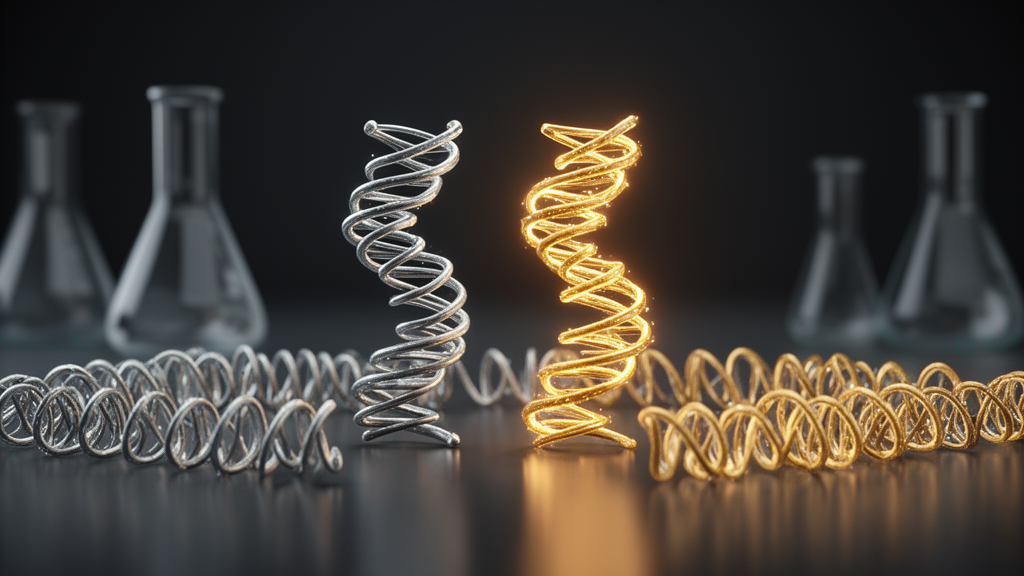
To understand why the committee’s citation matters, it helps to begin with chirality, the phenomenon at the heart of the award. Many molecules exist in two forms that are mirror images of one another, much like a pair of hands: they share the same atoms and the same connections, yet they cannot be superimposed on one another. Chemists call these two forms enantiomers. In a flask of ordinary reagents, a reaction that creates a new chiral center typically produces both forms in equal amounts, yielding a racemic mixture with no net handedness. Living systems, however, are strikingly selective. The amino acids that build proteins, the sugars that carry genetic information, and the receptors that drugs must engage are all handed, and a molecule of the wrong handedness can be inert at best and harmful at worst.
Asymmetric synthesis is the branch of chemistry devoted to this selectivity problem: how to persuade a reaction to form one enantiomer preferentially over the other. For decades, chemists achieved this with chiral catalysts and auxiliaries, molecular scaffolds that bias the transition state of a reaction toward one geometry. The efficiency of such processes is usually described by enantiomeric excess, a measure of how much one mirror-image form dominates the mixture. What Kagan recognized, and what the Nobel committee’s phrase non-linear effects captures, is that the relationship between the purity of a chiral catalyst and the purity of the product it delivers is not always the straightforward, proportional one that simple models predict.
In a linear world, a catalyst that is eighty percent enantiopure would be expected to give a product whose enantiomeric excess scales in a simple, predictable way with that purity. Kagan’s work revealed that in many asymmetric reactions the outcome depends on the catalyst’s handedness in a decidedly non-linear fashion. Small differences in catalyst purity can be magnified into large differences in product selectivity, or in some regimes, damped. This insight forced a rethinking of how chiral catalysts operate at the mechanistic level. It showed that aggregates of catalyst molecules, dimers and higher assemblies, can act in concert, and that the details of how catalyst molecules pair up can dominate the stereochemical outcome of a reaction. For chemists designing syntheses of complex, handed molecules, this was a practical warning and an opportunity at once: the enantiomeric purity of a catalyst is not just a starting condition but an active variable that can be exploited.
Soai’s contribution, honored under the second half of the citation, pushed these ideas into even more remarkable territory. Autocatalysis refers to a process in which a reaction’s product acts as a catalyst for its own formation, so that the product accelerates the very chemistry that produces it. Soai demonstrated that in certain asymmetric reactions, molecules of one handedness can amplify their own dominance: a tiny initial imbalance between the two enantiomers, far too small to measure by ordinary means, can grow through successive catalytic cycles into a mixture that is overwhelmingly one handed. The phenomenon, known as asymmetric autocatalysis with amplification of enantiomeric excess, provides a chemical route by which near-perfect molecular handedness can emerge from essentially symmetric beginnings.
The implications of that finding extend well beyond the synthetic laboratory. One of the enduring puzzles in the origin of life is homochirality, the question of why biology uses almost exclusively left-handed amino acids and right-handed sugars when both mirror-image forms are chemically plausible. A mechanism by which a vanishingly small initial bias, perhaps imparted by circularly polarized light or some other subtle physical influence, could be amplified to biological levels of purity has long been sought. Soai’s autocatalytic systems offered chemists a concrete, reproducible model of how such amplification might operate, turning a philosophical puzzle into an experimental science. The same chemistry also serves as an exquisitely sensitive probe, capable of revealing chiral influences so weak that conventional instruments cannot detect them directly.
Hernandez, in his statement on behalf of the American Chemical Society, framed the laureates’ achievement in vivid terms. Kagan and Soai led the way in dreaming and making new ways to control molecular handedness with remarkable precision, he said. Kagan helped establish the principles for producing one molecular form with extraordinary selectivity, while Soai revealed the remarkable phenomenon that such molecules can amplify their own handedness. Just like dancing partners must match, chemistry depends on molecules coming together in the right way. Their discoveries gave chemists unprecedented control over that process, enabling advances in medicines, materials, and so much more. The metaphor of dancing partners captures a deep truth about molecular recognition: biological and synthetic systems alike depend on shapes fitting together in specific three-dimensional arrangements, and control over handedness is control over that fitting.
The practical consequences of this control are visible throughout modern chemistry and medicine. Pharmaceutical molecules frequently contain one or more chiral centers, and regulatory science has long recognized that the two enantiomers of a drug can differ in potency, metabolism, and safety. Synthetic routes informed by the principles Kagan established allow manufacturers to produce the desired single enantiomer with high efficiency, reducing waste and improving the therapeutic profile of medicines. In materials science, chiral molecules underpin technologies from liquid crystal displays to optical devices that interact differently with left- and right-circularly polarized light. The non-linear effects that Kagan characterized inform how chemists choose, prepare, and deploy their catalysts, while autocatalytic amplification offers strategies for achieving extreme enantiopurity from modest starting materials.
The laureates’ connection to the American Chemical Society runs deep, and the society’s statement emphasized that history. Kagan has been an ACS member for sixty years, and Soai was an ACS member for twenty-six years and remains part of the ACS member community. The seminal papers recognized by the Nobel committee were published in the Journal of the American Chemical Society and in ACS’ Accounts of Chemical Research, two of the most widely read journals in the field. Kagan and Soai have published additional work on homochirality across ACS’ portfolio of more than ninety peer-reviewed journals, and both have been featured in Chemical & Engineering News, the society’s news outlet. Articles from that body of work are available to journalists upon request, a resource likely to see heavy use as the chemistry community digests the award.
For the broader public, the prize is an invitation to appreciate a kind of chemistry that operates at a scale far below the reach of the eye but with consequences that reach every medicine cabinet and every living cell. The ability to make a molecule in one handed form rather than a fifty-fifty mixture is the difference between a precise tool and a blunt instrument, and the discoveries honored this year explain both how to achieve that precision and how nature might have achieved it first. The ACS will post a special Headline Science short video about the Nobel Prize in Chemistry, and news media can arrange interviews with Hernandez or other experts in the field through the ACS Newsroom. As the celebrations begin in Orsay and Tokyo, the award stands as a reminder that some of the most consequential questions in science, including why life chose one hand over the other, can be answered molecule by molecule, in flasks and catalysts, by chemists patient enough to ask them.
Subject of Research: Non-linear effects and autocatalysis in asymmetric organic synthesis, recognized by the 2026 Nobel Prize in Chemistry
Article Title: ACS president comments on award of 2026 Nobel Prize in Chemistry
Article References: ACS president comments on award of 2026 Nobel Prize in Chemistry. (n.d.). Original publication
Image Credits: AI Generated
DOI: Not provided
Keywords: Nobel Prize in Chemistry, asymmetric synthesis, chirality, autocatalysis, non-linear effects, enantiomeric excess, homochirality, Henri Kagan, Kensō Soai, American Chemical Society, molecular handedness, chiral catalysis
News Source: Bethany Barker. (October 9, 2026). Nobel Chemistry Prize Honors Scientists Who Taught Molecules to Amplify Their Own Handedness. Scienmag.