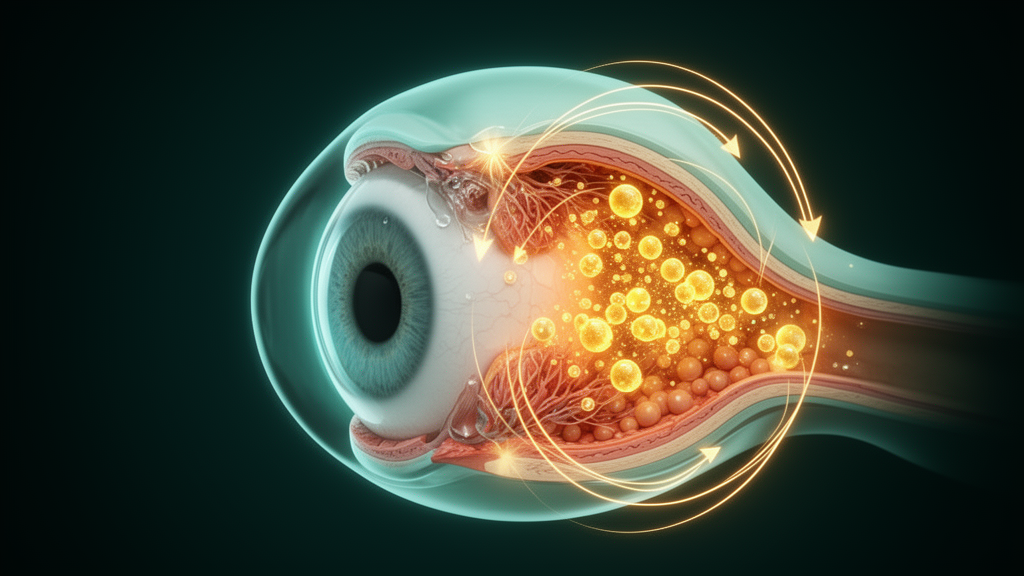
Dry eye disease is one of the most common complaints in ophthalmology, yet for decades it was dismissed as little more than an inconvenience of aging, screen time, or contact lens wear. A new review published in the Journal of Translational Medicine argues that this framing has been far too narrow. Han Yu, Xinru Wang, and Suxia Li, of the Eye Institute of Shandong First Medical University and the Shandong Eye Institute, synthesize a large body of mechanistic evidence to make a bold claim: inflammation is not a side effect of dry eye disease but its central engine, and the disease persists because three compartments of the ocular surface—epithelium, immune system, and nerves—lock each other into a self-amplifying pathological circuit.
The authors trace a decisive shift in how the field understands the disorder. Early research attributed dry eye primarily to insufficient tear secretion or excessive tear evaporation, treating the tear film as the sole culprit. Advances in mechanistic research have moved the academic consensus away from that tear film-centric perspective toward an integrated framework of disrupted overall ocular surface homeostasis. In this view, the tear film is just one node in a network, and the chronic, refractory character of the disease emerges from interactions across the whole ocular surface rather than from a single deficit in tear production or stability.
According to the review, the pathological cascade begins with the corneal epithelium. When this thin protective layer is injured, its barrier function breaks down, and cells release damage-associated molecular patterns, molecular alarm signals that alert the innate immune system. Responding immune cells secrete abundant proinflammatory mediators, which in turn further impair epithelial architecture and damage goblet cells, the specialized cells that produce the mucus component of the tear film. The result is a feedback loop in which barrier failure fuels inflammation, and inflammation deepens barrier failure, setting the stage for disease chronicity.
The third player in the circuit, and arguably its central regulator, is the corneal nerve. The review describes how corneal nerves undergo both morphological and functional remodeling under chronic inflammatory and hyperosmotic stimuli. Patients and experimental models show reduced nerve fiber density alongside hyperalgesia, a state in which sensations become amplified and painful. At the same time, stressed nerves continuously secrete neuropeptides, signaling molecules that induce neurogenic inflammation, a form of immune activation driven directly by neural output. Neural dysfunction also suppresses tear secretion and hinders epithelial repair, so the very system meant to sense and protect the ocular surface becomes a persistent amplifier of immune dysregulation and tissue injury.
It is this three-way interdependence that the authors elevate into a formal conceptual model, which they call the epithelial–immune–neural unit. In their framework, a disrupted epithelial barrier releases inflammatory cytokines that trigger excessive immune activation and corneal neural damage. Injured nerves, in turn, secrete neuropeptides that further amplify immune responses. Sustained aberrant immune and neural signaling then jointly inhibit epithelial repair and regeneration. Because each compartment regulates the others bidirectionally, the system settles into a vicious cycle in which every round of injury primes the next. Analyses confined to any single compartment, the authors contend, cannot fully explain the diverse symptoms and chronic progression that define dry eye disease in the clinic.
The model has immediate explanatory power for a puzzle that has long frustrated clinicians: why symptoms so often persist even when tear quantity or quality appears to improve. If chronic pain and fluctuating vision are driven by neural remodeling and neurogenic inflammation rather than by the tear film alone, then therapies aimed solely at wetting the surface or broadly suppressing inflammation will leave key arms of the circuit untouched. The review systematically collates these interconnected mechanisms precisely because, in the authors’ assessment, no prior review had done so, leaving the field without a unified account of why the disease becomes refractory.
On the therapeutic side, the authors take a candid look at existing anti-inflammatory strategies and their inherent limitations. Their analysis clarifies the fundamental reason why single symptomatic interventions fail to block the vicious cycle of the tripartite system: a drug that targets only one arm of the network leaves the other two arms free to regenerate the pathology. Broad-spectrum anti-inflammatory approaches, while valuable, do not address the specific molecular conversations occurring between epithelium, immune cells, and nerves, and therefore cannot dismantle the circuit as a whole.
The prescription that follows is a change of paradigm. Yu, Wang, and Li propose that future clinical diagnosis and treatment should shift from the conventional broad-spectrum anti-inflammatory approach to precise regulation targeting the multidimensional pathological interactive network. In practice, that means diagnosing which components of the epithelial–immune–neural unit are driving disease in a given patient and intervening at the specific molecular nodes—cytokine signaling, innate immune activation, neuropeptide release, or neural repair pathways—that sustain the loop. Such targeted intervention strategies, the authors argue, are the logical next step for translational research built on the mechanistic system they describe.
The review also carries implications for how dry eye disease should be studied. By constructing an integrated unit model rather than cataloguing mechanisms compartment by compartment, the authors provide a theoretical scaffold for experiments that manipulate one arm of the circuit and measure consequences in the others. The work was supported by the National Natural Science Foundation of China and the Taishan Scholars Program, and it arrives at a moment when dry eye disease affects a large and growing share of the population worldwide, making mechanistically grounded, precision-oriented therapies an increasingly urgent clinical need.
For patients, the message of the review is quietly radical: dry eye disease is not merely dryness, and it should not be managed as such. It is a chronic inflammatory disorder of an integrated neuroimmune-epithelial system, in which damaged barriers, overactive immunity, and remodeling nerves feed one another in a loop that widens with time. Breaking that loop, the authors conclude, will require therapies designed for the network as a whole—precise, multidimensional regulation in place of one-size-fits-all symptom relief. If the field follows the roadmap laid out in this synthesis, the next generation of dry eye treatments may look far less like better eye drops and far more like targeted modulators of the biological circuit that keeps the disease alive.
Subject of Research: Inflammatory mechanisms and epithelial–immune–neural interactions in dry eye disease
Article Title: Inflammation as a central mechanism: interactions among epithelial, immune, and neural units in dry eye disease and their therapeutic implications
Article References: Yu, H., Wang, X., & Li, S. (2026). Inflammation as a central mechanism: interactions among epithelial, immune, and neural units in dry eye disease and their therapeutic implications. Journal of Translational Medicine. https://doi.org/10.1186/s12967-026-08891-8
Image Credits: AI Generated
DOI: 10.1186/s12967-026-08891-8
Keywords: dry eye disease, inflammation, ocular surface, corneal nerves, epithelial barrier, innate immunity, neuropeptides, neurogenic inflammation, epithelial-immune-neural unit, targeted therapy, tear film, chronic disease
News Source: Ophelia Keating. (October 9, 2026). Dry Eye Disease Rewired: How Inflammation Drives a Self-Amplifying Loop in the Eye. Scienmag.