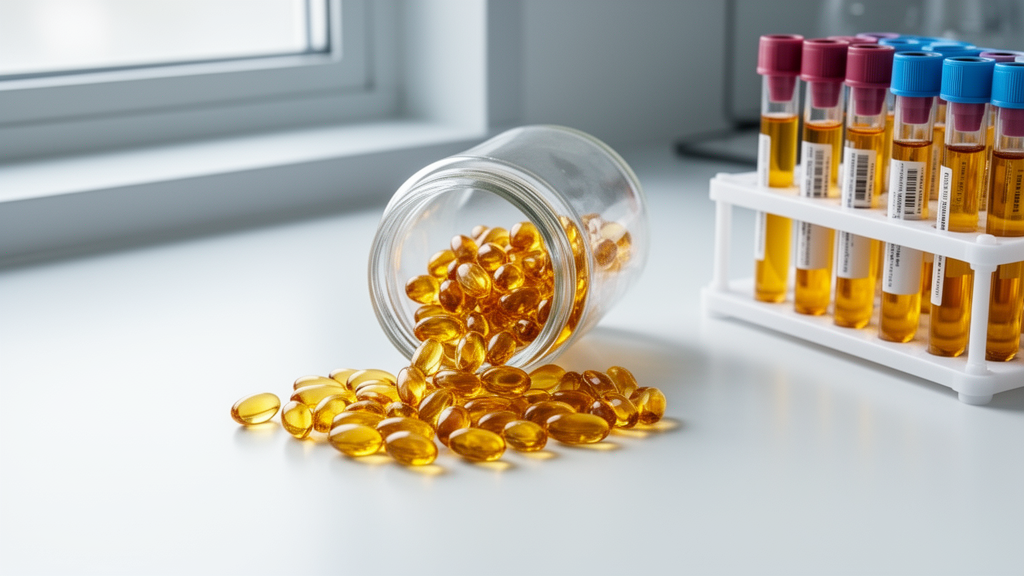
Vitamin E, one of the most widely consumed dietary supplements in the world, has long been promoted as a heart-protective antioxidant, yet its actual effect on blood cholesterol and triglycerides has remained stubbornly unclear. Now, a comprehensive systematic review and dose–response meta-analysis of randomized controlled trials, published in Food Science & Nutrition, offers the most rigorous assessment to date of how vitamin E supplementation affects serum lipids specifically in adults with dyslipidemia. The verdict is nuanced: statistically significant but modest improvements in triglycerides and HDL cholesterol, with intriguing hints that one particular family of vitamin E compounds may outperform the other.
The research team screened 5,155 records from MEDLINE/PubMed, ISI Web of Science, and Scopus, ultimately including 22 randomized controlled trials spanning 1978 to 2020, comprising 33 intervention arms and 1,001 participants. Crucially, unlike previous meta-analyses that lumped together people with diabetes, kidney disease, and other metabolic conditions, this analysis focused exclusively on adults with established dyslipidemia, the population most likely to consider supplementation in the first place. The trials came from an unusually broad geographic spread, including the United States, Iran, Finland, India, Malaysia, Japan, Turkey, Slovenia, Brazil, the Netherlands, Pakistan, Australia, and beyond, with participants ranging in age from 25 to 78 years and doses of vitamin E ranging from 55 to 1,043 IU per day over periods of 4 to 77 weeks.
The headline finding concerns triglycerides. Across 31 effect sizes from 21 studies, vitamin E supplementation produced a statistically significant reduction in serum triglycerides of 8.14 mg/dL, with remarkably low heterogeneity between studies, suggesting a consistent effect. The benefit was concentrated in people whose baseline triglycerides were elevated at 150 mg/dL or above, who saw an average reduction of 9.46 mg/dL. Those who already had normal triglyceride levels saw no meaningful change. Importantly, the GRADE framework rated the certainty of this triglyceride evidence as high, meaning the researchers had no serious concerns about bias, inconsistency, imprecision, or publication bias, a rare distinction in nutrition science.
HDL cholesterol, the so-called good cholesterol, also told a favorable story. Pooled analysis of 29 effect sizes revealed a significant increase of 1.08 mg/dL, rated as moderate certainty by GRADE. The improvement was most pronounced in participants starting with low HDL below 40 mg/dL, who gained an average of 2.67 mg/dL, and in obese participants, who saw a 2.36 mg/dL rise. Short-term interventions under 12 weeks appeared more effective for HDL than longer trials. However, the analysis flagged potential publication bias for the HDL outcome using Egger’s test, and a trim-and-fill adjustment confirmed the result was robust but warranted some caution.
The most scientifically provocative results emerged from the subgroup analyses comparing the two major isoforms of vitamin E. Vitamin E is not a single molecule but a family of eight fat-soluble compounds divided into tocopherols and tocotrienols, each with alpha, beta, gamma, and delta forms. Tocotrienols differ structurally by possessing an unsaturated isoprenoid side chain that enhances their mobility within lipid membranes. In the pooled data, tocotrienol formulations produced significant reductions in total cholesterol of 16.50 mg/dL and LDL cholesterol of 20.19 mg/dL, along with a substantial HDL increase of 2.39 mg/dL, whereas tocopherols showed no significant benefit for any of these outcomes. Doses at or below 400 IU per day were also consistently more effective than higher doses for total and LDL cholesterol.
The mechanistic explanation for the tocotrienol advantage may lie beyond antioxidant activity. Experimental studies indicate that tocotrienols can suppress HMG-CoA reductase, the rate-limiting enzyme in cholesterol biosynthesis and the same molecular target exploited by statin drugs, through post-transcriptional regulation. This gives tocotrienols a plausible cholesterol-lowering pathway that alpha-tocopherol, the most common form in supplements, lacks. The authors are careful to note, however, that these isoform comparisons come from indirect, between-study subgroup analyses rather than head-to-head randomized trials, so they should be treated as hypothesis-generating rather than definitive proof of superiority.
Total cholesterol and LDL cholesterol told a more complicated story. Overall pooled effects were nonsignificant, at minus 6.48 mg/dL and minus 9.06 mg/dL respectively, accompanied by very high heterogeneity exceeding 90 percent, and GRADE rated the certainty of both as very low. Yet within specific subgroups, the picture brightened: patients with baseline LDL at or above 130 mg/dL saw significant reductions, as did those on shorter interventions under 12 weeks, those taking tocotrienols, and those on doses of 400 IU per day or less. Nonlinear dose–response modeling further suggested a significant inverse relationship between dose and total cholesterol, hinting that higher doses might confer additional benefit under certain conditions, even as the most consistent categorical evidence favored moderate doses.
Sensitivity analyses generally reinforced the reliability of the findings. Sequentially removing individual studies left the pooled estimates for total and LDL cholesterol essentially intact, indicating no single trial drove those results. The triglyceride effect, however, proved more fragile: excluding one Iranian trial in women with type 2 diabetes attenuated the pooled reduction to a nonsignificant 5.42 mg/dL. Meta-regression found that longer intervention duration was significantly associated with smaller LDL reductions, a counterintuitive signal that the authors suggest may reflect differences in statistical assumptions between categorical subgroup and continuous dose–response models rather than a true biological contradiction.
The authors are refreshingly candid about what these numbers mean clinically. An 8 mg/dL triglyceride reduction and a 1 mg/dL HDL increase are statistically significant but modest, and they are unlikely to translate into meaningful reductions in cardiovascular risk when vitamin E is used alone. The appropriate framing, they argue, is adjunctive: vitamin E, particularly tocotrienol-rich formulations, may serve as a complementary nutritional strategy alongside lifestyle modification and guideline-directed lipid-lowering therapy, not as a replacement for statins, fibrates, or established dietary and exercise interventions. This caution echoes the broader history of vitamin E in cardiovascular medicine, where early enthusiasm from observational studies repeatedly collided with disappointing randomized evidence.
Limitations remain substantial. The included trials varied widely in underlying conditions, from isolated hypercholesterolemia to type 2 diabetes, carotid stenosis, and coronary artery disease, and several allowed concomitant statins or gemfibrozil, balanced across arms but still shaping absolute responses. Unmeasured clinical and methodological differences likely explain much of the residual heterogeneity in the cholesterol outcomes. The authors call for larger, multicenter trials with longer follow-up, direct head-to-head comparisons of tocopherols and tocotrienols, and deeper investigation of the molecular mechanisms by which vitamin E isoforms modulate lipid metabolism. For now, the message for the millions of adults with dyslipidemia is measured: the vitamin E story is not dead, but its benefits are real yet small, isoform-specific, and best viewed as a potential supplement to, never a substitute for, proven therapy.
Subject of Research: Effects of vitamin E supplementation on serum lipid profile in adults with dyslipidemia
Article Title: Efficacy of Vitamin E Administration on Serum Lipid Profile in Adult Patients With Dyslipidemia: A GRADE‐Assessed Systematic Review and Dose–Response Meta‐Analysis of RCTs
Article References: Karimi, M., Kazemi, K., Ziyafati, F., Valizadeh, F., Shirsalimi, N., Ramezanipour, S., Estifa, A., & Asbaghi, O. (2026). Efficacy of Vitamin E Administration on Serum Lipid Profile in Adult Patients With Dyslipidemia: A GRADE ‐Assessed Systematic Review and Dose–Response Meta‐Analysis of RCT s. Food Science & Nutrition, 14(10), Article e72428. https://doi.org/10.1002/fsn3.72428
Image Credits: AI Generated
DOI: 10.1002/fsn3.72428
Keywords: vitamin E, dyslipidemia, tocotrienols, tocopherols, triglycerides, HDL cholesterol, LDL cholesterol, meta-analysis, randomized controlled trials, GRADE, cardiovascular risk, dietary supplements
News Source: Daisy Hatcher. (October 9, 2026). Vitamin E Shows Modest Lipid Benefits in Dyslipidemia, Landmark Meta-Analysis Finds. Scienmag.