When a magnitude 9.0–9.1 earthquake struck off the coast of the Tohoku region of Japan on 11 March 2011, the tsunami waves that followed did more than devastate coastal communities. They also scrambled the genetics of the region’s fish. In the town of Otsuchi, the waves and the ground subsidence they caused flooded the downtown area and created a network of new spring-fed ponds. Those ponds became an accidental natural laboratory, and nine years of genomic monitoring there has now delivered one of the clearest real-time views ever obtained of how species defend their genetic identity after hybridization.
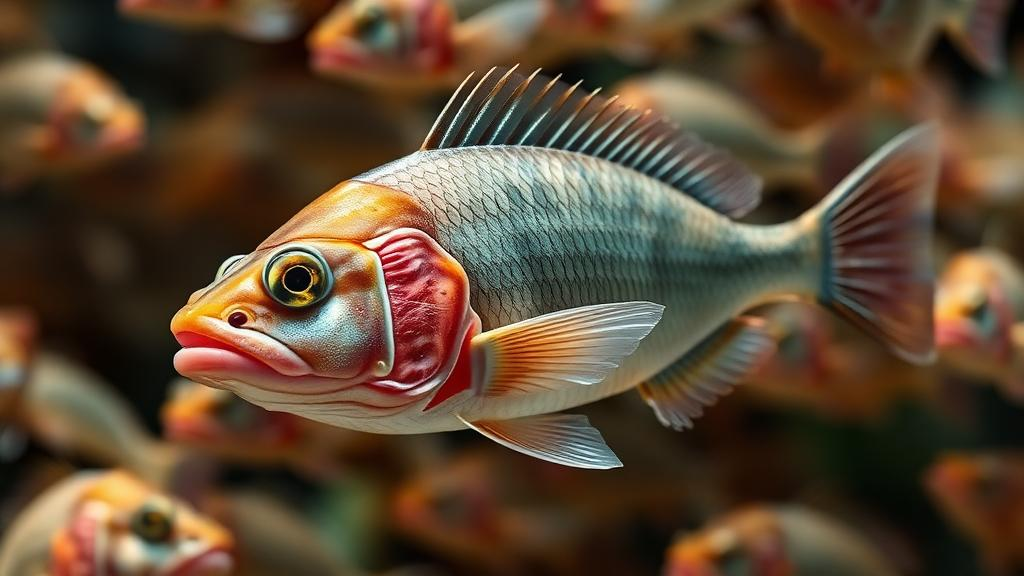
The story begins with two stickleback species. Freshwater threespine sticklebacks, Gasterosteus aculeatus, live permanently in the rivers of the region, while the Japan Sea stickleback, Gasterosteus nipponicus, is a marine or sea-run migrant. The two lineages diverged roughly 680,000 years ago and have evolved strong but incomplete reproductive isolation. The tsunami appears to have carried marine G. nipponicus inland from the Pacific Ocean, while the backwash swept freshwater G. aculeatus down from upstream reaches, dumping both species into the same newly formed ponds. By 2012, researchers sampling the ponds found a population teeming with hybrids, something that had never been documented in Otsuchi before the disaster.
What happened next is the heart of the new study, published in Nature Ecology & Evolution. Using restriction-site associated DNA sequencing across nine years of sampling, the team tracked the fate of G. nipponicus ancestry generation by generation. In 2012, 38 percent of sampled fish were hybrids, most of them first-generation backcrosses toward G. aculeatus. Yet by 2020, within roughly ten generations, the population had become almost entirely pure G. aculeatus. The marine species’ genome had been swept out of the population with remarkable speed, a process the researchers describe as genome-wide purging.
Could this rapid loss of foreign alleles simply be a statistical accident of small population size? The researchers tested that possibility rigorously. A mark–recapture survey estimated the census population at 22,485 individuals, and stochastic simulations based on the Wright–Fisher model were run at effective population sizes corresponding to 100 percent, 10 percent and 1 percent of that figure. Starting from the observed allele frequencies at 667 species-diagnostic loci, the simulations showed that at most loci—98.7 percent, 97.8 percent and 85.3 percent respectively—the real population purged G. nipponicus alleles faster than drift alone could ever explain. Selection, not chance, was doing the work.
The next question was where that selection was strongest. The team already knew from previous work that the two species are kept apart by multiple barriers: ecological selection against immigrants and hybrids, differences in habitat choice, sexual isolation and hybrid male sterility. Quantitative trait locus mapping had previously tied sexual isolation and hybrid male sterility to chromosomes 9 and 19, which function as the neo-X and ancestral-X chromosomes in G. nipponicus, a system that arose through a Y–autosome fusion. Strikingly, the new time-series data showed that G. nipponicus alleles at these major reproductive isolation loci vanished within the first few generations, faster than the genomic background.
To understand why, the researchers ran field experiments in the tsunami-created habitat itself. In outdoor net enclosures, pure G. nipponicus suffered dramatically higher mortality than pure G. aculeatus, with backcross hybrids showing intermediate survival. By comparing allele frequencies between the backcross fish released into the enclosure and the survivors six months later, the team identified five candidate loci on chromosomes 10, 15, 17 and 20 and the ancestral X chromosome where marine alleles reduced survival. Interestingly, a well-known freshwater adaptation—an extra copy of the fatty acid desaturase gene Fads2 on chromosome 12—played no role here, likely because prey organisms washed in from the sea kept the ponds well supplied with docosahexaenoic acid.
Habitat choice added a second, equally elegant mechanism. Because the tsunami ponds connect to the estuary only through small tunnels, any fish carrying marine alleles that triggered seaward migration would simply leave, never to return. The researchers built an eight-chambered experimental stream system in the field and found that G. nipponicus migrated seaward far more often than freshwater G. aculeatus, with backcross hybrids again intermediate. Quantitative trait locus mapping revealed significant loci for seaward migration on chromosome 10 and the ancestral X chromosome—regions that overlapped with the survival loci. This clustering of barriers for multiple isolating mechanisms on the same chromosomes, including a large-X effect, means a handful of genomic regions act as a disproportionately powerful barrier to gene flow.
But major loci alone could not explain the full story. Once the deleterious alleles at major barrier loci are purged in the first few generations, no further selection should act on neutral introgressed DNA elsewhere in the genome. Individual-based simulations confirmed this: models with only major reproductive isolation loci, or with drift alone, failed to reproduce both the observed admixture pattern and the subsequent genome-wide purging. The pattern only emerged when the team added many pairs of type 2 Dobzhansky–Muller incompatibilities—negative epistatic interactions between a dominant allele of one species and a recessive allele of the other—scattered across the genome. These incompatibilities do not harm first-generation hybrids but inflict fitness costs on later generations, when alleles become homozygous. In other words, a dense genome-wide network of weak incompatibilities, combined with a few major barriers, appears to be what prevents species fusion.
The pattern repeated itself elsewhere. The team located two other tsunami-struck stickleback habitats, in Iwaizumi and Kuji, roughly 55 and 90 kilometers north of Otsuchi. Both contained recent hybrids with predominantly G. aculeatus ancestry, and the frequencies of G. nipponicus-derived alleles across the genome correlated significantly between habitats, suggesting that the same genomic regions were purged first in each independently founded population. Differences in how much marine ancestry remained appeared to depend on the initial ancestry composition, with simulations showing that higher initial frequencies of G. nipponicus led to greater retention of its alleles. Elevated marine ancestry on chromosomes 12 and 13 in Iwaizumi may reflect heterozygote advantage or adaptive introgression, though the current data cannot rule out drift.
The implications reach well beyond Japanese ponds. The divergence between these two species sits near a proposed transitional threshold of speciation, and the study provides direct evidence that species identity can persist even after extensive introgression, provided enough genetic incompatibilities have accumulated. It also echoes a lesson Darwin drew from an earthquake in Chile aboard the Beagle: catastrophic geological events can open rare windows onto fundamental evolutionary processes. As climate change intensifies natural disasters and human activity increasingly forces species into contact, predicting whether hybridization leads to fusion, extinction or renewed isolation becomes ever more urgent. This nine-year experiment, launched by a tragedy, shows that the genome keeps its own defenses—and that watching them work is now possible in real time.
Subject of Research: Real-time genomic purging of introgressed alleles in a tsunami-induced hybrid stickleback population
Article Title: Rapid genome-wide purging following tsunami-induced hybridization in a stickleback population
Article References: Hosoki, T. K., Mori, S., Kagawa, K., Nishida, S., Kume, M., Nagano, A. J., Kanbe, H., Kakioka, R., Nakamoto, K., Iino, Y., Kodama, M., Oba, S., Seong, T., Kabeya, N., Ishikawa, A., Yoshida, K., Yamasaki, Y. Y., & Kitano, J. (2026). Rapid genome-wide purging following tsunami-induced hybridization in a stickleback population. Nature Ecology & Evolution. https://doi.org/10.1038/s41559-026-03184-1
Image Credits: AI Generated
DOI: 10.1038/s41559-026-03184-1
Keywords: stickleback, hybridization, speciation, genomics, tsunami, introgression, reproductive isolation, Dobzhansky-Muller incompatibilities, purging, evolutionary biology, population genetics, Japan
News Source: Juliet Wilcox. (October 8, 2026). Tsunami-Forced Fish Hybrids Purge Foreign Genes in Just a Decade, Revealing Speciation in Action. Scienmag.