Few techniques in modern biomedical science have reshaped an entire field as quietly and as thoroughly as the Real-Time Quaking-Induced Conversion assay, better known as RT-QuIC. A new review published in Acta Neuropathologica traces the arc of this technology and, above all, the career of Dr. Byron Caughey, the National Institute of Allergy and Infectious Diseases scientist whose decades-long pursuit of ultrasensitive prion detection transformed how laboratories around the world diagnose and study protein misfolding diseases. Written by his longtime collaborators, including Bradley Groveman, Andrew Hughson, and Christina Orrú of the NIH Rocky Mountain Laboratories, alongside Sarah Vascellari, Matilde Bongianni, and Gianluigi Zanusso of the Universities of Cagliari and Verona, the review is both a technical history and a tribute, dedicated to the memory of a scientist whose method now underpins diagnostics for disorders ranging from Creutzfeldt-Jakob disease to Parkinson’s disease.
To appreciate the significance of RT-QuIC, one must return to the conceptual problem that defined prion research for decades. Prions are infectious agents composed not of nucleic acid but of misfolded protein, a proposition famously advanced by Stanley Prusiner in 1982 and foreshadowed by theoretical work from J.S. Griffith and by radiation experiments in the 1960s suggesting that the scrapie agent could replicate without a genome. The central mechanism is templated conversion: a misfolded, aggregated form of the prion protein acts as a seed that forces the normal, protease-sensitive form of the protein to refold into the pathological conformation. This seeding model, articulated by Jarrett and Lansbury in 1993 as a kind of one-dimensional crystallization, implied that the infectious agent could in principle be detected and amplified in a cell-free system, if only the right conditions could be found.
Caughey’s laboratory delivered the crucial early proof. In 1994, working with Kocisko, Lansbury, and colleagues, his group reported the cell-free formation of protease-resistant prion protein, demonstrating that aggregates of the abnormal protein could induce the conversion of the normal protein outside any living cell. Follow-up papers in 1995 showed that these aggregates could drive the conversion of protease-sensitive prion protein to the protease-resistant state and that strain-specific properties of scrapie prions could propagate non-genetically, a finding with profound implications for how prion diversity is encoded. The same year, Caughey and Lansbury invoked the fictional ice-nine metaphor from Kurt Vonnegut’s novel Cat’s Cradle to describe the templating chemistry of scrapie infection, a seed that crystallizes everything it touches. These experiments established the mechanistic foundation on which all subsequent seed amplification technologies would be built.
The leap from proof of principle to practical detection required solving a sensitivity problem. Early cell-free conversion assays were slow and comparatively insensitive, and the field’s gold standard for detecting infectivity remained the animal bioassay, which took months or years. In 2001, Claudio Soto’s group introduced protein misfolding cyclic amplification, which used repeated rounds of sonication to amplify prion aggregates in brain homogenate. Caughey’s laboratory, together with Atarashi and colleagues, took a different route: in 2007 they described ultrasensitive detection of scrapie prion protein using seeded conversion of recombinant prion protein, and in 2010 Wilham, Orrú, and colleagues published the first full description of RT-QuIC. The assay’s elegance lay in its components. Recombinant prion protein serves as the substrate, tiny amounts of misfolded seed from a biological sample initiate its aggregation, and the aggregation is tracked in real time by a fluorescent dye, thioflavin T, that lights up as amyloid fibrils form. Gentle shaking, or quaking, accelerates the reaction in standard microplate readers.
The result was a diagnostic revolution. RT-QuIC could detect prion seeding activity with sensitivity comparable to animal bioassays but in hours rather than months, and it required no infectious material beyond the sample itself. Successive refinements pushed the technology further. In 2014, Orrú and colleagues reported in the New England Journal of Medicine that nasal brushings could be used to diagnose Creutzfeldt-Jakob disease with remarkable accuracy, and in 2015 the same team showed that cerebrospinal fluid testing with RT-QuIC achieved high sensitivity and specificity for sporadic CJD. International ring trials confirmed the assay’s robustness across laboratories, and second-generation protocols standardized the substrate and reaction conditions. Today, RT-QuIC on cerebrospinal fluid is incorporated into diagnostic criteria and surveillance guidelines for human prion disease issued by bodies such as the CDC and the European Centre for Disease Prevention and Control, and it has been extended to an astonishing range of easily accessible tissues, including olfactory mucosa, skin punch biopsies, hair roots, tear fluid, and even placental tissue.
Perhaps the most consequential extension of the platform came when Caughey’s group and others realized that the same seeding logic applies to other misfolded proteins implicated in neurodegenerative disease. Alpha-synuclein, the protein that aggregates in Parkinson’s disease, dementia with Lewy bodies, and multiple system atrophy, was adapted to RT-QuIC formats beginning around 2013, with parallel development of the related alpha-synuclein seed amplification assay by Shahnawaz and colleagues. Groveman and colleagues published a rapid, ultrasensitive alphaSyn RT-QuIC in 2018 for quantifying pathological alpha-synuclein seeds in brain and cerebrospinal fluid. The clinical payoff has been dramatic: large multicenter studies, including analyses within the Parkinson’s Progression Markers Initiative, demonstrated that cerebrospinal fluid alpha-synuclein seed amplification can identify Parkinson’s disease with high accuracy, and longitudinal work published in The Lancet Neurology in 2025 showed that the kinetic measures of the assay carry diagnostic and prognostic value. Researchers have since detected alpha-synuclein seeds in skin, olfactory mucosa, duodenal biopsies, and serum, opening the door to minimally invasive diagnosis at early stages of disease.
The same logic has been applied to tau, the microtubule-associated protein whose aggregates define Alzheimer’s disease and a family of frontotemporal dementias collectively called tauopathies. Kraus and colleagues showed in 2019 that RT-QuIC could selectively detect tau aggregate conformers of Alzheimer’s disease, and Metrick and colleagues developed a single ultrasensitive assay capable of discriminating tau aggregates of Alzheimer’s disease from those of Pick disease. Salt-modulated amplification protocols now allow classification of tauopathies directly from brain homogenates, and tau seeding activity has been detected in skin biopsies, where it helps differentiate tauopathies from synucleinopathies. The platform has expanded further still: TDP-43 seeds have been measured in cerebrospinal fluid and olfactory mucosa of patients with amyotrophic lateral sclerosis and frontotemporal dementia, superoxide dismutase 1 aggregates have been detected in neural tissue and cerebrospinal fluid from ALS cases, and even misfolded insulin has been targeted with a dedicated RT-QuIC assay.
Beyond human diagnostics, RT-QuIC has become an indispensable tool for surveillance and control of animal prion diseases, particularly chronic wasting disease in deer and elk, which continues to spread across North America and beyond. The assay enabled antemortem detection of prions in saliva, urine, blood, and feces of infected cervids, longitudinal studies of prion shedding, and detection of prions on environmentally relevant surfaces and in venison processing environments. Ear-notch testing of free-ranging and farmed deer is now feasible, and recent work has found prions in the blood of healthy-appearing white-tailed deer, underscoring the challenge of silent carriage. The assay has also been turned on itself in a constructive way: because it quantifies residual seeding activity, it has become a standard method for evaluating prion decontamination procedures, testing disinfectants such as hypochlorous acid, sodium hypochlorite, and commercial formulations against multiple prion strains on laboratory surfaces.
The technology continues to evolve in directions that Caughey championed: higher throughput, greater sensitivity, and broader accessibility. Hofmeister ion comparisons achieved million-fold sensitivity enhancements in seed amplification assays for biospecimens, magnetic particle extraction concentrates prions from large-volume samples, and nanoparticle-enhanced Nano-QuIC has overcome inhibitors in blood to detect alpha-synuclein seeding activity in Parkinson’s patients. Microfluidic Micro-QuIC platforms promise rapid on-site amplification and visual detection, while digital seed amplification assays bring single-molecule counting to TDP-43 quantification in cerebrospinal fluid. In parallel, the assay has become a workhorse of therapeutic research, serving as a screening tool for anti-prion drug candidates and as a readout in human cerebral organoid models of Creutzfeldt-Jakob disease, where recent work has identified oligosaccharyltransferase complex inhibition as a promising treatment strategy for rodent and human prions.
What emerges from the review is a portrait of a scientific legacy built on collaboration, standardization, and an almost obsessive attention to the practical details of assay performance, from substrate selection, such as the remarkably versatile bank vole prion protein, to buffer chemistry and shaking parameters. The authors are careful to note that seed amplification technology has been developed through the seminal contributions of many eminent scientists and that the breadth of the field now extends far beyond any single laboratory or any single review. Yet the through-line is unmistakable. A question that began with the strange chemistry of scrapie, pursued for decades by Byron Caughey and his collaborators, has grown into a family of ultrasensitive assays that now detect, discriminate, and quantify the pathological protein seeds of prion disease, parkinsonism, tauopathy, and motor neuron disease. As the field moves toward standardization, data sharing, and clinical deployment of alpha-synuclein and tau seed amplification assays, the tree of discoveries that grew from a single prion seed continues to spread its branches across medicine.
Subject of Research: Development and legacy of the RT-QuIC seed amplification assay for ultrasensitive detection of prions and other misfolded proteins
Article Title: From a prion seed to a tree of discoveries: Byron Caughey’s RT-QuIC legacy in protein misfolding research
Article References: Groveman, B. R., Vascellari, S., Bongianni, M., Hughson, A. G., Zanusso, G., & Orrú, C. D. (2026). From a prion seed to a tree of discoveries: Byron Caughey’s RT-QuIC legacy in protein misfolding research. Acta Neuropathologica, 152(1), Article 44. https://doi.org/10.1007/s00401-026-03094-3
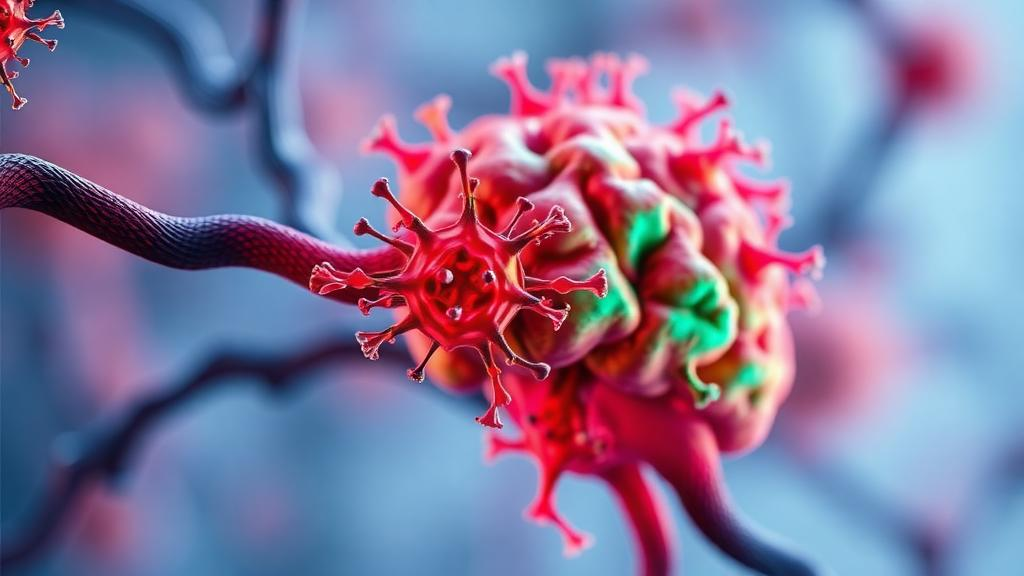
Image Credits: AI Generated
DOI: 10.1007/s00401-026-03094-3
Keywords: RT-QuIC, prion disease, Byron Caughey, protein misfolding, alpha-synuclein, tau, Creutzfeldt-Jakob disease, Parkinson's disease, seed amplification assay, chronic wasting disease, TDP-43, biomarkers
News Source: Diana Fleming. (October 7, 2026). How one assay turned prion detection into a revolution across neurodegeneration. Scienmag.