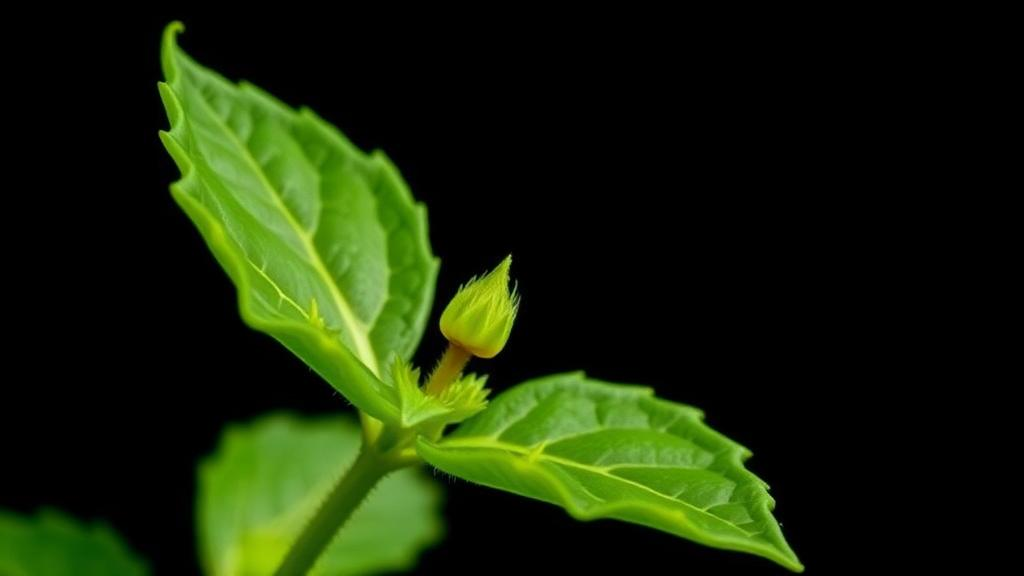
Deep in the pharmacopoeia of traditional Chinese medicine sits Paederia foetida, a climbing vine of the coffee family whose leaves release a pungent, sulfurous odor when crushed, earning it names like skunkvine and stinkvine across Asia. For centuries, healers have brewed its leaves and stems into decoctions to treat inflammation, pain, and digestive complaints. Now a team of researchers working across Belarus, China, and Russia has taken a distinctly modern look at this ancient remedy, and what they found inside the plant may explain some of its therapeutic reputation. In a study published in Plant Biosystems, Yuxuan Peng of the Belarusian State University and Hainan College of Vocation and Technique, together with Vadim Demidchik, Sergei Medvedev, and Galina Smolikova, isolated exosome-like nanoparticles from the plant and mapped the molecular cargo they carry, uncovering a payload of anti-inflammatory terpenoids and more than a thousand microRNAs with predicted targets in human immune pathways.
Exosome-like nanoparticles, often abbreviated ELNs, are tiny membrane-bound vesicles that plants package and release into their extracellular space. Roughly analogous to the exosomes that animal cells use to shuttle proteins, lipids, and genetic material between cells, these plant-derived vesicles have attracted intense interest over the past decade as potential natural drug delivery platforms. Unlike synthetic nanoparticles, they are biocompatible by construction, stable across a range of conditions, and come preloaded with bioactive molecules that the plant itself has synthesized. Previous work has shown that ELNs from ginger, grapefruit, lemon, ginseng, and other edible and medicinal species can modulate inflammation in animal cells, influence the gut microbiome, and even deliver regulatory RNAs across the species barrier. The new study extends this growing catalog to a plant whose medicinal pedigree stretches back generations but whose nanoscale secrets had not previously been cataloged in detail.
The researchers began by isolating the nanoparticles from Paederia foetida tissue and characterizing their physical properties with two complementary techniques. Nanoparticle tracking analysis, which infers particle size and concentration from the Brownian motion of individual vesicles under laser illumination, revealed a population of vesicles ranging from 25 to 200 nanometers in diameter, with the bulk of the distribution centered around 90 nanometers. Transmission electron microscopy then confirmed that these particles possess the characteristic cup-shaped or spherical vesicular morphology expected of membrane-enclosed nanoparticles. That size range is significant from a drug delivery standpoint: particles below roughly 200 nanometers can penetrate biological barriers, accumulate in inflamed tissue through enhanced permeability effects, and are readily taken up by immune cells, all properties that make them attractive candidates for pharmaceutical development.
Having established that the vesicles exist and fall within a therapeutically interesting size window, the team turned to their chemical contents. Using high performance liquid chromatography, they identified five terpenoids packaged within the Paederia foetida-derived nanoparticles: geniposidic acid, andrographolide, asiatic acid, scandoside, and loganin. Each of these compounds has an established anti-inflammatory resume in the pharmacological literature. Geniposidic acid has been shown to alleviate osteoarthritis progression by inhibiting inflammation and chondrocyte ferroptosis. Andrographolide suppresses inflammatory responses in macrophages and in murine models of acute colitis through activation of AMPK signaling. Asiatic acid exhibits anti-inflammatory and antioxidant activities in models of fulminant hepatic failure. Scandoside exerts its effects by suppressing both NF-κB and MAPK signaling in macrophages, while loganin attenuates cartilage inflammation by modulating the TLR4/MyD88/NF-κB axis. Finding all five co-packaged inside a single population of natural nanoparticles suggests that the vesicle membrane may serve as a delivery vehicle that concentrates these compounds and protects them on their journey to target tissues.
The terpenoids, however, were only half of the story. The researchers also performed microRNA sequencing on the isolated nanoparticles, generating a profile of the small regulatory RNAs that the plant packages into its vesicles. The results were striking: a total of 1,170 distinct microRNAs were detected in the Paederia foetida nanoparticles. MicroRNAs are short, roughly 21 to 24 nucleotide RNA molecules that regulate gene expression by binding to complementary sequences in messenger RNAs and triggering their degradation or blocking their translation. When the team ranked the vesicle microRNAs by abundance, the top 50 most plentiful species all belonged to the MIR159 family, a conserved plant microRNA family best known for its roles in plant development and pollen formation.
The prominence of MIR159 is particularly intriguing because of a body of evidence suggesting that plant microRNAs can act across kingdom boundaries. In a landmark 2016 study, researchers reported that miR159 from plants could inhibit the growth of breast cancer cells in mammals by targeting transcripts in the tumor cells. Other work has demonstrated that plants export small RNAs in extracellular vesicles to silence virulence genes in fungal pathogens, and that plant-derived exosomal microRNAs can shape the composition of the gut microbiota in animals that consume them. Cotton plants have been shown to export microRNAs that inhibit fungal virulence genes, and citrus-derived miR169 has been computationally proposed as a candidate antiviral agent against SARS-CoV-2. The enrichment of MIR159 in Paederia foetida vesicles places this plant squarely within the emerging conversation about edible and medicinal plants as sources of cross-kingdom gene regulators.
To probe what these 1,170 microRNAs might actually be doing, the researchers deployed a battery of bioinformatic tools, including the target prediction programs psRobot and miRanda, followed by Gene Ontology and KEGG pathway enrichment analyses. On the plant side of the ledger, the predicted targets were enriched in pathways governing phytohormone signal transduction, MAPK signaling cascades, and terpenoid biosynthesis, suggesting that the vesicle cargo plays roles in the plant’s own stress responses and metabolic regulation. But the more provocative findings emerged when the team ran the same predictions against the human genome. The microRNAs were predicted to target genes involved in adipocytokine signaling, infection-related immunity, and cancer-associated pathways. Among the key predicted human targets were NFKB1, the gene encoding a subunit of the central inflammatory transcription factor NF-κB, and MAP2K6, a kinase in the p38 MAPK cascade that participates in inflammation and apoptosis signaling.
Those two targets deserve particular attention. NF-κB sits at the hub of the mammalian inflammatory response, controlling the expression of cytokines, chemokines, and survival factors, and its dysregulation is implicated in virtually every chronic inflammatory disease as well as many cancers. MAP2K6, meanwhile, relays stress signals into the cell interior and influences decisions about cell death and inflammatory activation. If plant microRNAs delivered by these nanoparticles can meaningfully dampen the activity of such genes in animal tissues, the therapeutic implications would be considerable, ranging from treatment of inflammatory bowel disease to adjunctive cancer therapy. The authors of the new study are careful to frame these findings as predictions, since computational target prediction is a screening step rather than proof of functional regulation, but the convergence between the predicted targets and the known anti-inflammatory chemistry of the packaged terpenoids paints a coherent picture of a vesicle system oriented toward inflammation control.
The work also fits into a broader translational push surrounding plant-derived nanovesicles. Recent reviews have cataloged their potential as green delivery platforms, functional food ingredients, and therapeutic agents for conditions ranging from colitis to cardiovascular disease, and studies of yam-derived nanoparticles have reported protective effects against acute liver injury. Medicinal plants are of special interest because their vesicles combine a drug delivery function with intrinsic pharmacological activity, a dual-action profile that synthetic carriers struggle to replicate. Paederia foetida itself has a documented phytochemical and pharmacological profile, and earlier work by the same lead author compared the terpenoid content and anti-inflammatory effects of related Rubiaceae species on macrophage cells, providing a foundation for the present nanoscale analysis.
Considerable hurdles remain before any of this reaches the clinic. The cross-kingdom activity of dietary plant microRNAs in mammals remains an actively debated question, with questions of bioavailability, dose, and stability in the digestive tract still being worked out. Functional validation of the predicted targets, uptake studies in animal models, and safety and standardization work all lie ahead. Nevertheless, the study provides a detailed molecular inventory of a previously unexplored medicinal plant’s nanoparticle cargo, and it demonstrates a workflow, from physical characterization through chromatography and small RNA sequencing to cross-species bioinformatics, that can be applied to the vast pharmacopoeia of traditional medicines still awaiting nanoscale scrutiny. For a plant long valued in folk medicine for cooling inflammation, the discovery that its tiniest emissaries carry both anti-inflammatory chemistry and microRNAs aimed at inflammatory genes offers a satisfying, if preliminary, molecular vindication of traditional practice.
Subject of Research: Isolation and molecular characterization of exosome-like nanoparticles from the medicinal plant Paederia foetida
Article Title: Isolation and characterization of exosome-like nanoparticles from Paederia foetida (Rubiaceae) and analysis of their miRNA and terpenoid composition
Article References: Peng, Y., Demidchik, V., Medvedev, S., & Smolikova, G. (2026). Isolation and characterization of exosome-like nanoparticles from Paederia foetida (Rubiaceae) and analysis of their miRNA and terpenoid composition. Plant Biosystems, 160(5), Article 280. https://doi.org/10.1007/s44473-026-00271-w
Image Credits: AI Generated
DOI: 10.1007/s44473-026-00271-w
Keywords: exosome-like nanoparticles, Paederia foetida, microRNA, terpenoids, anti-inflammatory, cross-kingdom regulation, MIR159, NF-κB, drug delivery, medicinal plants, nanoparticle tracking analysis, Plant Biosystems
News Source: Alan Morgan. (October 7, 2026). Stinky Leaf Plant Yields Tiny Nanoparticles Packed With Anti-Inflammatory Cargo. Scienmag.