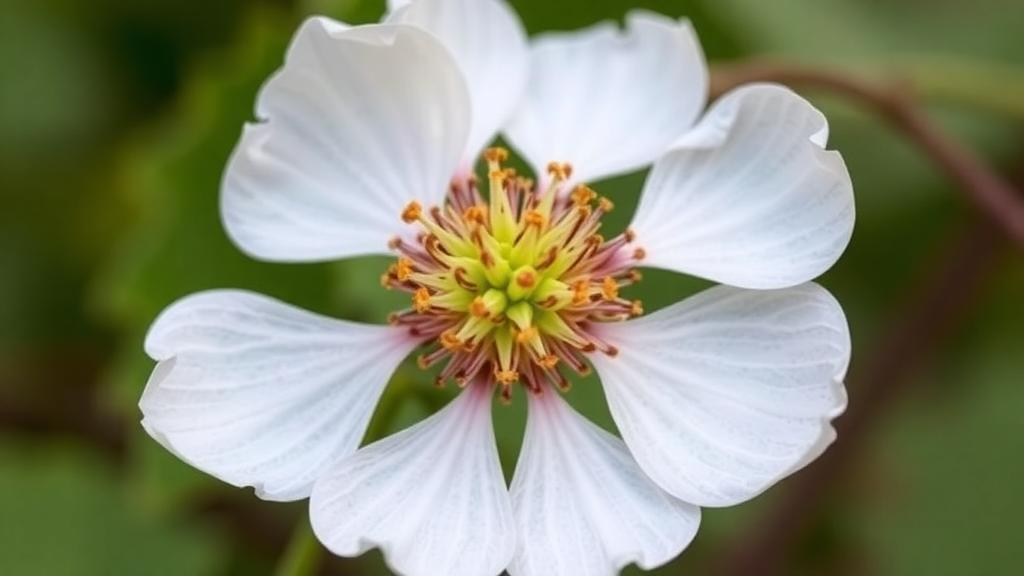
The giant milkweed, Calotropis gigantea, has long been a fixture of traditional medicine across tropical Asia and Africa, its white latex sap applied to everything from joint swellings to skin disorders. Now a team of researchers at Lyallpur Khalsa College in Jalandhar, India, has combined laboratory chemistry with computational modeling to ask a sharper question: which molecules in that milky sap might actually calm inflammation, and how tightly do they grip the two enzymes that drive it? Their findings, published in Discover Chemistry, suggest that this roadside shrub is a richer chemical arsenal than its weedy reputation implies.
The researchers collected latex from wild-growing plants near their institution by snapping stems and gathering the dripping sap drop by drop. They then split the latex into five solvent extracts using acetone, methanol, ethanol, isopropyl alcohol and isoamyl alcohol, each mixed with water in an 8:2 ratio. The choice of solvent matters enormously, because polarity determines which phytochemicals dissolve out of the raw sap. After vortexing, overnight incubation and centrifugation at 10,000 rpm, the team had five distinct fractions, labeled CAE, CME, CEE, CIPE and CIAE, ready for chemical fingerprinting and biological testing.
Fourier-transform infrared spectroscopy and fluorescence spectroscopy provided the first look at what each extract contained. The FT-IR spectra revealed a broad band between 3400 and 3200 cm−1 in every extract, a signature of hydroxyl groups that pointed to the presence of phenolic compounds. All extracts except the acetone fraction showed a distinct band near 2800 to 2900 cm−1 from alkane C–H stretching, and the complex fingerprint region below 1500 cm−1 differed across solvents. Fluorescence spectra showed a distinct emission peak near 500 nm in every extract, consistent with polyphenolic compounds such as anthocyanins, phenolics, alkaloids and aromatic benzenoids, confirming that the latex is loaded with fluorescent secondary metabolites.
Quantitative assays then measured exactly how much of each phytochemical class each solvent had pulled out. The ethanol extract, CEE, was the clear winner, delivering the highest phenolic content at 0.59 mg gallic acid equivalents per milliliter, the highest flavonoid content at 0.18 mg rutin equivalents per milliliter, and the highest tannin content at 3.8 mg tannic acid equivalents per milliliter. The pattern followed solvent polarity: the most polar solvent extracted the most polar phytochemicals most efficiently, while the less polar acetone pulled out fewer. This solvent-dependence echoes earlier findings in plants such as Limonium delicatulum and Azanza garckeana, where alcohol-based extraction consistently outperformed less polar alternatives for polyphenol recovery.
Gas chromatography with a flame ionization detector then catalogued the volatile bioactive compounds in each fraction. The ethanol extract yielded the most peaks, with 29 phytocompounds detected, followed by the isoamyl alcohol extract with 23. In the acetone extract, which contained 14 peaks, the dominant compound was phytol at 43.61 percent abundance, followed by ethion at 18.67 percent and diisobutyl phthalate at 11.68 percent. Benzhydrazide emerged as a prominent compound across fractions, ranging from 5.31 percent in methanol to 67.5 percent in isoamyl alcohol, while phytol reached 64 percent in the isopropyl fraction. Several of these molecules carry documented pharmacological credentials: phytol and its derivatives have been linked to antioxidant, neuroprotective, antibacterial, anticancer and anti-inflammatory effects, while 2-phenylindole derivatives show antiviral, analgesic and anti-parasitic activities.
The antioxidant performance of the extracts was striking. Using three complementary assays, the team measured IC50 values for nitric oxide scavenging, hydroxyl radical scavenging and iron chelating activity. The ethanol extract again led the pack, with IC50 values of 14 µg/ml for nitric oxide scavenging, 15 µg/ml for hydroxyl radical scavenging and 117 µg/ml for iron chelation, all far below the corresponding values for the ascorbic acid standard, which came in at 115.23, 523.22 and 456.21 µg/ml respectively. Correlation analysis reinforced the link between chemistry and function: the R² value between total flavonoid content and nitric oxide scavenging in the ethanol extract was 0.94, while phenolic content and iron chelation correlated at 0.95, and tannin content tracked hydroxyl radical scavenging at 0.94.
Anti-inflammatory activity was assessed through a protein denaturation assay, a widely used in vitro proxy in which bovine serum albumin is heat-denatured and the protective effect of test compounds is measured by tryptophan fluorescence. Every extract showed substantial protection, but the acetone extract stood out. Adding CAE to the BSA solution dropped fluorescence intensity from 3.6 × 10⁴ INT units to 0.1 × 10⁴ INT units, and the extracts outperformed the synthetic anti-inflammatory drugs paracetamol, dexona and combiflame used as positive controls. The authors attribute this protection to complex mixtures of polyphenolics that may act cooperatively to stabilize protein structure against thermal denaturation.
The computational phase of the study focused on the three most abundant compounds in the acetone extract: phytol, ethion and diisobutyl phthalate. Using the CB-Dock2 platform, the team docked these ligands against the crystal structures of inducible nitric oxide synthase (PDB 3E7G, 2.20 Å resolution) and cyclooxygenase-2 (PDB 1CX2, 3.00 Å resolution), the two enzymes most closely associated with inflammatory signaling. Redocking a co-crystallized inhibitor into HSP90 produced an RMSD of 0.102, validating the docking protocol. The results were remarkable: diisobutyl phthalate scored −8.3 kcal/mol against iNOS, matching the −8.3 score of the standard drug combiflame, and scored −7.5 against COX-2, close to combiflame’s −7.8. Phytol followed with −7.1 against iNOS and −6.7 against COX-2, while ethion scored −5.1 and −5.6 respectively.
The interaction analysis revealed why these plant molecules bind so well. The most stable diisobutyl phthalate–iNOS complex was held together by two hydrogen bonds, three alkyl interactions, one pi-alkyl interaction and seven van der Waals contacts involving residues including Pro350, Ala351, Asn370, Leu209, Ile244, Tyr489 and Met355. Against COX-2, the same compound formed a pi-sigma interaction with Ala527, alkyl contacts with Val523 and Leu352, and five pi-alkyl interactions with residues including His90, Phe518, Trp387 and Val349. Crucially, the phytocompound occupied the same binding pose as the synthetic drug and targeted conserved residues in both active sites, with ligands docking into the oxygenase domain of iNOS and the C-terminal catalytic domain of COX-2. This dual-target engagement suggests a plausible molecular mechanism for the anti-inflammatory effects observed in the wet-lab assays.
Drug-likeness and ADMET predictions added a final layer of cautious optimism. All three compounds satisfied Lipinski’s Rule of Five, with consensus log P values between 3.56 and 6.25 indicating good oral absorption potential and predicted bioavailability scores around 0.55. Toxicity screening with ProToxII placed phytol and diisobutyl phthalate in toxicity classes 5 and 6, indicating low toxicity, and neither compound showed organ-level toxicity, though diisobutyl phthalate was flagged as active against carcinogenicity, a caveat the authors acknowledge. PASS analysis predicted anti-inflammatory activity for all three ligands with probability-of-activity scores above 0.5. The team is careful to note that these findings are preliminary: the docking scores and in vitro assays must now be validated through cell-based experiments and in vivo studies before any of these milkweed molecules can be considered genuine drug leads. Still, the convergence of chemical profiling, enzyme docking and pharmacokinetic screening paints the humble giant milkweed as a promising starting point for developing safer, plant-derived alternatives to the NSAIDs that currently dominate anti-inflammatory therapy, at the cost of gastrointestinal and cardiovascular side effects.
Subject of Research: Phytochemical profiling and molecular docking of Calotropis gigantea latex compounds against inflammatory enzymes iNOS and COX-2
Article Title: Chemical profiling and in silico analysis of phytocompounds extracted from milky-latex sap from giant milkweed Calotropis gigantea (Linn.) targeting nitric oxide synthase (iNOS) and cyclooxygenase-2 (COX-2) proteins
Article References: Sharma, A. D., Kaur, I., & Chauhan, A. (2026). Chemical profiling and in silico analysis of phytocompounds extracted from milky-latex sap from giant milkweed Calotropis gigantea (Linn.) targeting nitric oxide synthase (iNOS) and cyclooxygenase-2 (COX-2) proteins. Discover Chemistry, 3(1), Article 497. https://doi.org/10.1007/s44371-026-00951-8
Image Credits: AI Generated
DOI: 10.1007/s44371-026-00951-8
Keywords: Calotropis gigantea, latex, phytochemicals, anti-inflammatory, iNOS, COX-2, molecular docking, GC-FID, antioxidant, phytol, diisobutyl phthalate, ADMET
News Source: Bethany Barker. (October 7, 2026). Milkweed Sap Yields Anti-Inflammatory Molecules That Dock onto Key Enzymes. Scienmag.