A sticky, dark byproduct that sugar refineries have long treated as a disposal problem may hold the key to making microalgae farming dramatically cheaper, according to a new study published in BMC Plant Biology. Researchers from Mansoura University in Egypt and the Agricultural Research Center in Giza showed that hydrolyzed molasses—leftover syrup from sugarcane and sugar beet processing—can replace expensive purified sugars in the growth medium of the freshwater microalga Chlorella vulgaris MU-22, multiplying its cell density several times over while enriching the biomass with proteins, lipids, pigments, and antioxidant compounds. The team then demonstrated that extracts from the molasses-grown algae can act as a biofertilizer and biocontrol agent for bell pepper plants, pointing toward a closed-loop system in which an industrial waste stream becomes the raw material for both affordable algal cultivation and greener agriculture.
The central obstacle the researchers set out to tackle is one of the most persistent in algal biotechnology: cost. Microalgae such as Chlorella vulgaris are prized for their rapid growth, their ability to accumulate valuable biomolecules, and their versatility across applications ranging from aquaculture feed to biofuels and biostimulants. Yet growing them at industrial scale remains expensive, largely because standard culture media rely on costly carbon sources and nutrients. Under purely photosynthetic, or autotrophic, conditions, algae convert light and carbon dioxide into biomass, but yields per volume stay modest. Supplying an organic carbon source lets the cells also feed on dissolved sugars—a mode of growth called mixotrophy—that typically accelerates growth far beyond what photosynthesis alone can deliver. The catch is that purified glucose, the usual choice, is far too expensive to be economical at scale.
Molasses offers an appealing alternative. It is produced in enormous quantities by the sugar industry, is rich in fermentable sugars, and sells at a fraction of the price of reagent-grade glucose. In its raw form, however, it also carries impurities and complex sugar polymers that algae cannot easily use. The Egyptian team therefore hydrolyzed the molasses, breaking down its more complex carbohydrates into simpler, bioavailable sugars before adding it to Bold Basal Medium, a standard algal growth medium. They then grew Chlorella vulgaris MU-22—a locally isolated freshwater strain—under mixotrophic conditions and measured how different concentrations of the molasses-derived glucose affected growth, photosynthetic performance, and biochemical composition.
The results were striking. In the unsupplemented control cultures, maximum cell density reached 274 × 10⁴ cells per milliliter. When the medium was supplemented to an effective concentration of 1.0 gram of glucose per liter from the hydrolyzed molasses, cell density soared to 929 × 10⁴ cells per milliliter—more than a threefold increase. Optical density, a proxy for biomass concentration, climbed to 2.459 at 2.0 grams of glucose per liter. Crucially, the boost in growth did not come at the expense of the cells’ photosynthetic machinery. The maximum quantum efficiency of photosystem II, measured as the Fv/Fm ratio, remained between 0.770 and 0.785 across all treatments, values characteristic of healthy, unstressed algal cultures. In other words, the algae were simultaneously feasting on sugars and photosynthesizing at full capacity.
Biochemical analysis revealed that the molasses-grown algae were not just more abundant but nutritionally richer. Compared with autotrophically grown controls, the mixotrophic cultures showed elevated levels of proteins, lipids, and carbohydrates, along with higher concentrations of chlorophylls, carotenoids, total flavonoids, and total phenolic compounds. This matters because the commercial value of algal biomass depends heavily on its composition. Protein-rich biomass is attractive for feed and food applications, lipids feed into biofuel and nutraceutical markets, and pigments and phenolics underpin the antioxidant and antimicrobial activities that make algal extracts useful in agriculture and health. The finding suggests that a cheap carbon source can enhance both the quantity and the quality of the biomass produced.
With the enriched biomass in hand, the researchers turned to the second half of the study: what could these algae actually do? They prepared bioactive extracts from both the autotrophic control culture, designated CAT, and the mixotrophic culture grown with 1.5 grams of glucose per liter, designated CMX, and subjected them to a battery of bioassays. The extracts were tested for antibacterial activity against bacterial strains, for antioxidant capacity using the DPPH radical-scavenging assay, for insecticidal potency against test insects with lethal concentration values calculated at the LC50 and LC90 thresholds, and for antigenotoxic effects using single-cell gel electrophoresis, a technique that detects DNA damage in individual cells. Cytotoxicity was also assessed to evaluate safety and potential bioactivity against cell lines. Gas chromatography–mass spectrometry was used to profile the chemical constituents of the extracts, identifying the small molecules responsible for the observed activities.
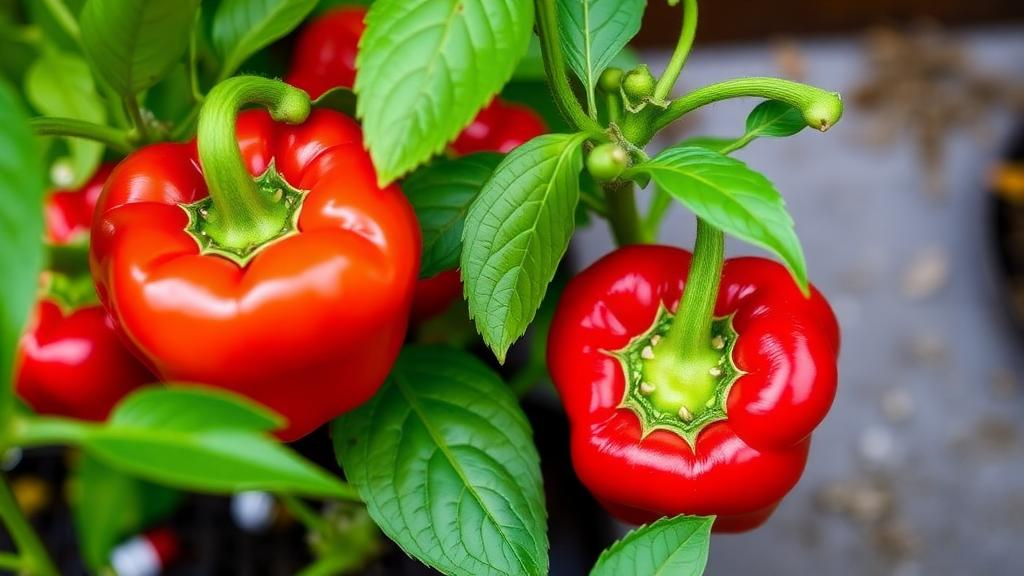
The agricultural centerpiece of the work involved bell pepper, Capsicum annuum L., one of the world’s most economically important vegetable crops. In greenhouse experiments arranged in a randomized block design, pepper plants were treated in several ways: some were irrigated and sprayed with distilled water as controls, some received the algal extracts as a biofertilizer, and others received conventional chemical fertilizer for comparison. The team tracked plant growth, fruit yield, and fruit quality across the growing cycle, measuring parameters that included fruit protein, carbohydrate, and ascorbic acid content, fruit water content, and the levels of chlorophylls, carotenoids, flavonoids, and phenolics in the fruits, along with the fruits’ own antioxidant activity.
The treatments with algal extracts improved plant growth and fruit quality relative to the water-treated controls, supporting the idea that Chlorella vulgaris biomass can function as an effective biofertilizer. Microalgal biostimulants are thought to benefit plants through multiple mechanisms: they supply bioavailable nutrients and growth-promoting compounds, they can enhance soil microbial activity, and their antioxidant and antimicrobial constituents may help plants cope with stress and suppress pathogens. The comparison with chemical fertilizer is particularly significant for the broader argument of the paper. If algal extracts derived from waste-grown biomass can approach or complement the performance of synthetic fertilizers, they offer a route to reducing the energy intensity and environmental footprint of vegetable production, which currently depends heavily on industrially produced nitrogen and phosphate fertilizers.
The study’s framing as a valorization exercise is what gives it its economic punch. Valorization, in the language of biotechnology, means converting low-value or negative-value waste streams into products with market value. Sugar mills generate molasses in vast quantities, and while some of it is fermented into ethanol or used in animal feed, large volumes remain a disposal liability. By hydrolyzing this byproduct and feeding it to algae, the researchers effectively created a two-step value chain: waste sugar becomes algal biomass, and that biomass becomes a portfolio of agricultural products—biofertilizers, biopesticides, and antioxidant extracts. Each step uses a cheap input to create a more valuable output, which is exactly the kind of arithmetic that determines whether laboratory discoveries ever reach the field.
There are, of course, caveats and hurdles between these greenhouse results and commercial reality. The experiments were conducted at laboratory and greenhouse scale with a single algal strain and a single crop; scaling up molasses-based mixotrophic cultivation will require engineering solutions for contamination control, since sugar-rich media are also a feast for bacteria and fungi, as well as lifecycle assessments confirming the net environmental benefit. The insecticidal and antimicrobial results will need validation against real agricultural pest and pathogen complexes, and the dose, formulation, and application schedule of algal biofertilizers must be optimized for different soils and climates. Still, the study offers a compelling proof of concept: a locally isolated microalga, fed on one of the sugar industry’s cheapest byproducts, grew faster, accumulated more valuable biomolecules, and yielded extracts that nourished pepper plants and showed biocontrol potential. As agriculture searches for alternatives to synthetic inputs and biotechnology searches for cheaper feedstocks, the humble syrup left over from sugar refining may prove to be an unlikely bridge between the two.
Subject of Research: Use of hydrolyzed molasses for cost-effective mixotrophic cultivation of Chlorella vulgaris MU-22 and its biofertilizer potential on bell pepper
Article Title: Valorization of sugar industry byproducts for cost-effective Chlorella vulgaris MU-22 production: assessment of bioactive extracts and biofertilizer potential on bell pepper (Capsicum annuum)
Article References: Atia, A. M., Heikal, Y. M., El-Rokh, A. R., & Eltanahy, E. (2026). Valorization of sugar industry byproducts for cost-effective Chlorella vulgaris MU-22 production: assessment of bioactive extracts and biofertilizer potential on bell pepper (Capsicum annuum). BMC Plant Biology. https://doi.org/10.1186/s12870-026-09964-y
Image Credits: AI Generated
DOI: 10.1186/s12870-026-09964-y
Keywords: Chlorella vulgaris, molasses, mixotrophic cultivation, biofertilizer, bell pepper, Capsicum annuum, sugar industry byproducts, antioxidant activity, antibacterial activity, biocontrol, microalgae, BMC Plant Biology
News Source: Alan Morgan. (October 7, 2026). Sugar Industry Waste Feeds Algae That Boost Bell Pepper Growth, Study Finds. Scienmag.