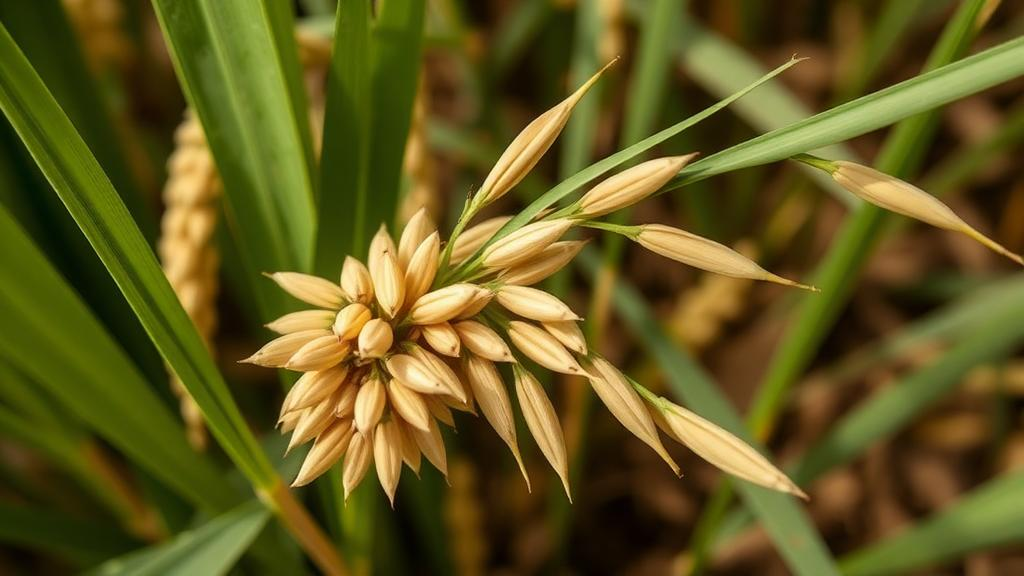
In a finding that reads like science fiction but comes straight from the paddy field, researchers have shown that simply squeezing rice seeds under intense hydrostatic pressure can leave molecular fingerprints that persist for at least nine generations of self-pollination. The study, published in Plant Cell Reports, tracked a rice lineage derived from seeds blasted with 100 megapascals of pressure for just fifteen minutes, and found that the descendants still carried altered traits, mobilized transposable elements, shifted DNA methylation patterns, and rewired gene expression long after the original stress had passed. The work offers one of the most detailed multi-layer portraits yet of how an unusual physical stimulus can be associated with lasting heritable variation in a crop plant.
The story began years earlier, when the research team, then working on the rice transposable element mPing, discovered that hydrostatic pressurization could mobilize mPing and its autonomous partner Pong in living plants. From that same experimental system, a single lineage was isolated and propagated by continuous self-pollination. By the ninth generation, designated HPM, the plants were unmistakably different from their wild-type ancestor, the japonica cultivar JL307. They were shorter, produced fewer tillers, and set seed far less reliably, a suite of agronomic changes that had remained stable through every selfed generation in between.
The phenotypic measurements were striking in their magnitude. Average plant height in the HPM lineage was 90.93 centimeters compared with 97.91 centimeters in the wild type, a difference the authors report with a probability value of 1.90 times ten to the minus seventeenth. Tiller number dropped from 29.79 per plant to 20.27, and the seed-setting rate, the proportion of spikelets that develop into filled grains, fell from 97.05 percent to 61.63 percent on average. Notably, the seed-setting distribution in HPM was bimodal: 44 percent of the measured plants showed severe reduction below 50 percent, while the remainder were largely comparable to the wild type, hinting at heterogeneity within the lineage that may itself reflect the mosaic nature of transposon activity.
To understand what was happening inside the genome, the team deployed a battery of molecular techniques. Transposon display, a polymerase chain reaction based method that maps insertion sites of a specific element, targeted mPing across roughly 1100 amplified fragments in four independent ninth-generation plants. Both novel bands and missing bands appeared in every HPM plant relative to the wild type, with polymorphism rates between 0.82 and 0.91 percent. This confirmed that the miniature inverted-repeat transposable element, famously responsive to environmental and genomic perturbation in rice, remained mobile generations after the pressure treatment, its excisions and reinsertions still churning through the genome.
Whole-genome resequencing then widened the lens beyond mPing. Using a paired-end mapping strategy on an Illumina platform, with sequencing depths of roughly 13.2-fold for the wild type and 21.7-fold for HPM, the researchers identified 255 candidate transposable element insertion sites specific to the pressure-derived lineage. The insertions were far from randomly distributed among element families. The LTR retrotransposons Dasheng and Hopi dominated, contributing 73 and 44 candidate insertions respectively, followed by Osr29 with 17 and Echidne with 16. This pattern makes biological sense: LTR retrotransposons are the most abundant class in the rice genome and propagate through a copy-and-paste mechanism, so even a modest number of activation events can seed many new insertions and amplify genomic diversity without requiring excision.
The epigenetic layer told a complementary story. Methylation-sensitive amplified polymorphism analysis, which uses the restriction enzymes HpaII and MspI to probe cytosine methylation at CCGG sites, generated 1189 reproducible fragments per sample. Across all four HPM plants, between 4.63 and 5.72 percent of scored fragments showed methylation polymorphisms, and hypomethylation consistently outnumbered hypermethylation in both CG and CHG sequence contexts. In other words, the pressure-derived lineage had undergone a general loosening of DNA methylation, the very epigenetic mark that normally keeps transposable elements locked in a silent state. The concordance between reduced methylation and ongoing transposon activity is exactly what models of stress-induced genome destabilization would predict.
To connect methylation to gene function, the team selected four genes that the microarray analysis showed to be strongly upregulated in HPM and sequenced bisulfite-converted promoter DNA at each locus. Three of the four promoters showed statistically supported methylation losses at individual cytosine positions. The most dramatic case was LOC_Os02g48770, whose promoter methylation collapsed from 23.01 percent in the wild type to 2.81 percent in HPM, accompanied by a 9.71-fold increase in transcript abundance. LOC_Os06g48870 dropped from 38.85 to 23.48 percent methylation alongside a 23.12-fold expression increase, and LOC_Os03g08320 fell from 65.98 to 54.64 percent with an 11.51-fold increase. The fourth gene showed only a small, statistically unsupported change. Although four loci cannot settle a genome-wide question, the pattern is consistent with the classical inverse relationship between promoter methylation and transcriptional activity.
The transcriptomic survey itself was sweeping. Of 1079 candidate differentially expressed probes identified on the Affymetrix Rice Genome Array with a fold change of at least two, 305 remained significant after Benjamini-Hochberg correction at a false discovery rate below 0.05. Among the affected genes, transcription factor families prominent in plant stress signaling stood out: twelve WRKY genes, nine ERF/AP2 genes, eight MYB genes, and five VQ-associated genes showed altered expression, alongside members of the NAC, bHLH, Dof, and homeobox families. Stress-responsive genes were also dramatically induced, including WRKY71 with a 25.98-fold increase and the glutathione S-transferase gene GST42 with a 79.34-fold increase, together with chitinases and genes involved in reactive oxygen species detoxification and cell wall processes. Quantitative RT-PCR on twelve selected genes confirmed the direction of the microarray results.
The authors are careful about what these correlations do and do not prove. Because the analyzed material descends from a single lineage maintained by selfing, contributions from spontaneous mutation or cumulative selection during propagation cannot be formally excluded. The study is descriptive: transposon mobilization, methylation change, and transcriptional reprogramming co-occur, but causal chains linking the pressure treatment to each molecular alteration, or linking any single insertion to a specific trait, remain unestablished. Individual insertion events were not validated by locus-specific polymerase chain reaction, zygosity was not determined, the phenotypic evaluation covered a single growing season, and segregation analysis through reciprocal crosses, which would be needed to demonstrate Mendelian inheritance, was not performed. The persistence of the phenotype across nine generations, while remarkable, is not by itself proof of classical heritability.
Even with those caveats, the implications are considerable. Hydrostatic pressure is an exotic stimulus in plant biology, and this study is, to the authors’ knowledge, the first to document such multi-level molecular variation persisting in a selfed lineage derived from pressure-treated seeds. The findings echo Barbara McClintock’s long-standing proposal that genomes respond to challenge by reorganizing themselves, and they align with modern evidence that drought, salinity, temperature stress, and tissue culture can all awaken dormant transposable elements and reshape methylomes. Practically, the work suggests that hydrostatic pressure could complement conventional mutagens in rice breeding, either as a physical mutagen for generating novel germplasm or as a platform for transposon-based gene tagging. As genome-wide methylome profiling and functional validation of candidate genes mature, the pressure-squeezed rice of Jilin may prove to be more than a curiosity: it could become a standard system for dissecting how environmental shocks become written into the heritable fabric of a crop genome.
Subject of Research: Transgenerational molecular and phenotypic variation induced by hydrostatic pressure in rice
Article Title: Hydrostatic pressure-induced heritable variation in rice is associated with transposon mobilization, DNA methylation changes, and transcriptional reprogramming
Article References: Hu, L., Wang, Q., Li, Y., Jiang, W., Zhong, Y., Huang, S., Feng, Z., Xing, X., Guo, B., Peng, J., Du, X., & Ma, Z. (2026). Hydrostatic pressure-induced heritable variation in rice is associated with transposon mobilization, DNA methylation changes, and transcriptional reprogramming. Plant Cell Reports, 45(11), Article 322. https://doi.org/10.1007/s00299-026-04009-y
Image Credits: AI Generated
DOI: 10.1007/s00299-026-04009-y
Keywords: rice, hydrostatic pressure, transposable elements, mPing, DNA methylation, epigenetics, transcriptional reprogramming, LTR retrotransposons, plant breeding, stress response, heritable variation, WRKY transcription factors
News Source: Alan Morgan. (October 6, 2026). Crushing Rice Seeds Under Pressure Leaves Genetic Scars That Last Nine Generations. Scienmag.