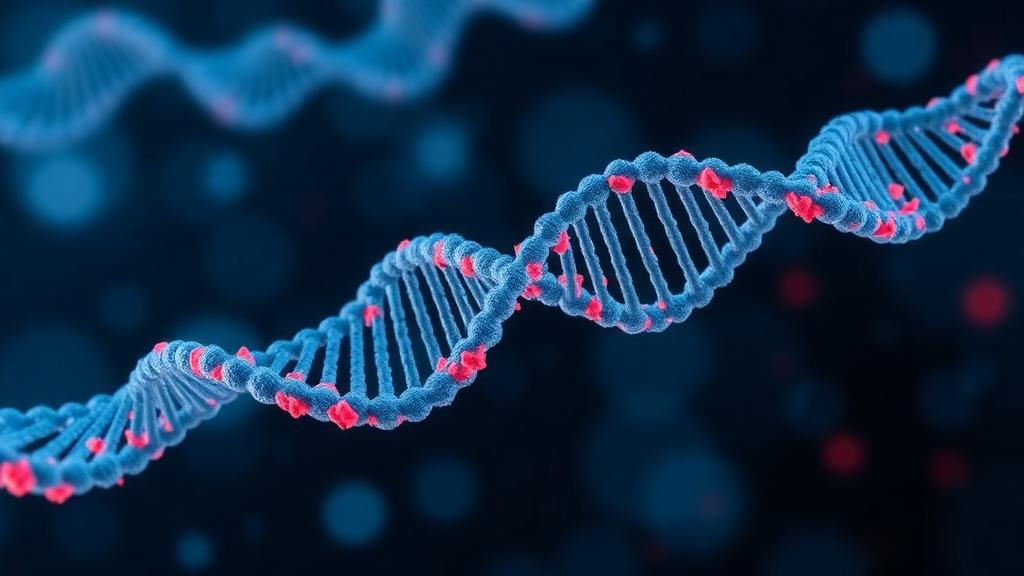
Every time a cell divides, every time it is bathed in ultraviolet light, and every time its metabolism leaks reactive by-products into the nucleus, its DNA sustains damage. Left unrepaired, that damage mutates genes, destabilises chromosomes and, over time, drives both cancer and the progressive decline we recognise as ageing. Cells therefore maintain an elaborate surveillance network known as the DNA damage response, or DDR, a coordinated system of sensors that detect broken strands, relay proteins that amplify the alarm, and enzymatic repair machineries that restore the sequence. Now a study published in BMC Biology by Oviya Devendran, Umanshi Rautela, Gautam Chandra Sarkar and colleagues in Arnab Mukhopadhyay’s Molecular Ageing Laboratory at the National Institute of Immunology in New Delhi adds a surprising new layer to this network, showing that a transcription factor famous for extending lifespan also acts as a guardian of the genome itself.
The factor in question is DAF-16, the nematode worm Caenorhabditis elegans equivalent of the mammalian FOXO family of transcription factors. DAF-16 sits at the bottom of the insulin/IGF signalling pathway, a nutrient-sensing cascade whose reduction reliably extends lifespan across the animal kingdom. When insulin-like signals are low, DAF-16 accumulates in the nucleus and switches on batteries of genes involved in stress resistance, detoxification and metabolic remodelling. Because DNA repair is an energetically expensive undertaking, biologists have long suspected that it must be coordinated with the metabolic state of the cell, and the insulin pathway was an obvious candidate coordinator. What remained unclear was whether DAF-16 directly participates in maintaining genomic integrity or merely influences it indirectly through general stress physiology.
To answer that question, the team subjected worms with altered insulin signalling to genotoxic stress, including ionising radiation, and then measured how well the animals repaired the resulting lesions. The results were striking. Under conditions of reduced insulin/IGF signalling, when DAF-16 is active, the expression of DNA damage response repair genes was maintained at a higher level, and damaged DNA was repaired more promptly. Using chromatin immunoprecipitation-style approaches to examine promoter occupancy, the researchers found that activated DAF-16 binds directly to the regulatory regions of DDR genes, demonstrating that the transcription factor is not a passive bystander but an active, sequence-specific regulator of the repair programme.
This direct promoter binding is the mechanistic heart of the study. It means that when insulin signalling drops, DAF-16 enters the nucleus and physically parks itself on the genes encoding repair proteins, holding them in a state of readiness. Should a double-strand break or other lesion occur, the repair machinery is already being produced at elevated levels, allowing the cell to respond without the delay that would otherwise be required to ramp up gene expression from scratch. In effect, low insulin signalling pre-arms the genome’s emergency response, a configuration that makes evolutionary sense for an organism facing starvation or other stresses that also increase the risk of DNA damage.
One of the study’s most important findings concerns where in the animal DAF-16 operates. C. elegans contains two broadly distinct cellular compartments: the mitotic and meiotic germ cells that produce sperm and eggs, and the post-mitotic somatic cells that make up the body. The researchers determined that DAF-16 functions in both. In the soma, its activity supports the integrity of cells that can no longer divide and must simply endure damage for the remainder of the animal’s life. In the germline, its role is arguably even more critical, because the genome passed to the next generation must be protected from mutations that would become permanent heritable changes. The finding that a single nutrient-responsive transcription factor safeguards both compartments suggests that the insulin pathway coordinates genome maintenance across the entire organism rather than in a tissue-specific fashion.
The study then drilled down into the molecular fine print of DAF-16 itself. Like its mammalian FOXO cousins, DAF-16 exists as several protein isoforms generated by alternative splicing, each with slightly different sequence features and, presumably, different regulatory targets. When the team tested these isoforms individually, they discovered a clear division of labour: the DAF-16(d/f) isoform, but not the DAF-16(a) isoform, is essential for maintaining germline genome integrity. This isoform specificity is more than a technical curiosity. It implies that the different FOXO variants carved out by evolution are not interchangeable generalists but specialised tools, and it offers a potential explanation for why mammals maintain multiple FOXO genes with overlapping yet distinct functions in stress responses, metabolism and tumour suppression.
How, mechanically, does DAF-16 enhance the DNA damage response? The researchers found that the bulk of the enhancement flows through the canonical DDR components themselves, the conserved sensor and effector proteins such as the ATM-like kinases and the downstream repair pathways including homologous recombination and non-homologous end joining that mend double-strand breaks. By keeping the expression of these core components elevated, DAF-16 strengthens the primary repair machinery. Interestingly, however, the analysis revealed a secondary contribution from apoptosis, the programmed suicide of severely damaged cells. In the germline, cells whose genomes are too badly damaged to repair are normally eliminated as a failsafe, and DAF-16 activation appears to support this clearance pathway as well, albeit to a lesser extent than direct repair. Genome maintenance, in other words, is achieved through a two-pronged strategy: fix what can be fixed, and remove what cannot.
The evolutionary implications of the work are considerable. FOXO transcription factors are among the most conserved regulators of longevity known, operating in organisms from fruit flies to humans, and mammalian FOXO proteins have previously been implicated in DNA repair and tumour suppression. By establishing a direct, mechanistic role for DAF-16 in the DDR of C. elegans, the New Delhi team demonstrates that this function is conserved across the evolutionary divide separating worms and mammals. The study thus closes a conceptual loop in the biology of ageing: the same nutrient-sensing pathway that determines how long an animal lives also determines how faithfully its cells preserve the genetic instructions that make life possible in the first place. Longevity and genome stability, it turns out, are two faces of the same coin.
There are also practical horizons. Because reduced insulin/IGF signalling is a proven longevity intervention, and because DAF-16/FOXO sits at its downstream end, the new findings suggest that some of the health benefits of dampening insulin signalling may derive not from metabolic changes alone but from a strengthened capacity to repair DNA. In humans, where genomic instability underlies cancers, premature ageing syndromes and age-related tissue decline, understanding how FOXO activity could be tuned to bolster the DDR without unwanted side effects becomes an attractive pharmacological goal. The worm, with its transparent body, rapid life cycle and precisely mapped cell lineages, remains the ideal proving ground for such ideas.
For now, the study stands as a reminder that the molecules biologists thought they had categorised often harbour unexpected day jobs. DAF-16 earned its fame as a lifespan determinant, a switch that, when flipped by scarcity, extends life in the nematode. The new work shows that the same switch also keeps the genome intact under assault from radiation and other genotoxic insults, in both the cells of the body and the cells destined to become the next generation. In linking the insulin pathway, transcriptional regulation and the DNA damage response into a single coherent circuit, Devendran, Rautela, Sarkar, Mukhopadhyay and their colleagues have provided mechanistic insight into how an animal balances the energy demands of repair with the imperative of survival, and how evolution has wired the perception of nutrients directly into the defence of the genetic code itself.
Subject of Research: Role of DAF-16/FOXO in maintaining genome integrity through the DNA damage response in C. elegans
Article Title: DAF-16/FOXO maintains genome integrity following genotoxic stress
Article References: Devendran, O., Rautela, U., Sarkar, G. C., Ranjisha, K., Mittal, R., Bala, R., Goyala, A., & Mukhopadhyay, A. (2026). DAF-16/FOXO maintains genome integrity following genotoxic stress. BMC Biology. https://doi.org/10.1186/s12915-026-02755-9
Image Credits: AI Generated
DOI: 10.1186/s12915-026-02755-9
Keywords: DAF-16, FOXO, DNA damage response, genome integrity, C. elegans, insulin/IGF signalling, DNA repair, germline, ageing, genotoxic stress, BMC Biology, maintains
News Source: Juliet Wilcox. (October 6, 2026). Insulin-Sensing FOXO Protein Guards the Genome After DNA Damage. Scienmag.