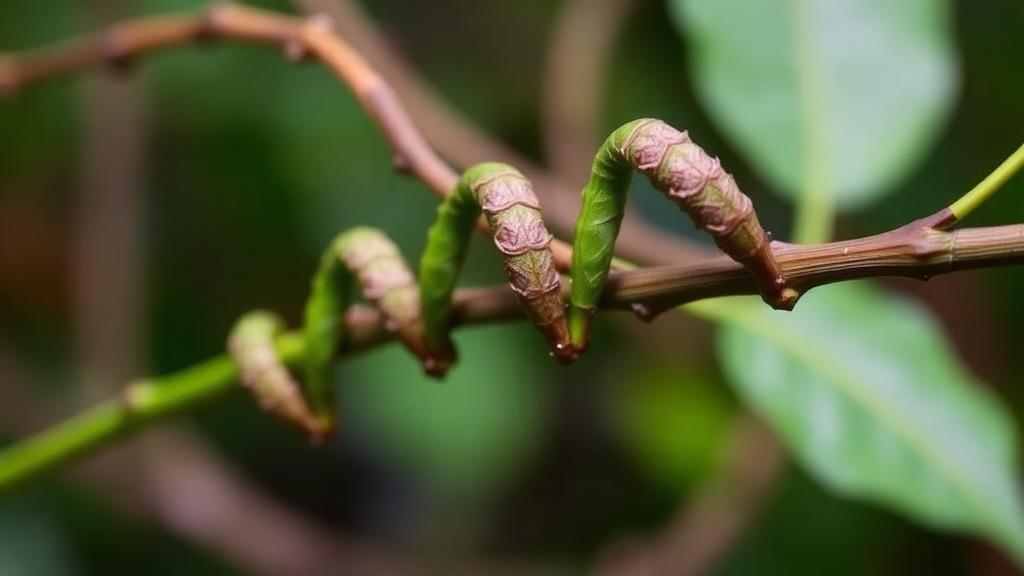
A fast-growing woody climber with fragrant pale yellow flowers, long prized in traditional Indian medicine for treating rheumatism, coughs, and digestive complaints, is now drawing attention from a very different direction: obesity research. In a new open-access study published in Discover Chemistry, a team of Indian pharmaceutical scientists reports the isolation and tentative identification of three bioactive compounds from the roots of Hiptage madablota Gaertn., a member of the Malpighiaceae family, and uses computational modeling to explore how they might interact with human pancreatic lipase, the enzyme that breaks down dietary fat and a validated drug target in obesity therapy. The work is deliberately framed as hypothesis-generating: the authors are careful to stress that no enzyme inhibition was measured in the laboratory and that every finding remains a computational prediction awaiting experimental confirmation.
The research began in the Talakona Forest of Chittoor district in Andhra Pradesh, India, at roughly 850 meters above sea level, where the roots were collected and taxonomically authenticated by a botanist at Sri Venkateswara University, with a voucher specimen deposited in the departmental herbarium. After washing, shade-drying, and grinding the material, the team split their extraction strategy in two. One portion was defatted with petroleum ether, yielding a pale green semisolid extract at just 1.15 percent by weight. The remaining defatted residue was exhaustively extracted with ethanol using maceration followed by Soxhlet extraction, producing a dark brown semisolid at a much richer 8.25 percent yield. That yield gap alone told the chemists something important: the polar chemistry of the root, the kind ethanol dissolves best, was where the bulk of the phytochemical action lay.
Qualitative screening confirmed the split. The petroleum ether extract contained mainly steroids, fixed oils, and fats, while the ethanol extract was a treasure trove of proteins, phenolic compounds, flavonoids, tannins, glycosides, and saponins. Quantitative analysis then put numbers on that richness. Using the Folin–Ciocalteu colorimetric assay with gallic acid as the reference standard, the team measured a total phenolic content of 80.12 milligrams of gallic acid equivalents per gram of extract. The aluminum chloride colorimetric method, calibrated against quercetin, gave a total flavonoid content of 1.33 milligrams of quercetin equivalents per gram, and a gravimetric acetone-precipitation method revealed a substantial saponin fraction of 18.50 percent by weight. All measurements were performed in triplicate with relative standard deviations below two percent, indicating solid analytical precision.
To map the chemical fingerprint of the ethanol extract more finely, the researchers turned to high-performance thin-layer chromatography, or HPTLC, a technique prized in natural product chemistry for its speed, low solvent consumption, and ability to resolve many samples on a single silica plate. Running the extract on silica gel 60 F254 plates in a toluene, ethyl acetate, and formic acid mobile phase, the CAMAG densitometry system resolved six distinct peaks with retention factor values ranging from 0.02 to 0.89. The most abundant constituent, at an Rf of 0.62, accounted for 18.14 percent of the total profile. Crucially, two of the observed Rf values matched those of authentic standards: quercetin at 0.44 and gallic acid at 0.51, two polyphenols with well-documented antioxidant and anti-inflammatory credentials. The authors note, however, that Rf matching alone is only putative identification, and definitive confirmation would require comparison with reference compounds and orthogonal spectroscopic techniques.
The heart of the study was the column chromatography campaign that followed. The ethanol extract was loaded onto a silica gel column and eluted with a gradient of increasing polarity, from pure petroleum ether through petroleum ether–ethyl acetate mixtures and finally into ethyl acetate–methanol blends. Roughly 85 to 95 fractions of 25 to 50 milliliters each were collected and monitored by thin-layer chromatography under ultraviolet light and after derivatization with anisaldehyde–sulfuric acid reagent. From fractions 7 through 12, eluted at 80:20 petroleum ether to ethyl acetate, repeated recrystallization from petroleum ether delivered 10 milligrams of a semisolid compound designated HM-1. Fractions 50 to 54 yielded a white crystalline solid, HM-2, purified from chloroform at 8 milligrams, and the highly polar fractions 80 to 85 gave a yellow amorphous powder, HM-3, recrystallized from ethyl acetate at 10 milligrams. Analytical HPLC confirmed each isolate was better than 95 percent pure.
Spectroscopy then took over. HM-1, with a molecular ion at m/z 310 and the formula C20H38O2, showed infrared absorptions for hydroxyl and carbonyl groups and proton NMR signals consistent with a long unsaturated aliphatic chain, leading to its tentative assignment as icos-10-enoic acid, a twenty-carbon monounsaturated fatty acid. HM-2, at m/z 405 and C22H44O6, displayed an anomeric proton signal and sugar-region carbon resonances alongside a long methylene chain and ether stretching bands, fitting the structure 2-(hexadecyloxy)-6-(hydroxymethyl)-tetrahydro-2H-pyran-3,4,5-triol, a glycoside-like molecule not previously reported from this species. HM-3, with a molecular ion at m/z 301, aromatic UV maxima, and NMR signals for hydroxyl groups and a methoxy substituent on a flavonoid scaffold, was identified as kaempferide, a methylated flavonol previously known from Alpinia officinarum rhizomes. The authors emphasize that all three assignments remain tentative pending high-resolution mass spectrometry and multidimensional NMR.
With three candidate molecules in hand, the team moved to the computational phase. They retrieved the crystal structure of human pancreatic lipase from the Protein Data Bank under the identifier 2PPL, prepared the protein in Schrödinger’s Maestro environment with the OPLS-AA force field, and verified its stereochemical quality with a Ramachandran plot showing 97 percent of residues in favored regions. Each ligand was energy-minimized and prepared with LigPrep and Epik to generate physiologically relevant ionization states, then docked into the enzyme’s binding site using the Glide Extra Precision protocol. All three compounds docked successfully into a single binding site. HM-2 led with a Glide score of minus 5.95 kilocalories per mole, driven by favorable van der Waals contacts, hydrogen bonding, and electrostatic interactions, including predicted hydrogen bonds to the residues aspartate 296 and asparagine 294 at distances of roughly 2 angstroms. Kaempferide followed closely at minus 5.77 kilocalories per mole, with strong hydrogen-bonding contributions to glutamine 320, cysteine 322, and aspartate 409. The fatty acid HM-1 lagged far behind at minus 2.90 kilocalories per mole.
The comparison with the clinical benchmark was sobering but instructive. When docked alongside orlistat, the only approved pancreatic lipase inhibitor on the market, sold as both Orlistat and Xenical, both HM-2 and HM-3 showed lower predicted binding affinities than the reference drug. The authors are candid about this gap, positioning their compounds not as ready-made drugs but as starting points for further investigation. On the pharmacokinetic side, QikProp-based ADMET predictions were broadly encouraging. Predicted octanol-water partition coefficients ranged from 2.4 to 4.2, polar surface areas stayed below the 140 square angstrom threshold for intestinal permeability, and all three compounds satisfied Lipinski’s Rule of Five. Predicted hERG channel values between minus 4.8 and minus 5.3 offered no obvious cardiac toxicity red flags, though the team stresses that such computational estimates cannot substitute for real pharmacokinetic and toxicological testing.
What makes the study notable is its methodological honesty in a field often prone to overclaiming. The authors repeatedly caution that docking scores are not evidence of enzyme inhibition, that ADMET predictions are theoretical, and that the anti-obesity potential of these molecules is entirely unproven. Earlier work by some of the same researchers had shown that Hiptage madablota affected high-fat diet-induced obesity in rats, providing a biological rationale for the current investigation, but the mechanistic link remains to be drawn. The road forward, as the authors lay it out, includes comprehensive LC-MS/MS and HPLC-PDA profiling of the extract, definitive structural confirmation of the isolates, and, most critically, experimental pancreatic lipase inhibition assays to test whether the predicted binding interactions translate into measurable enzyme blockade. If they do, this humble forest climber could earn a place in the growing arsenal of plant-derived leads being explored against one of the world’s most pressing metabolic epidemics.
Subject of Research: Phytochemical isolation and molecular docking of Hiptage madablota root compounds as predicted human pancreatic lipase inhibitors
Article Title: Isolation structural characterization and molecular docking analysis of bioactive phytoconstituents from Hiptage madablota Gaertn root as human pancreatic lipase inhibitors
Article References: Retnasamy, G., Adikay, S., Saravanakumar, A., Repudi, L., Nuli, M. V., Chagarlamudi, K., Jaini, P. K., & Gandla, K. (2026). Isolation structural characterization and molecular docking analysis of bioactive phytoconstituents from Hiptage madablota Gaertn root as human pancreatic lipase inhibitors. Discover Chemistry, 3(1), Article 563. https://doi.org/10.1007/s44371-026-01014-8
Image Credits: AI Generated
DOI: 10.1007/s44371-026-01014-8
Keywords: Hiptage madablota, pancreatic lipase, molecular docking, phytochemistry, obesity, kaempferide, HPTLC, natural products, ADMET prediction, flavonoids, drug discovery, ethnopharmacology
News Source: Bethany Barker. (October 6, 2026). Root Compounds From a Traditional Indian Climber Show Predicted Binding to a Key Fat-Digesting Enzyme. Scienmag.