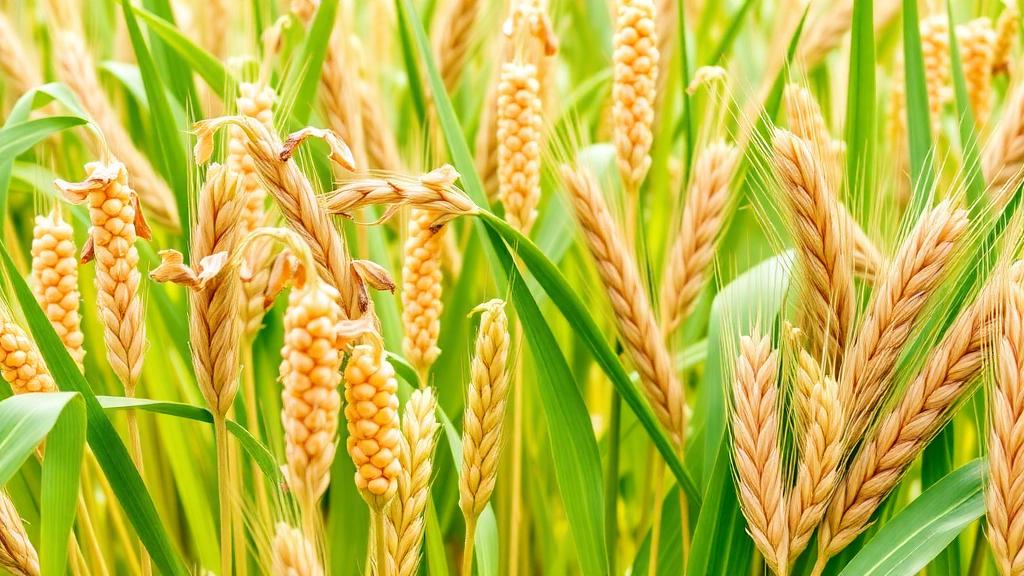
One of China’s most important grain-producing regions may need to abandon the idea of a one-size-fits-all approach to sustainable fertilization. A new meta-analysis published in BMC Plant Biology has found that replacing chemical fertilizer with organic alternatives delivers a strikingly different outcome for the two crops that dominate the Huang-Huai-Hai Plain: maize yields rose by an average of 16.45 percent, while wheat showed no significant yield benefit at all. The finding, drawn from 73 field studies and 541 paired observations across the region, challenges the assumption that organic substitution is universally beneficial and offers a data-driven roadmap for farmers seeking to restore degraded soils without sacrificing productivity.
The Huang-Huai-Hai Plain is the agricultural heartland of northern China, a vast alluvial lowland where a winter wheat–summer maize double-cropping system has been practiced for decades. This rotation produces an enormous share of the nation’s grain, but it has come at a cost. Long-term, intensive application of chemical fertilizers has degraded soil structure, depleted organic matter, and undermined the agroecological sustainability of the region. Organic fertilizer substitution—replacing a portion of synthetic nitrogen, phosphorus, and potassium inputs with manure, compost, or crop-residue-derived amendments—has been widely promoted as a remedy. Yet global meta-analyses that pool results from many regions and cropping systems tend to average away the very differences that matter most to local farmers, masking how responses diverge with crop type, soil texture, and soil chemistry.
To close that gap, a team of researchers led by Yi Wang and Lu Li of Hebei Agricultural University assembled a regional dataset specifically covering the winter wheat–summer maize rotation. Following the PRISMA protocol for systematic reviews, the authors screened field studies drawn from Chinese and international literature databases, including the China National Knowledge Infrastructure, and extracted paired observations in which organic substitution treatments were directly compared with purely chemical fertilization under otherwise comparable conditions. For each pair, they calculated the natural logarithm of the response ratio, a standard effect-size metric in meta-analysis, and used confidence intervals to judge whether effects were statistically distinguishable from zero.
The headline result is the stark divergence between the two crops. Maize, the summer crop in the rotation, responded to organic substitution with a yield increase of 16.45 percent on average. Wheat, sown in winter and harvested in early summer, showed no significant yield response overall. This asymmetry matters because the two crops share the same fields, the same soils, and largely the same management calendars. If organic substitution were simply a matter of adding nutrients back into the system, both crops should benefit roughly equally. The fact that they do not points to deeper physiological and pedological mechanisms at work.
The authors attribute the contrasting responses to what they describe as phenological nutrient-demand mismatches, modulated by soil texture and pH. In essence, the timing of nutrient release from organic amendments does not align equally well with the growth patterns of the two cereals. Organic fertilizers mineralize slowly; their nitrogen becomes available over weeks to months as soil microbes decompose the organic matter. Maize, with its rapid biomass accumulation during the hot summer months, appears to exploit this gradual release pattern effectively, matching nutrient supply to demand across its growth cycle. Wheat, by contrast, has critical nutrient demands during early spring green-up and grain filling, windows during which mineralization from organic inputs applied in autumn may lag behind what the crop requires, leaving it no better off than with conventional chemical fertilization.
Soil conditions proved to be a decisive moderator of the yield response. The benefits for maize were greatest in loam soils, in fluvo-aquic soils—the young alluvial soils that dominate the plain—and under alkaline conditions, specifically where initial soil pH was 7.5 or higher. Perhaps most counterintuitively, neutral soils exhibited a negative yield response to substitution. This pH-dependent pattern suggests that organic amendments interact with soil chemistry in ways that can either unlock or constrain nutrient availability. In alkaline soils, organic matter can chelate micronutrients and improve phosphorus solubility, whereas in already-neutral soils the amendments may temporarily immobilize nitrogen or alter microbial competition in ways that disadvantage the crop. The practical implication is that the same bag of compost can be a yield booster on one field and a yield drag on another, depending on measurable soil properties.
Beyond yield, the meta-analysis documented consistent and largely positive effects on soil health across the dataset. Organic substitution enhanced soil organic matter, increased total nitrogen, and raised the availability of key nutrients including available phosphorus and available potassium. Enzyme activities, sensitive indicators of the soil’s biological engine, responded strongly: nitrate reductase activity, which reflects the soil’s capacity to process nitrogen, increased by 64.01 percent. Elevated enzyme activity signals a more active microbial community and faster nutrient cycling, both of which underpin long-term soil fertility. Notably, the analysis also found bidirectional pH buffering, meaning that organic substitution nudged acidic soils upward and alkaline soils downward, moving both toward the near-neutral range most favorable for nutrient availability. This moderating effect on pH is a hallmark of organic matter’s role as a chemical buffer in soils.
These findings arrive at a moment when Chinese agriculture is under pressure to reconcile food security with environmental repair. Decades of over-application of synthetic fertilizer in the Huang-Huai-Hai Plain have contributed to soil acidification in some areas, nutrient runoff, and greenhouse gas emissions, prompting national policies aimed at reducing chemical fertilizer use while maintaining yields. The new analysis suggests that the path forward is not blanket substitution but targeted application. The authors recommend prioritizing organic substitution for maize in loam and fluvo-aquic soils and under alkaline conditions with initial pH of at least 7.5, while adopting more cautious, site-specific management for wheat and for neutral soils. Such a condition-specific strategy, they argue, offers a practical reference for sustainable intensification, particularly in medium- and low-yield fields where the margin for improvement is greatest.
The study also highlights a methodological lesson for agricultural science: region-specific meta-analyses can reveal patterns that global syntheses obscure. By restricting the analysis to a single rotation system within a defined agroecological zone, the researchers were able to detect the wheat–maize divergence and its soil-texture and pH moderators—signals that would have been diluted in a worldwide pooling of studies spanning rice paddies, pastures, and dryland cereals. As machine-assisted evidence synthesis becomes more common, the Huang-Huai-Hai result stands as a case for granularity: the average effect across all studies may be less useful to a farmer than the effect in her own soil type, under her own rotation, at her own pH.
For the millions of farmers who work the plain, the message is both encouraging and cautionary. Organic fertilizer substitution is not a magic bullet, but it is a powerful tool when aimed correctly—capable of lifting maize yields by double digits, rebuilding organic matter, supercharging soil enzymes, and buffering pH in the right conditions. Applied indiscriminately, however, it may leave wheat yields unchanged and even depress yields in neutral soils. The research, funded by the National Key R&D Program of China, transforms organic substitution from a general slogan into a precision practice, one that matches amendment to crop phenology and soil chemistry. In a region that feeds a substantial share of China’s population, that distinction could determine whether sustainable intensification succeeds on the ground or remains an aspiration confined to policy documents.
Subject of Research: Effects of organic fertilizer substitution on wheat and maize yields and soil properties in the winter wheat–summer maize rotation of the Huang-Huai-Hai Plain
Article Title: Contrasting responses of wheat and maize to organic fertilizer substitution in the Huang-Huai-Hai Plain: a meta-analysis
Article References: Wang, Y., Li, L., Liu, Z., Li, X., Zhang, C., Du, Z., Zhang, R., & Wang, X.-X. (2026). Contrasting responses of wheat and maize to organic fertilizer substitution in the Huang-Huai-Hai Plain: a meta-analysis. BMC Plant Biology. https://doi.org/10.1186/s12870-026-09992-8
Image Credits: AI Generated
DOI: 10.1186/s12870-026-09992-8
Keywords: Huang-Huai-Hai Plain, organic fertilizer substitution, winter wheat–summer maize rotation, meta-analysis, crop yield, soil organic matter, soil enzymes, soil pH, fluvo-aquic soil, sustainable intensification, nutrient uptake, soil fertility
News Source: Alan Morgan. (October 5, 2026). Organic Fertilizer Boosts Maize but Not Wheat in China’s Grain Belt, Meta-Analysis Finds. Scienmag.