As climate change pushes soils toward salinization and water supplies grow increasingly unpredictable, scientists are turning to one of the Andes’ most remarkable gifts: quinoa. A comprehensive review published in Stress Biology by Heng Zhang of Shanghai Jiao Tong University and colleagues Guojun Feng and Yaozu Feng of the Xinjiang Academy of Agricultural Sciences maps out why this semi-domesticated halophyte has become the most closely watched stress-resistant crop in modern plant science, and what it will take to turn its natural toughness into a global agricultural asset. The review arrives at a moment when the pressures on the food system have never been sharper, with the world’s population projected to approach ten billion by 2050 and roughly 10.7 percent of global land already affected by salinity.
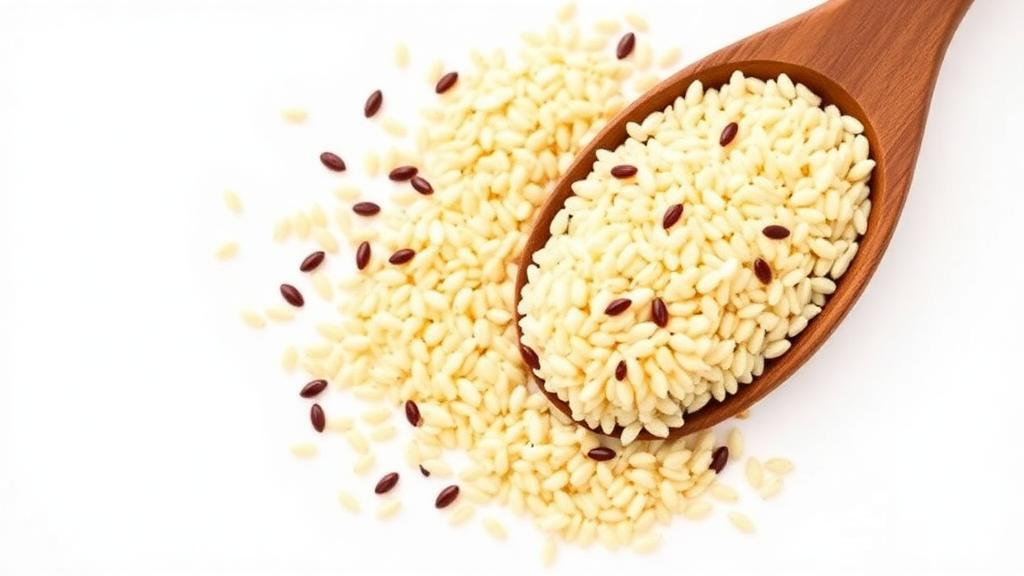
Quinoa’s credentials as a nutritional powerhouse are well established, but the review emphasizes that its agronomic versatility is equally striking. The seeds contain 12 to 23 percent protein, comparable to milk and superior to wheat, maize, and rice, and they deliver all essential amino acids, including lysine, methionine, and threonine, which are typically scarce in true cereals. The crop is naturally gluten-free, making it a lifeline for people with celiac disease, and its leaves, sprouts, and microgreens are emerging as novel plant foods in their own right, with dried quinoa leaves reaching protein levels of 37.7 percent, exceeding even spinach. Beyond human nutrition, the whole plant serves as green fodder or silage, and harvest residues feed livestock, making quinoa a genuinely multi-purpose crop.
The agronomic headline, however, is salt. Quinoa is a facultative halophyte, a rare classification among crops that means it can complete its entire life cycle at salinity levels up to 400 millimolar sodium chloride, equivalent to around 40 decisiemens per meter, conditions that would devastate wheat or rice. Remarkably, its growth is often optimal at moderate salinity of 100 to 200 millimolar NaCl, suggesting an inherent appetite for salt. Field trials in the United Arab Emirates demonstrated that quinoa produced seed yields between 0.7 and 1.05 tonnes per hectare using irrigation water at 14 to 15 decisiemens per meter, comparable to yields in non-saline traditional growing regions. Yet the tolerance has limits: one study identified a soil salinity threshold of roughly 12 decisiemens per meter above which seed yield declines rapidly, and germination remains a particularly sensitive stage.
At the heart of quinoa’s salt strategy lies one of plant biology’s most debated structures: the epidermal bladder cell. These balloon-like cells, which cloak the aerial surfaces of leaves, stems, and inflorescences, can reach volumes up to 1,000 times larger than ordinary epidermal cells. For decades they were regarded as salt glands, dumping toxic sodium and chloride ions away from metabolically active tissue. Supporting evidence came from experiments in which mechanically brushing off the bladder cells produced a salt-sensitive phenotype with increased sodium accumulation in the leaf lamina. Transcriptomic work identified key transporters, including the sodium-selective channel CqHKT1.2 and the anion transporter CqClC-c, proposed to load these ions into bladder vacuoles, with stalk cells acting as traffic controllers directing polar ion transport.
But the story has recently grown more complicated. Mutant quinoa lines that completely lack epidermal bladder cells show no loss of salt tolerance compared with wild-type plants, challenging the sequestration hypothesis. Instead, researchers have proposed that oxalic acid accumulated in the bladders deters arthropod herbivores. Intriguingly, multiple studies indicate that bladder cells accumulate potassium in quantities exceeding sodium even under saline conditions, and a recent study found epidermal bladder cells in some spinach varieties with potassium as the dominant ion. Knocking down a WD40 gene reduced bladder cell density and increased water loss, while removing stem bladder cells, but not leaf ones, reduced transpiration and growth. These findings point toward an evolutionarily conserved role in water management rather than a simple salt-dumping function, and the review makes clear that the debate is far from settled.
Whatever the bladder cells’ exact role, quinoa’s osmotic strategy is well characterized. Unlike glycophytes that burn energy synthesizing organic osmolytes, quinoa preferentially uses inorganic ions as cheap osmotica, with an estimated 80 to 95 percent of leaf osmotic adjustment achieved through accumulation of sodium, potassium, and chloride. Toxic ions are sequestered into vacuoles by tonoplast antiporters driven by proton pumps, while tolerant genotypes excel at retaining potassium in the cytosol, maintaining the high cytosolic potassium-to-sodium ratio essential for enzymatic function. Organic solutes play supporting roles: proline acts as a reactive oxygen species scavenger and stabilizer of subcellular structures, betalain pigments in colored varieties protect the photosynthetic machinery from oxidative damage, and soluble sugars contribute to osmotic balance and stress signaling.
Drought tolerance follows a complementary logic. Quinoa behaves as an isohydric species, rapidly closing its stomata in response to water deficits to preserve leaf water potential, a response mediated by abscisic acid transported from roots to shoots. Although this closure restricts carbon dioxide uptake, quinoa maintains photosynthetic capacity even under severe water deficits, hinting at robust non-stomatal resilience. Root architecture adds another layer: genotypes from arid environments develop faster taproot elongation and longer, coarser root segments than their humid-environment counterparts, a phenotypic flexibility that lets the plant forage for deep soil moisture. The crop also tolerates frost down to roughly minus 8 degrees Celsius depending on developmental stage, using soluble sugars and proline as cryoprotectants and accumulating dehydrin proteins to shield seeds and embryos from desiccation and cold.
The review is candid about quinoa’s vulnerabilities, which matter enormously for its expansion beyond the Andes. Heat is the most serious threat: temperatures exceeding 32 to 35 degrees Celsius can slash yields by 31 to 85 percent depending on genotype and timing, and high temperatures reduce pollen viability by 30 to 80 percent, with the most sensitive window falling 8 to 10 days before flowering. Heat also alters seed composition, changing mineral concentrations of calcium, iron, and zinc in ways that persist after the stress ends. Waterlogging is equally damaging, reducing yields by more than 70 percent when it strikes during anthesis, and comparative studies suggest it is more detrimental than drought or salinity. Preharvest sprouting, driven by weak seed dormancy selected against during domestication, threatens harvests in increasingly erratic rainy seasons. Wild relatives such as Chenopodium berlandieri, which show superior yield stability and pollen viability under extreme heat, are now viewed as valuable resources for introgression breeding.
On the genomics front, the past decade has transformed quinoa from an orphan crop into a genetically well-resourced species. High-quality chromosome-scale reference genomes for the coastal Chilean accession QQ74 and the Real cultivar enabled the identification of TSARL1, a transcription factor whose mutation underlies saponin-free sweet quinoa, and revealed expansions of gene families involved in ion transport and abscisic acid homeostasis. An updated QQ74-V2 assembly placed 90.5 percent of the sequence on 18 chromosome-scale scaffolds and uncovered a 52-megabase pericentromeric inversion on chromosome 3B distinguishing coastal from highland ecotypes. A newly developed Chenopodium pangenome spanning 12 species and all eight known genome types shows that Gypsy retrotransposon expansion drives genome size differences and that roughly 65 percent of gene families in the genus are variable shell genes enriched for environmental adaptation. Functional tools have kept pace: the Apple latent spherical virus system for virus-induced gene silencing has confirmed the roles of sodium transporters CqHKT1 and CqSOS1, and a stable Agrobacterium-mediated floral culture transformation system now permits non-chimeric transgenic plants.
The path forward, the authors argue, lies in integrating these resources with modern breeding technologies. High-throughput phenomics using drones equipped with thermal and hyperspectral sensors can capture dynamic stress responses in the field, while artificial intelligence-driven genomic selection predicts breeding values for complex polygenic traits such as yield and stress tolerance. CRISPR/Cas9 editing, potentially delivered through transgene-free viral systems, could introduce targeted mutations for saponin reduction and heat tolerance, and speed breeding techniques that shorten generation times promise to compress cultivar development timelines dramatically. The review also flags institutional hurdles: quinoa’s absence from the Multilateral System of the International Treaty on Plant Genetic Resources and the Nagoya Protocol’s restrictions hamper cross-border germplasm exchange, and researchers have proposed a Global Collaborative Network on Quinoa to standardize descriptors and phenotyping protocols. If these biological and institutional challenges can be met, the authors conclude, quinoa will serve not merely as a promising pseudo-cereal but as a vital model system for translating halophytic mechanisms into resilient cropping systems, turning the world’s degraded, salt-blighted soils into productive farmland.
Subject of Research: Physiological mechanisms and genomic resources underlying abiotic stress resistance in quinoa
Article Title: Quinoa as a naturally stress-resistant crop: current status and future promises
Article References: Zhang, H., Feng, G., & Feng, Y. (2026). Quinoa as a naturally stress-resistant crop: current status and future promises. Stress Biology, 6(1), Article 12. https://doi.org/10.1007/s44154-025-00283-0
Image Credits: AI Generated
DOI: 10.1007/s44154-025-00283-0
Keywords: quinoa, halophyte, salinity tolerance, drought resistance, epidermal bladder cells, pangenome, genomic selection, CRISPR, heat stress, waterlogging, preharvest sprouting, food security
News Source: Juliet Wilcox. (October 5, 2026). Quinoa: The Salt-Loving Super Grain That Could Future-Proof Farming. Scienmag.