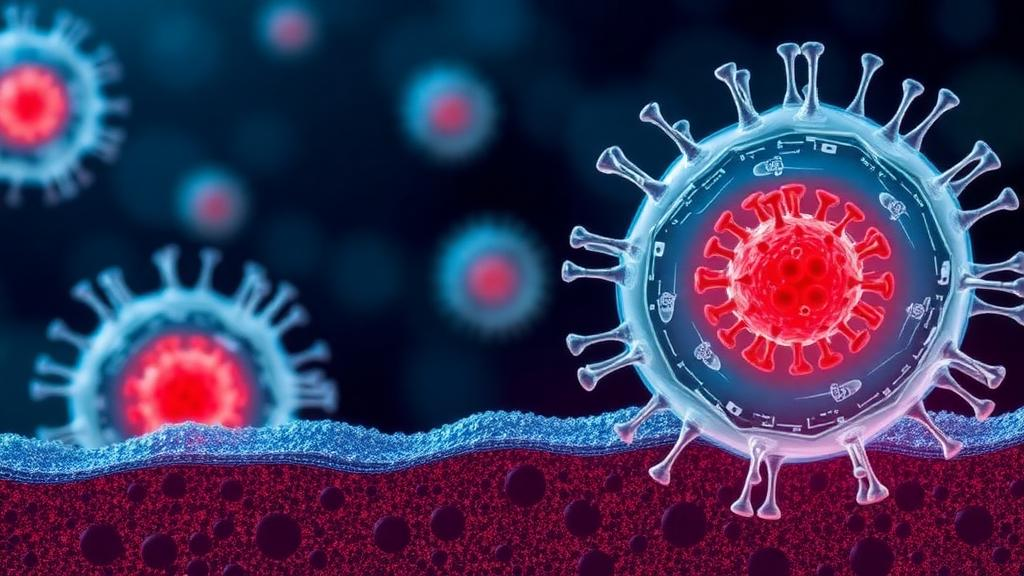
Every second of every day, the epithelial cells that line our lungs, skin, and other surfaces stand guard against a hostile world. Among the most insidious weapons deployed by bacteria are pore-forming toxins, molecular machines that assemble into ring-shaped structures on the cell surface and punch microscopic holes through the plasma membrane. Once these pores open, the carefully controlled boundary between the inside of the cell and the outside world collapses. Ions rush in, vital molecules leak out, and if the damage is not sealed quickly, the cell swells, ruptures, and dies. New research from Juntendo University in Japan has now revealed an unexpected player in the cellular emergency response: a lipid signaling pathway that acts as a rapid-repair crew, mobilizing within moments of injury to save the wounded cell.
The study, led by Dr. Yuan Chi, Dr. Kazuko Saeki, and Professor Takehiko Yokomizo of the Juntendo University Graduate School of Medicine, was published online in the Journal of Cell Biology on September 3, 2026. The team focused on a bioactive lipid mediator known as 12-HHT, or 12S-hydroxyheptadecatrienoic acid, and its receptor BLT2, which is found primarily on epithelial cells. Their findings identify the 12-HHT/BLT2 axis as a previously unrecognized regulator of the cellular response to plasma membrane damage, opening a new chapter in the biology of wound healing at the single-cell level.
To probe how cells cope with toxin attack, the researchers worked with human lung epithelial cells, canine kidney epithelial cells, and primary mouse skin epidermal keratinocytes. By comparing cells with natural, increased, or absent BLT2 expression, they could isolate the contribution of this single receptor to membrane repair. The team then inflicted membrane damage using a battery of pore-forming agents: pneumolysin from Streptococcus pneumoniae, streptolysin O from Streptococcus pyogenes, α-hemolysin from Staphylococcus aureus, and the detergent-like molecule digitonin. This diversity of insults was deliberate. If BLT2 protected against all of them, it would suggest a general repair mechanism rather than a toxin-specific defense.
The results were striking. Cells with enhanced BLT2 signaling showed less membrane leakage, less visible structural damage, better mitochondrial health, and higher survival rates after toxin exposure. In contrast, cells lacking BLT2 were far more likely to rupture and die. The protective effect held across every damaging agent tested, including digitonin, pointing to a broadly deployed membrane-repair system rather than a narrow countermeasure against one bacterial weapon. Importantly, the researchers found that BLT2 does not prevent toxins from attaching to the cell surface in the first place. Its role begins only after the damage has been done, when the cell is fighting for its life.
The mechanism the team uncovered is elegant in its economy. When pores open in the plasma membrane, calcium ions flood into the cell from the surrounding environment. This calcium influx, long known to be a universal trigger for membrane repair, sets off the production of 12-HHT, which the researchers measured directly using liquid chromatography–mass spectrometry. The newly generated lipid then activates BLT2 on the cell surface, launching two coordinated repair actions that together rescue the wounded membrane.
The first action is a kind of cellular surgery. BLT2 signaling helps the cell pinch off damaged pieces of membrane, including the toxin pores themselves, into tiny bubbles called extracellular vesicles that are shed into the surrounding space. Electron microscopy revealed these vesicles being released from injured cells, effectively jettisoning the compromised patches of membrane along with their embedded molecular drills. This shedding strategy allows the cell to physically remove the source of the leak rather than attempting to seal each individual pore in place.
The second action rebuilds the cell’s structural integrity. BLT2 activates Rac1, a signaling protein that reorganizes actin, the fibrous scaffold that gives the cell its shape and mechanical strength. By remodeling the actin cytoskeleton, the injured cell can strengthen and reshape its damaged perimeter, contracting around the wound and supporting the membrane as it recovers. The importance of both arms of this response was confirmed by experiment: blocking either vesicle release or Rac1-driven actin remodeling eliminated BLT2’s protective effect, demonstrating that the two mechanisms work in concert rather than as redundant backups.
The experimental design behind these conclusions was rigorous and multi-layered. Beyond the cell-type comparisons and toxin panel, the team assessed membrane injury and leakage through microscopy, fluorescent dyes that report membrane integrity, lactate dehydrogenase release assays that quantify cellular leakage, and viability tests that measure survival. To dissect the mechanism, they performed experiments in calcium-free conditions, which confirmed the dependence of the pathway on calcium entry, and applied inhibitors targeting BLT2, Rac1, actin polymerization, acid sphingomyelinase, and 12-HHT production itself. Each inhibitor served as a molecular scalpel, cutting one link in the signaling chain and revealing its necessity.
The broader implications of this work extend well beyond basic cell biology. Pore-forming toxins are among the most common virulence factors produced by pathogenic bacteria, contributing to diseases ranging from pneumonia and skin infections to food poisoning. Current therapeutic strategies focus on targeting the pathogen itself, through antibiotics or antitoxin approaches. This study suggests a complementary strategy: strengthening the host. As Dr. Chi notes, in addition to targeting the pathogen or toxin, it may be possible to enhance the ability of host cells to withstand and repair membrane damage. In the long term, such host-directed therapies could help treat infectious diseases and other conditions associated with plasma membrane injury, a category that includes certain inflammatory and ischemic disorders where membrane rupture contributes to tissue damage.
The discovery also reframes how scientists think about lipid mediators. Molecules like 12-HHT are often studied in the context of inflammation, where they help recruit immune cells and coordinate tissue responses. This work shows that a lipid signal can serve as an autonomous, cell-intrinsic emergency broadcast, generated within seconds of injury and translated into immediate structural repair. The plasma membrane is often described as the cell’s first line of defense, but this research demonstrates that the defense does not end when that line is breached. Beneath the surface lies a second line, written in lipids and actin, ready to fight back the moment the barrier fails. Understanding and ultimately reinforcing that hidden repair system may one day help clinicians tip the balance in the patient’s favor during some of medicine’s most stubborn bacterial battles.
Subject of Research: The 12-HHT/BLT2 lipid signaling pathway in epithelial cell plasma membrane repair after bacterial toxin damage
Article Title: How cells fight back after bacterial toxins break through
Article References: How cells fight back after bacterial toxins break through. (n.d.). Original publication
Image Credits: AI Generated
DOI: Not provided
Keywords: 12-HHT, BLT2 receptor, pore-forming toxins, membrane repair, epithelial cells, extracellular vesicles, Rac1, actin cytoskeleton, calcium signaling, lipid mediators, bacterial infection, Journal of Cell Biology
News Source: Drew Townsend. (October 5, 2026). Lipid Signal 12-HHT Helps Cells Patch Membranes Torn by Bacterial Toxins. Scienmag.