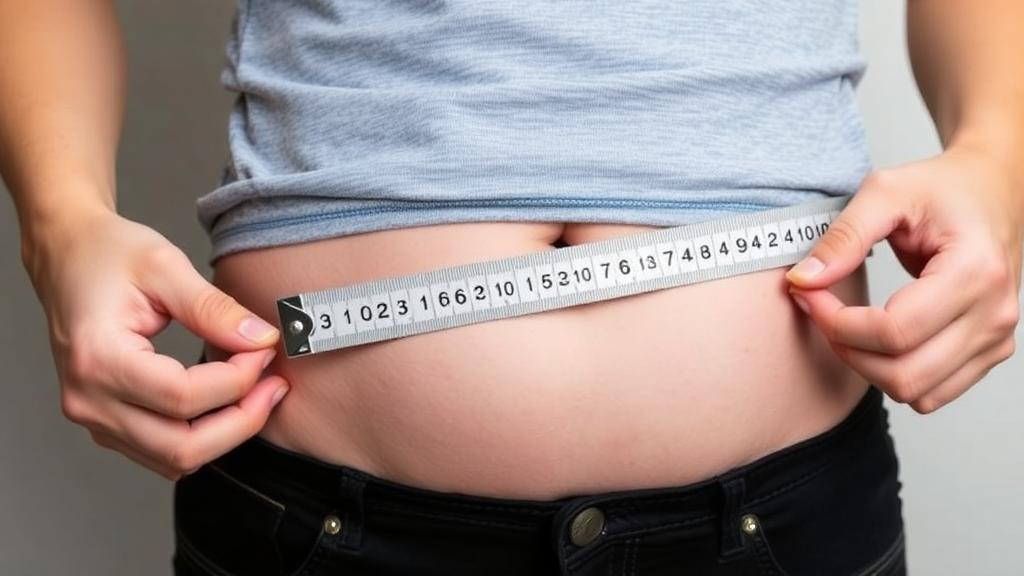
For decades, the tape measure wrapped around the waist has been the standard bedside tool for detecting central obesity, the accumulation of fat around the abdominal organs that is far more dangerous than fat stored under the skin elsewhere in the body. But a new study from researchers at Guangzhou Medical University, published in BMC Endocrine Disorders, suggests that a simpler, cheaper measurement taken front to back across the abdomen may match or even slightly outperform waist circumference in identifying people at metabolic risk. The work addresses a long-standing gap: sagittal abdominal diameter, or SAD, has been proposed for years as an alternative marker of visceral fat, yet no standardized protocol existed for how, where, and in what position it should actually be measured.
SAD is the distance from the bed or floor to the highest point of the abdomen, essentially a measure of how deep the belly is rather than how wide. The rationale is anatomical: in a supine person, abdominal girth is influenced by subcutaneous fat, muscle tone, and even how much the abdominal wall relaxes, whereas the sagittal height is constrained by the spine behind and reflects the volume of the abdominal cavity, where visceral fat accumulates. Because visceral fat is metabolically active, releasing free fatty acids and inflammatory signaling molecules directly into the portal circulation, its burden correlates more tightly with insulin resistance, dyslipidemia, and fatty liver than overall body weight does. Imaging techniques such as computed tomography and magnetic resonance imaging quantify visceral fat precisely, but their cost and radiation exposure make them impractical for screening large populations.
The research team, led by Dandan Chen, Yimei Chen, and Qiwen Xiao with corresponding authors Liankun Zeng and Zhuoqing Hu, enrolled 1,881 adults in a cross-sectional study conducted in 2024. Rather than adopting a single measurement site, they systematically evaluated six candidate protocols. Supine measurements were taken at three anatomical landmarks: the midpoint between the lower edge of the ribcage and the top of the hip bone, the level of the navel, and the superior border of the iliac crest. The same three landmarks were then used with participants standing, producing six distinct values. This design allowed the investigators to determine, for the first time in a systematic head-to-head comparison, which combination of position and landmark best captured metabolic risk.
A key practical barrier to SAD measurement has always been instrumentation. Clinical studies have used sliding calipers, anthropometers, or specialized devices, none of which are widely available in routine clinics. The Guangzhou team designed a low-cost, simple L-shaped caliper specifically for the task, consisting of a horizontal base and a vertical arm whose height can be read directly. The device requires no power, no calibration beyond standard manufacturing tolerances, and minimal training, making it plausible to deploy in primary care settings, health screening centers, and community surveys where sophisticated equipment is out of reach.
The analytical strategy centered on correlations with metabolic indicators and on receiver operating characteristic, or ROC, analysis. ROC analysis quantifies how well a continuous measurement discriminates between people with and without a condition of interest; the area under the ROC curve, or AUC, ranges from 0.5, equivalent to a coin flip, to 1.0, perfect discrimination. In this study the diagnostic target was the presence of two or more non-adipose components of metabolic syndrome, meaning metabolic abnormalities other than waist size itself, such as elevated blood pressure, high fasting glucose, high triglycerides, or low HDL cholesterol. This choice deliberately tested whether each anthropometric measure could identify the metabolic consequences of central obesity rather than merely circling back to its own definition.
The results pointed clearly toward standing measurements. Standing SAD correlated more strongly with adverse metabolic indicators than supine SAD across the panel of biochemical and clinical variables. Within the standing set, the two measurements taken at the midpoint between the subcostal margin and the iliac crest, designated SAD4, and at the umbilical level, designated SAD5, showed the strongest correlations with metabolic markers and the highest AUCs for identifying central obesity. The physiological interpretation is that when a person stands, gravity pulls the abdominal contents downward, and the sagittal height at these mid-abdominal landmarks most faithfully reflects the volume of visceral fat pressing the abdominal wall forward, whereas supine measurements allow the contents to settle laterally and reduce the apparent depth.
When the researchers compared the best SAD protocols against waist circumference, the findings were striking in their consistency even if statistically modest. In the 2024 cohort, SAD4 and SAD5 yielded slightly higher AUCs than waist circumference in both women and men, though the differences did not reach statistical significance. To guard against overfitting to a single sample, the team pooled their data with a validation cohort of 701 adults recruited in 2023. In this combined analysis, SAD5 again showed slightly higher AUCs than waist circumference in both sexes, and this time the advantage reached statistical significance in men, with an AUC of 0.76 for SAD5 versus 0.74 for waist circumference, a difference with a P value of 0.03. The effect is small in absolute terms, but it was achieved with a measurement that takes seconds and avoids several known pitfalls of tape measurement.
Those pitfalls are worth spelling out, because they explain why the field has been searching for alternatives. Waist circumference depends on where the tape is placed, how tightly it is pulled, whether the subject exhales or holds their breath, and how much the subcutaneous fat layer compresses under tension. Inter-observer variability is well documented, and in people with very large abdomens the tape can sag or slip. SAD, by contrast, is a single-point height measurement with an unambiguous zero reference: the surface the person stands or lies on. The study established sex-specific optimal cutoffs for the umbilical-level standing measurement, finding that a value of 20.0 centimeters in women and 21.0 centimeters in men best discriminated central obesity in this Chinese population. These thresholds now provide clinicians with concrete numbers rather than a vague concept.
The authors recommend that, among Chinese adults, standing SAD measured at either the midpoint between the subcostal margin and the iliac crest or at the umbilical level should be used to identify metabolic risk factors. They position SAD as comparable or slightly superior to waist circumference, and as a potential simpler, novel tool for obesity assessment across a range of applications, from epidemiological surveys to routine health checkups. The L-shaped caliper design could be manufactured inexpensively at scale, and the measurement itself requires less training and produces fewer procedural ambiguities than tape-based girth. For large-scale screening in countries facing rising rates of type 2 diabetes and cardiovascular disease, a tool that is simultaneously cheap, fast, and at least as informative as the incumbent is a meaningful advance.
Important caveats remain before SAD can be adopted globally. The study was conducted in a Chinese population, and body proportions, fat distribution patterns, and existing waist circumference cutoffs differ across ethnic groups, so the authors explicitly call for validation in other populations. The reported advantage over waist circumference is slight, and in the initial cohort it did not reach statistical significance, so the most defensible current claim is equivalence with hints of superiority rather than a decisive win. It is also unknown how SAD performs in people with extreme obesity, spinal deformities, or large abdominal hernias, conditions that could distort the sagittal height. Nevertheless, the study delivers what the field has lacked: a standardized, reproducible protocol with defined landmarks, positions, and cutoffs, validated against metabolic outcomes in nearly 2,600 participants. If independent cohorts confirm these findings, the humble front-to-back belly measurement could become a routine vital sign of metabolic health, joining blood pressure and body mass index in the standard checkup.
Subject of Research: Standardized measurement of sagittal abdominal diameter for diagnosing central obesity and metabolic syndrome risk
Article Title: Standardization of sagittal abdominal diameter measurement: protocol evaluation and diagnostic utility for central obesity compared with waist circumference
Article References: Chen, D., Chen, Y., Xiao, Q., Li, C., Shi, W., Dong, P., Liang, W., Li, W., Zeng, L., & Hu, Z. (2026). Standardization of sagittal abdominal diameter measurement: protocol evaluation and diagnostic utility for central obesity compared with waist circumference. BMC Endocrine Disorders. https://doi.org/10.1186/s12902-026-02579-2
Image Credits: AI Generated
DOI: 10.1186/s12902-026-02579-2
Keywords: sagittal abdominal diameter, central obesity, waist circumference, metabolic syndrome, visceral fat, anthropometry, ROC analysis, standardized protocol, caliper, cardiometabolic risk, screening, Guangzhou Medical University
News Source: Ophelia Keating. (October 5, 2026). A Simple Caliper Test May Outmeasure the Tape for Spotting Dangerous Belly Fat. Scienmag.