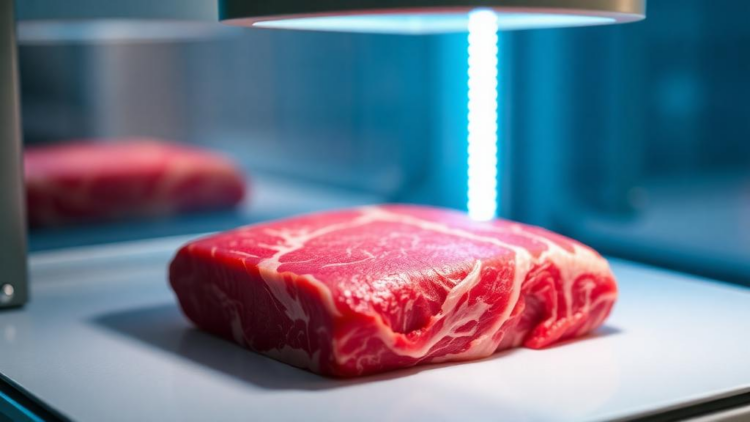
A dose of just 3 kilograys of electron beam radiation is enough to eliminate the most dangerous foodborne pathogens lurking in raw beef, while leaving the meat’s nutritional composition, pH, and texture essentially untouched, according to a new study published in Food Science of Animal Resources. Researchers Ui-Bin Beak and Hack-Youn Kim of Kongju National University in Korea systematically bombarded raw beef samples with escalating radiation doses and tracked both microbial survival and a battery of quality indicators, offering some of the most detailed evidence yet that non-thermal sterilization can make raw meat dramatically safer without ruining it.
The experiment was designed around a deceptively simple question: what is the minimum radiation dose that kills pathogens without compromising meat quality? The team inoculated raw beef bottom round with five of the most notorious foodborne pathogens: Salmonella Typhimurium, Listeria monocytogenes, Staphylococcus aureus, Bacillus cereus, and Escherichia coli. Samples were then treated with electron beam doses ranging from 1 to 9 kilograys using a linear accelerator operating at 10 megaelectronvolts, with the meat held at minus 2 degrees Celsius during treatment to mimic realistic cold-chain conditions. The results were striking: Salmonella, Listeria, Staphylococcus, and E. coli all fell below the detection limit of less than one log colony-forming unit per gram at doses of 3 kilograys or higher.
One microbe, however, proved remarkably stubborn. Bacillus cereus, a spore-forming bacterium, required doses of at least 7 kilograys before it too dropped below detectable levels. The reason lies in the extraordinary architecture of bacterial spores. These dormant structures are wrapped in multiple protective layers, including a cortex, an outer membrane, protein coats, and an exosporium. The outer coat contains pigments that absorb ultraviolet radiation, while the spore core maintains an extremely low water content and is packed with pyridine-2,6-dicarboxylic acid and small acid-soluble proteins that bind directly to DNA, shielding the genetic material from radiation-induced damage.
The physics of why radiation kills bacteria in the first place comes down to water. When high-energy electrons strike the moisture-rich interior of a microbial cell, they trigger radiolysis, splitting water molecules and generating a cascade of reactive oxygen species. These highly reactive chemicals, including hydroxyl radicals, attack cellular components indiscriminately, causing base modifications in DNA, strand breaks, and cross-linking that prevent cell division and ultimately destroy the organism. The researchers note that meats with higher moisture content may actually generate more of these lethal radicals, potentially enhancing the antimicrobial effect. Refrigerated storage at 4 degrees Celsius compounded the kill effect, with viable counts in irradiated samples continuing to decline over two weeks of storage while control samples remained unchanged.
Crucially, the radiation doses that annihilated pathogens did not gut the meat’s nutritional value. Proximate composition, measured through standardized methods for moisture, crude protein, crude fat, and ash, showed no significant differences between irradiated samples up to 3 kilograys and untreated controls. The researchers attribute this to the nature of the analytical methods themselves, which measure total mass regardless of chemical denaturation, and to the protective conditions of the experiment. Vacuum packaging limits oxygen migration and suppresses radiation-induced oxidation, while the meat’s abundant proteins can soak up free radical ions, stabilizing them before they cause substantial mass loss detectable by total-mass-based techniques.
Not every quality parameter emerged unscathed. Water-holding capacity, the meat’s ability to retain its own moisture, decreased significantly at doses of 2 and 3 kilograys. The mechanism traces back to those same reactive oxygen species: they react with amino acids and peptide bonds, driving protein oxidation that reduces surface hydrophilicity. Radiation also appears to reshape the secondary structure of myofibrillar proteins, increasing amorphous random coils and beta-turns, promoting partial unfolding and aggregation. These structural changes can alter hydrogen and disulfide bonds, reduce the activity of proteolytic enzymes such as calpains, and limit the degradation of cytoskeletal proteins, all of which shrink the spaces between muscle fibers where water is normally held.
Texture, by contrast, barely budged. Shear force, measured with a V-blade texture analyzer cutting perpendicular to the muscle fibers, declined only slightly and not significantly with increasing dose. The researchers suggest that radiation-generated radicals can abstract hydrogen atoms from proteins, forming carbon-centered radicals that initiate oxidation chain reactions. These may promote actomyosin depolymerization and degrade contractile proteins such as actin and myosin, along with structural proteins like titin and nebulin, which could explain the modest tenderizing trend. Oxidation of the myosin heavy chain is thought to reduce calcium-ATPase activity and weaken protein contractility, subtly softening the meat’s structural integrity without producing a statistically meaningful change.
Color chemistry told a more nuanced story. At week zero, samples treated with 3 kilograys displayed the lowest lightness and the highest redness, a dose-dependent shift the authors link to oxidative transformations of myoglobin, the heme protein responsible for meat’s characteristic hue. Reactive oxygen species can oxidize the heme iron from its ferrous to ferric state, or generate a highly oxidized intermediate called ferrylmyoglobin, which catalyzes further oxidation through pseudo-peroxidase activity. Radiation may also disrupt calcium homeostasis in muscle cells, impairing mitochondrial function and amplifying radical production. The Fenton reaction, in which hydrogen peroxide reacts with ferrous iron to produce hydroxyl radicals, may sustain metmyoglobin formation during storage, gradually browning the meat over time.
Two classic spoilage indicators, thiobarbituric acid reactive substances and volatile basic nitrogen, crept upward with dose and storage time, though neither showed statistically significant differences from controls at the outset. TBARS, a proxy for lipid oxidation, rose gradually during weeks one and two, with the 3-kilogray samples showing the highest levels, likely reflecting the accumulation of secondary lipid oxidation products such as aldehydes. Volatile basic nitrogen, a marker of protein breakdown, increased significantly with dose from week two onward, consistent with radiation-induced deamination, decarboxylation, and peptide bond cleavage that release ammonia and other nitrogen-containing volatiles. The delayed onset suggests these protein modifications accumulate silently before manifesting as measurable spoilage chemistry.
The study’s context is the booming raw pet food market, where uncooked meat poses real zoonotic risks to both animals and the humans handling it, particularly the immunocompromised. With Korea permitting radiation sterilization up to 10 kilograys for feed, and the United States allowing up to 50 kilograys for pet food, the finding that 3 kilograys suffices for non-spore-forming pathogens leaves a wide safety margin. The authors conclude that electron beam irradiation at 3 kilograys effectively secures microbial safety in raw beef while inducing only limited and acceptable physicochemical changes, positioning the technology as a practical non-thermal sterilization strategy. Whether consumer skepticism about irradiated food, which has long hampered adoption despite mandatory radura labeling in many countries, can be overcome by this kind of hard evidence remains the next frontier.
Subject of Research: Effects of electron beam irradiation on microbial inactivation and physicochemical quality of raw beef
Article Title: Physicochemical and microbial changes in Raw beef meat induced by radiation
Article References: Beak, U.-B., & Kim, H.-Y. (2026). Physicochemical and microbial changes in Raw beef meat induced by radiation. Food Science of Animal Resources, 46(1), Article 56. https://doi.org/10.1007/s44463-026-00060-1
Image Credits: AI Generated
DOI: 10.1007/s44463-026-00060-1
Keywords: electron beam irradiation, raw beef, food safety, microbial inactivation, Salmonella, Listeria monocytogenes, Bacillus cereus, reactive oxygen species, water-holding capacity, lipid oxidation, myoglobin, non-thermal sterilization
Cite Scienmag News
APA
MLA
Chicago
Alan Morgan. (October 4, 2026). Electron Beam Irradiation Wipes Out Deadly Pathogens in Raw Beef While Preserving Quality. Scienmag. https://scienmag.com/electron-beam-irradiation-wipes-out-deadly-pathogens-in-raw-beef-while-preserving-quality/
Alan Morgan. “Electron Beam Irradiation Wipes Out Deadly Pathogens in Raw Beef While Preserving Quality.” Scienmag, 4 October 2026, https://scienmag.com/electron-beam-irradiation-wipes-out-deadly-pathogens-in-raw-beef-while-preserving-quality/. Accessed 4 October 2026.
Alan Morgan. “Electron Beam Irradiation Wipes Out Deadly Pathogens in Raw Beef While Preserving Quality.” Scienmag. October 4, 2026. https://scienmag.com/electron-beam-irradiation-wipes-out-deadly-pathogens-in-raw-beef-while-preserving-quality/
Copy citation
Download RIS
Tags: Bacillus cereuscold-chain electron beam treatmentelectron beam food sterilizationelectron beam irradiationelectron beam radiation food safetyfood irradiation dose optimizationfood safetyfoodborne pathogen control in raw meathigh-energy electron irradiation for food safetyimpact of electron beam on meat texture and nutrientslipid oxidationListeria monocytogenesmicrobial inactivationminimum effective radiation dose for pathogen killmyoglobinnon-thermal meat preservationnon-thermal sterilizationpathogen elimination in raw beefpreservation of meat quality during irradiationraw beefreactive oxygen speciessafety and quality of irradiated raw beefSalmonellawater-holding capacity