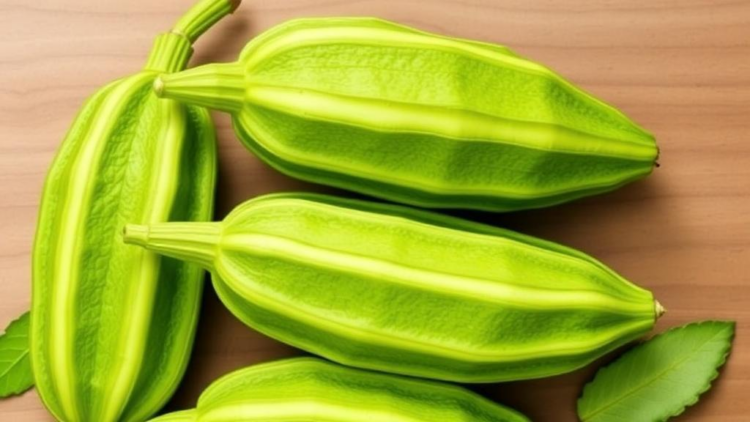
Bitter gourd has long occupied a paradoxical place on the dinner plate: famously unpleasant to some palates, yet prized across Asia and beyond for a dense portfolio of health-promoting compounds. Now, a comprehensive genetic study from researchers at the ICAR-Indian Agricultural Research Institute and partner institutions has mapped, with unusual precision, how the vegetable’s nutritional riches can be amplified through hybrid breeding. The work, published in BMC Plant Biology, evaluated 20 parental lines and 64 first-generation hybrids for a battery of bioactive and antioxidant compounds and essential minerals, and identified cross combinations that push levels of carotenoids, vitamin C, charantin, iron, zinc and other nutrients far beyond those of existing commercial standards.
The research team, led by Vishal Sunartiya and Gograj Singh Jat, deployed a classical but powerful quantitative genetics framework known as the line × tester mating design. Sixteen genetically diverse parental lines, including gynoecious, predominantly gynoecious and monoecious types, were crossed with four testers to generate 64 F1 hybrids. Each of these hybrids, along with its parents, was grown under controlled experimental conditions and assessed for seven bioactive and antioxidant traits, namely chlorophyll a, chlorophyll b, total carotenoids measured at both the edible and ripening stages, vitamin C, saponins and charantin, together with five essential minerals: calcium, magnesium, iron, zinc and manganese. The scale of the evaluation, spanning both the chemistry of the fruit and the genetics behind it, is what distinguishes the study from earlier, more fragmented surveys of bitter gourd quality.
At the heart of the analysis were two complementary concepts. The first is heterosis, or hybrid vigor, the well-known phenomenon in which the offspring of two genetically distinct parents outperforms either parent. The second is combining ability, which partitions the genetic contribution to a trait into a general component, reflecting how consistently a parent transmits favorable alleles across many crosses, and a specific component, reflecting interactions unique to a particular parent pair. General combining ability, abbreviated GCA, points breeders toward parents worth keeping in a program; specific combining ability, or SCA, points toward individual crosses worth commercializing. Together with standard heterosis, which measures a hybrid’s advantage over the best commercial check variety, these metrics form the decision-making backbone of hybrid crop breeding.
The results revealed significant genetic variation for every nutritional trait measured, confirming that bitter gourd breeders have substantial raw material to work with. On the parental side, six lines stood out: DBGS-100-0, IC398610, PVGy-201, DBG-38, DBG-4-1 and S-43 all combined superior mean performance with favorable GCA effects for the studied traits. In practical terms, these lines carry alleles that reliably elevate nutrient levels in their progeny, making them prime candidates for inclusion in future crossing programs. The identification of such parents is often the bottleneck in nutritional improvement, because yield-focused breeding has historically left quality traits underexplored in this crop.
The hybrid results were even more striking. Several crosses exhibited significant positive standard heterosis exceeding 50 percent for carotenoids, vitamin C, charantin and mineral nutrients, and three combinations emerged as the most promising overall: DBGS-100-0 × S-43, PVGy-201 × G-16-2 and IC398610 × G-23. The magnitude of some heterotic effects is remarkable. The hybrid PVGy-201 × G-16-2 recorded the highest standard heterosis for charantin at 61.58 percent and for iron at a striking 113.39 percent, meaning it delivered more than double the iron content of the standard check. Charantin, a steroidal glycoside complex unique to bitter gourd and its relatives, is among the compounds most intensively studied for the vegetable’s antidiabetic reputation, so a hybrid that concentrates it by more than 60 percent over a commercial benchmark has obvious implications for both nutrition and nutraceutical markets.
Mineral heterosis was equally impressive across other crosses. DBG-4-1 × S-43 showed superior standard heterosis for magnesium at 26.51 percent, IC398610 × S-43 for manganese at 86.39 percent, DBGS-100-0 × S-43 for calcium at 32.50 percent, and IC398610 × DBGS-2 for zinc at 112.18 percent. Iron, zinc and other micronutrient deficiencies affect billions of people worldwide, particularly in South Asia where bitter gourd is a staple vegetable, and biofortification through breeding is widely regarded as one of the most sustainable and cost-effective interventions available. The finding that a single vegetable crop can be hybrid-bred to more than double its iron or zinc concentration suggests that bitter gourd could become a serious delivery vehicle for micronutrient nutrition rather than merely a niche health food.
To make sense of the multidimensional data, the researchers turned to two statistical tools that have become standard in modern plant breeding. Hierarchical clustering combined with heat map analysis grouped the 64 hybrids into seven distinct clusters, each characterized by a unique profile of bioactive compounds and minerals. This clustering revealed that the hybrids are far from interchangeable: some combinations concentrate antioxidants, others minerals, and still others a balanced mixture. Principal component analysis reinforced this picture by identifying phenotypically divergent hybrids along the major axes of nutritional variation. For breeders, these analyses serve a practical purpose, because selecting parents from divergent clusters maximizes the genetic distance of future crosses and, in turn, the likelihood of strong heterosis in the next generation of hybrids.
The study also carries a subtle but important message about the architecture of these traits. Significant SCA effects alongside GCA effects indicate that both additive gene action and non-additive interactions, including dominance and epistasis, shape the nutritional chemistry of bitter gourd fruit. Traits governed largely by additive gene action respond well to selection and can be fixed in open-pollinated varieties, whereas traits dominated by non-additive effects are best exploited through F1 hybrids, where the favorable interactions are captured in every seed sold to farmers. The pattern observed here, with several hybrids showing large positive SCA and heterosis for carotenoids, vitamin C, charantin and minerals, suggests that hybrid breeding is the appropriate strategy for pushing nutritional quality in this crop, a conclusion that aligns with the ongoing shift toward gynoecious hybrid cultivation in commercial bitter gourd production.
There are, of course, caveats and next steps. The authors note that the identified superior parental lines should be used to develop nutritionally superior hybrids, which must then undergo nutritional stability analysis across environments and seasons before commercial release. Nutrient concentrations in vegetables are notoriously sensitive to growing conditions, soil type, irrigation and maturity at harvest, so a hybrid that doubles iron content in one trial must prove it can do so reliably across the diverse agroclimatic zones where bitter gourd is grown. Yield, disease resistance, fruit shape and consumer acceptability must also keep pace with nutritional gains, since a hyper-nutritious but low-yielding or unmarketable hybrid helps no one. The study was supported by ICAR-IARI under its in-house project on the genetic improvement of cross-pollinated vegetable crops, reflecting a broader institutional push to treat quality traits as primary breeding targets rather than afterthoughts.
Even so, the work represents a meaningful step forward in the science of nutrient-dense vegetables. By systematically quantifying heterosis and combining ability across a large set of hybrids for a trait panel spanning pigments, antioxidants, antidiabetic compounds and minerals, the researchers have converted a folk reputation for healthfulness into a quantitative, breedable set of targets. The standout crosses, DBGS-100-0 × S-43, PVGy-201 × G-16-2 and IC398610 × G-23, now move into the pipeline of stability testing and commercial evaluation, while the six superior parental lines become building blocks for the next round of crossing. For a crop whose bitterness once defined it, the future may be defined instead by numbers: more carotenoids, more vitamin C, more charantin, and more than twice the iron and zinc of the varieties on today’s market shelves.
Subject of Research: Heterosis and combining ability for bioactive compounds and mineral nutrients in bitter gourd hybrid breeding
Article Title: Genetic evaluation of bioactive compounds and mineral nutrients in bitter gourd (Momordica charantia L.) using heterosis and combining ability approach
Article References: Sunartiya, V., Jat, G. S., Singh, D., Tomer, A., Tharun, B., Archana, G., Singh, A. K., Bhardwaj, R., Singh, N., Choudhary, H., Tomar, B. S., & Behera, T. K. (2026). Genetic evaluation of bioactive compounds and mineral nutrients in bitter gourd (Momordica charantia L.) using heterosis and combining ability approach. BMC Plant Biology. https://doi.org/10.1186/s12870-026-10068-w
Image Credits: AI Generated
DOI: 10.1186/s12870-026-10068-w
Keywords: bitter gourd, heterosis, combining ability, bioactive compounds, mineral nutrients, hybrid breeding, carotenoids, charantin, biofortification, plant genetics, antioxidants, BMC Plant Biology
Cite Scienmag News
APA
MLA
Chicago
Daisy Hatcher. (October 4, 2026). Bitter Gourd Hybrids Show Huge Nutritional Boosts in Landmark Breeding Study. Scienmag. https://scienmag.com/bitter-gourd-hybrids-show-huge-nutritional-boosts-in-landmark-breeding-study/
Daisy Hatcher. “Bitter Gourd Hybrids Show Huge Nutritional Boosts in Landmark Breeding Study.” Scienmag, 4 October 2026, https://scienmag.com/bitter-gourd-hybrids-show-huge-nutritional-boosts-in-landmark-breeding-study/. Accessed 4 October 2026.
Daisy Hatcher. “Bitter Gourd Hybrids Show Huge Nutritional Boosts in Landmark Breeding Study.” Scienmag. October 4, 2026. https://scienmag.com/bitter-gourd-hybrids-show-huge-nutritional-boosts-in-landmark-breeding-study/
Copy citation
Download RIS
Tags: antioxidant properties of bitter gourdantioxidantsbioactive compoundsbioactive compounds in bitter gourdbiofortificationbiofortification of bitter gourd through geneticsbitter gourdbitter gourd hybrid breedingBMC Plant Biologycarotenoid and vitamin C levels in bitter gourdcarotenoidscharantincombining abilityessential mineral content in bitter gourdgenetic mapping of vegetable nutrientshealth benefits of hybrid bitter gourd varietiesheterosishybrid breedinghybridization techniques in crop improvementICAR research on vegetable nutritionline × tester mating design in plant breedingmineral nutrientsnutritional enhancement in vegetablesplant genetics