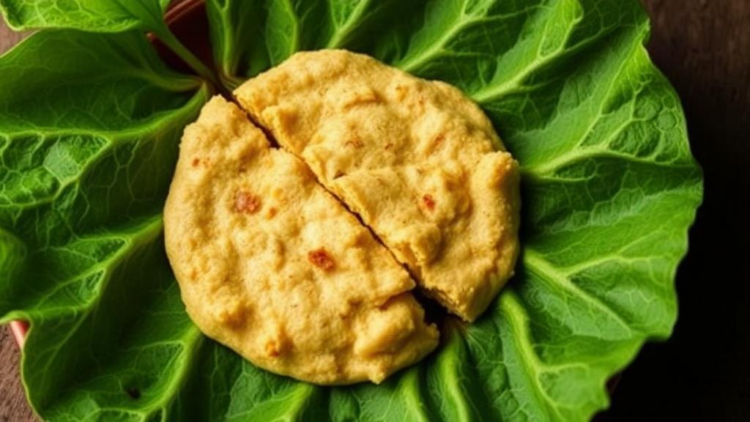
A seven-minute blast of ultraviolet B light on amaranth leaves before drying may transform one of Mexico’s most beloved staple foods into a genuine functional food. Researchers at Tecnológico de Monterrey have shown that postharvest UVB treatment of Amaranthus hybridus leaves produces a bioactive powder that, when kneaded into nixtamalized maize flour, yields tortillas with a dramatically richer phenolic signature, stronger cellular antioxidant activity, greater anti-inflammatory potential, and a lower predicted glycemic index than ordinary maize tortillas. The work, published in the Journal of Agriculture and Food Research, positions a simple, non-genetic physical treatment as a sustainable route to biofortify a food eaten daily by millions.
The rationale is rooted in plant stress physiology. When leafy vegetables are exposed to short-term abiotic stresses such as UVB radiation in the 290 to 315 nanometer range, they respond by activating defense-related secondary metabolism, particularly the phenylpropanoid pathway that generates phenolic acids and flavonoids. Previous work by the same group demonstrated that a seven-minute UVB exposure at a dose of 5.04 kilojoules per square meter maximized phenolic content, cellular antioxidant activity, and anti-inflammatory potential in fresh amaranth leaves. The new study asked whether that bioactive boost could survive dehydration, milling, incorporation into masa, and a scorching 280 to 300 degree Celsius bake.
To scale the concept beyond the laboratory, the team built an industrial-design-registered irradiation chamber fitted with twelve 40-watt broadband UVB lamps, increasing per-lamp power 4.3-fold and total system power 8.7-fold over an earlier prototype. Fresh leaves of Amaranthus hybridus var. Negra 1, harvested 42 days after sowing at the university’s experimental farm in Querétaro, were laid in a single layer, irradiated for seven minutes, rested for five, then dried in a solar dehydrator at 65 degrees Celsius for seven hours and milled into powder. A parallel untreated batch yielded the control powder. Rheological screening with a Mixolab instrument then identified 7.5 percent substitution on a dry-weight basis as the highest level that preserved measurable dough behavior and acceptable tortilla quality.
Nutritionally, the fortification paid off. Control maize tortillas contained 8.80 percent protein and 1.52 percent ash on a dry-weight basis, while tortillas with untreated amaranth powder reached 10.16 percent protein and 3.32 percent ash, and those with UVB-treated powder hit 10.48 percent and 3.35 percent, respectively. Total dietary fiber rose from roughly 3.0 percent to about 4.8 percent, and total starch fell from about 76.6 percent to about 71.0 percent. The researchers caution that the higher ash in the UVB powder likely reflects a relative concentration effect, since ultraviolet light cannot introduce minerals, but the protein and fiber gains in the final tortillas are unambiguous contributions of the leaf ingredient.
Perhaps the most striking nutritional result concerns starch digestibility. Rapidly digestible starch, the fraction most quickly converted to glucose, plummeted from 85.29 percent in fresh control tortillas to 54.33 percent and 56.02 percent in the amaranth-enriched versions after five days of refrigerated storage, while slowly digestible starch climbed. The predicted glycemic index dropped by roughly 9 to 13 units compared with the control, falling from 92.60 to 79.92 by day five. The authors attribute this to a combination of reduced total starch, a physical barrier effect from dietary fiber, and non-covalent interactions between phenolic compounds and starch or digestive enzymes that slow enzymatic hydrolysis. Although the values remain in the high glycemic range, the researchers describe the shift as a relevant improvement for a staple food.
Equally important, the treatment improved rather than worsened the anti-nutritional profile. UVB exposure reduced oxalates by 28.8 percent, nitrates by 33.7 percent, phytic acid by 25.2 percent, saponins by 26.7 percent, tannins by 19.4 percent, and protease inhibitors by 44.3 percent in the powder. After dilution into tortillas and thermal processing, anti-nutrient concentrations fell further, and the authors estimate that even a daily intake of six tortillas, about 144 grams, would keep these compounds below levels of nutritional concern. Microbiological testing after one week of refrigerated storage confirmed compliance with the Mexican standard NOM-187-SSA1-SCFI-2002, with total aerobic mesophiles and molds and yeasts below 10 colony-forming units per gram.
The phenolic chemistry revealed a subtler story than a simple boost. Using UPLC-MS/MS with 65 authentic standards, the team quantified 22 phenolic compounds plus L-phenylalanine, the entry substrate of the phenylpropanoid pathway. UVB treatment raised L-phenylalanine by 23 percent, consistent with stress-primed metabolism, and selectively increased salicylic acid by 282 percent, 4-hydroxybenzoic acid by 96 percent, and 4-hydroxyphenylacetic acid by 69 percent, while several hydroxycinnamic and benzoic acids declined. Crucially, the total quantified phenolics in the powder actually fell by 16.7 percent, yet the tortillas made with UVB-treated powder emerged with the richest phenolic profile of all: 5.519 micrograms per gram, 3.29 times more than tortillas with untreated powder and 2.11 times more than the maize control. Rutin alone was 10.5-fold higher in the UVB-powder tortillas than in the untreated-powder version.
Because rutin levels were nearly identical in both powders, the authors argue that this enrichment arose during dough mixing and baking, not from new biosynthesis during the brief irradiation. They propose that UVB-induced changes to the leaf matrix, including altered extractability, photochemical transformation of pre-existing compounds, or differential thermal stability during baking, favored the retention of specific flavonoids. The team is careful to note that the seven-minute exposure plus five-minute rest is too short for measurable phenylalanine ammonia-lyase-mediated synthesis, and that without gene expression or time-resolved profiling data, mechanistic claims remain plausible hypotheses rather than proven pathways.
The functional assays translated the chemistry into cell-level biology. Extracts from the UVB-powder tortillas inhibited nitric oxide production in lipopolysaccharide-stimulated RAW 264.7 macrophages by 67.52 percent, roughly 2.4 times the control’s 27.87 percent and 1.6 times the untreated-powder tortillas’ 42.39 percent. Cellular antioxidant activity in Caco-2 intestinal cells reached 72.67 percent, an 85 percent increase over the control’s 39.29 percent. MTT assays confirmed the extracts were not cytotoxic. The authors link these effects to the enriched rutin, protocatechuic acid, caffeic acid, and salicylic acid content, while acknowledging that amaranth proteins and fiber may also contribute independently.
Consumers, however, rendered a more tempered verdict. In a 40-person sensory panel using a seven-point hedonic scale, control tortillas scored 5.55 for overall acceptability, while the UVB-powder tortillas scored 4.38, close to neutral, with no significant penalty relative to untreated-powder tortillas. Seventy percent of participants preferred the plain maize version. The darker green-brown color and possible bitter phenolic notes explain the trade-off, and the authors suggest particle-size optimization, flavor masking, or debittering strategies as next steps. Even so, the study demonstrates that a culturally familiar staple can be upgraded with more protein, fiber, and bioactivity, a lower glycemic signature, and no added anti-nutritional burden, all through a seven-minute dose of light. The researchers emphasize that in vitro results must now be followed by bioaccessibility, bioavailability, and in vivo studies before health claims can be made, but the proof of concept for postharvest UVB biofortification of tortillas stands.
Subject of Research: Postharvest UVB biofortification of amaranth leaf powder as a functional ingredient in nixtamalized maize tortillas
Article Title: Postharvest UVB treatment of amaranth leaves produces a bioactive powder ingredient that improves the phenolic signature and bioactivity of nixtamalized maize tortillas
Article References: Segura-Jiménez, M. E., de la Rosa-Millán, J., Antunes-Ricardo, M., Sánchez-Reséndiz, A. I., Gastélum-Estrada, A., Guerrero-Analco, J. A., Monribot-Villanueva, J. L., Valencia-Mejía, E., Pérez-Carrillo, E., & Jacobo-Velázquez, D. A. (2026). Postharvest UVB treatment of amaranth leaves produces a bioactive powder ingredient that improves the phenolic signature and bioactivity of nixtamalized maize tortillas. Journal of Agriculture and Food Research, 31, Article 103315. https://doi.org/10.1016/j.jafr.2026.103315
Image Credits: AI Generated
DOI: 10.1016/j.jafr.2026.103315
Keywords: amaranth, UVB radiation, tortillas, nixtamalization, phenolic compounds, rutin, antioxidant activity, anti-inflammatory, glycemic index, functional foods, postharvest biofortification, maize
Cite Scienmag News
APA MLA Chicago
Alan Morgan. (October 1, 2026). Zapping Amaranth Leaves With UVB Turns Mexico’s Tortilla Into a Functional Food. Scienmag. https://scienmag.com/zapping-amaranth-leaves-with-uvb-turns-mexicos-tortilla-into-a-functional-food/
Alan Morgan. “Zapping Amaranth Leaves With UVB Turns Mexico’s Tortilla Into a Functional Food.” Scienmag, 1 October 2026, https://scienmag.com/zapping-amaranth-leaves-with-uvb-turns-mexicos-tortilla-into-a-functional-food/. Accessed 1 October 2026.
Alan Morgan. “Zapping Amaranth Leaves With UVB Turns Mexico’s Tortilla Into a Functional Food.” Scienmag. October 1, 2026. https://scienmag.com/zapping-amaranth-leaves-with-uvb-turns-mexicos-tortilla-into-a-functional-food/
Copy citation Download RIS
Tags: amaranthanti-inflammatoryanti-inflammatory properties of leafy greensantioxidant activityantioxidant activity in cropsbioactive plant powdersbiofortification of traditional foodsfunctional food developmentfunctional foodsglycemic indexhealth benefits of amaranth-based tortillasimpact of UVB on plant secondary metabolitesmaizenatural food fortificationnixtamalizationnon-GMO food enhancementPhenolic compoundsphenolic compounds in vegetablespostharvest biofortificationrutinsustainable food processing methodstortillasUVB radiationUVB-treated amaranth leaves