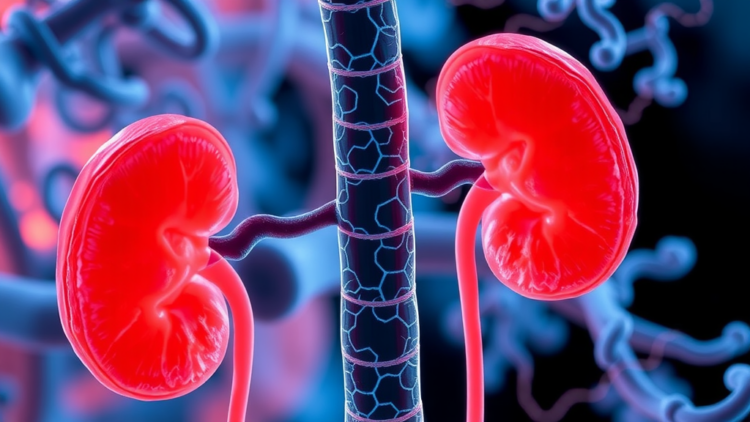
Clear cell renal cell carcinoma, the most common and most lethal form of kidney cancer, has long frustrated oncologists with its stubborn resistance to chemotherapy and radiotherapy. Now, a research team reporting in the journal Cancer Reports has identified an unexpected player in the disease’s progression: RPL28, a structural component of the cell’s protein-making machinery that appears to moonlight as a tumor promoter. The study, which combined large-scale genomic data mining with laboratory experiments on kidney cancer cells, suggests that this humble ribosomal protein could serve both as a prognostic biomarker for identifying high-risk patients and as a promising therapeutic target in a cancer that urgently needs new options.
The clinical stakes are considerable. Renal cell carcinoma accounts for roughly 3.8 percent of adult cancer diagnoses, and clear cell carcinoma represents about 75 percent of those cases. According to the 2023 Cancer Statistics Report, the United States was projected to see 81,800 new kidney cancer cases and 14,890 deaths. Surgery remains the mainstay of treatment, but more than half of patients develop metastasis after nephrectomy, and the five-year survival rate for metastatic disease languishes below 12 percent. Against this grim backdrop, the search for molecular markers that can stratify risk and reveal actionable vulnerabilities has taken on real urgency.
RPL28 belongs to a family of proteins that assemble into ribosomes, the molecular factories that translate messenger RNA into protein. Eukaryotic ribosomes comprise a large 60S subunit containing roughly 46 ribosomal proteins and a small 40S subunit with about 33 more. Yet ribosomal proteins are increasingly recognized as multitaskers, engaging in extraribosomal functions that include regulating proliferation, apoptosis, DNA repair, and cell cycle control. Recent work has implicated them in tumorigenesis across multiple cancers, and the new study asked whether RPL28, located on chromosome 19q13.42, plays a similar role in kidney cancer, whose distinct molecular landscape of VHL-driven pseudohypoxia, metabolic reprogramming, and frequent chromosome 3p alterations could give ribosomal components entirely different significance than in colorectal or liver tumors, where RPL28 had previously drawn attention.
The researchers began by mining RNA sequencing data from The Cancer Genome Atlas, comparing 535 clear cell renal cell carcinoma specimens with 72 adjacent normal kidney tissues. RPL28 expression was markedly elevated in the tumors, a finding independently confirmed in the International Cancer Genome Consortium’s RECA-EU cohort of 91 tumors and 45 normal samples. Crucially, the team also validated the result at the protein level, using immunohistochemistry on paired tumor and normal tissue from 12 patients treated at Meizhou People’s Hospital, where the mean patient age was 62.3 years. A pan-cancer survey through the TIMER2.0 database further revealed RPL28 overexpression in breast, bladder, colon, liver, and lung cancers, positioning the protein as a broad marker of malignant behavior.
When the TCGA cohort was split into high- and low-expression groups at the median, the differences were striking. Elevated RPL28 correlated significantly with male sex, tumor presence, higher histological grade, advanced T stage, distant metastasis, and advanced TNM stage. Survival analysis drove the point home: patients with high RPL28 expression had significantly worse overall survival, with a hazard ratio of 1.5, and worse disease-specific survival, with a hazard ratio of 1.9. Multivariate Cox regression confirmed that RPL28 expression stood as an independent prognostic factor alongside histological grade and TNM stage. The team then built nomograms incorporating RPL28 to predict one-, three-, and five-year survival, achieving area under the curve values of 0.856, 0.798, and 0.753 respectively, outperforming any single clinical factor in both ROC and decision curve analyses.
The study also probed how RPL28 relates to the molecular subtypes defined by kidney cancer’s characteristic driver mutations. Among the genes examined, including VHL, PBRM1, BAP1, KDM5C, MTOR, TP53, PTEN, PIK3CA, and ARID1A, only SETD2 showed a significant association, with RPL28 expression significantly higher in SETD2-mutant tumors. Because SETD2 regulates chromatin and transcription, the authors caution that this exploratory finding is hypothesis-generating rather than proof of direct regulation, but it hints that RPL28 overexpression may arise within a specific epigenetic context rather than being a generic byproduct of the common 3p deletions that dominate the disease.
Given that clear cell renal cell carcinoma is among the most immune-infiltrated solid tumors and responds clinically to immunotherapy, the researchers examined whether RPL28 expression tracked with immune features. Using xCell algorithms adjusted for tumor purity, they found that RPL28-high tumors harbored significantly different levels of regulatory T cells, NKT cells, and mast cells. Checkpoint gene analysis added nuance: the RPL28-high group showed higher expression of PDCD1 and LAG3 but lower levels of CD274 and PDCD1LG2, the genes encoding PD-L1 and PD-L2. A pharmacogenomic analysis using CTRP-trained models further suggested that RPL28-high tumors might be more sensitive to several targeted agents, including axitinib, sunitinib, sorafenib, pazopanib, cabozantinib, and temsirolimus, though the authors stress these computational predictions await experimental validation.
The most compelling evidence came from the laboratory. The team silenced RPL28 in two clear cell renal cell carcinoma cell lines, 786-O and OSRC-2, using lentiviral short hairpin RNA, confirming efficient knockdown by quantitative PCR. Cell Counting Kit-8 assays showed that RPL28 silencing significantly impaired proliferation in both lines, while wound-healing assays, quantified over 24 hours in serum-reduced conditions to exclude proliferative effects, revealed a marked drop in migratory capacity. Gene set enrichment analysis supplied a mechanistic framework: elevated RPL28 expression was strongly associated with epithelial-mesenchymal transition, the developmental program that endows cancer cells with mobility and invasiveness, as well as with TGF-beta and MYC signaling, two pathways known to drive EMT. The correlation between RPL28 and EMT reached a coefficient of 0.335 and held across multiple cancer types in the pan-cancer analysis.
These results fit into a growing body of work showing that individual ribosomal proteins can steer cancer behavior. RPL23 has been linked to cisplatin resistance in ovarian cancer through EMT activation, RPS7 overexpression promotes growth and migration in prostate cancer, and RPL14 drives proliferation and invasion in nasopharyngeal carcinoma. The concept of ribosome heterogeneity, in which tumors assemble ribosomes with varying protein compositions to preferentially translate mRNAs supporting proliferation, stress adaptation, and therapeutic resistance, offers a plausible explanation for how a single ribosomal protein could exert such outsized influence in a tumor defined by metabolic and translational plasticity.
The authors are candid about the study’s limitations. Survival analyses rested primarily on a single cohort, immune infiltration was inferred computationally from bulk RNA sequencing, myeloid-derived suppressor cells were not directly estimated, drug sensitivity was predicted rather than tested, and the functional experiments were confined to cell cultures. Multicenter validation, in vivo models, and mechanistic dissection will be needed before RPL28 reaches the clinic. Nevertheless, the convergence of evidence, from overexpression in tumors to independent prognostic power to demonstrable effects on cancer cell proliferation and migration, makes RPL28 a rare example of a ribosomal component emerging as a credible biomarker and drug target in one of oncology’s most challenging cancers.
Subject of Research: The role of the ribosomal protein RPL28 in the progression, prognosis, and potential treatment of clear cell renal cell carcinoma
Article Title: Knockdown of RPL28 Inhibits the Progression of Clear Cell Renal Cell Carcinoma
Article References: Luo, R., Wu, G., Xie, Z., Xiao, Y., Zhu, W., & Jiang, H. (2026). Knockdown of RPL28 Inhibits the Progression of Clear Cell Renal Cell Carcinoma. Cancer Reports, 9(9), Article e70683. https://doi.org/10.1002/cnr2.70683
Image Credits: AI Generated
DOI: 10.1002/cnr2.70683
Keywords: RPL28, clear cell renal cell carcinoma, kidney cancer, ribosomal protein, prognostic biomarker, epithelial-mesenchymal transition, TCGA, SETD2, immune infiltration, drug sensitivity, TGF-beta signaling, MYC signaling
Cite Scienmag News
APA MLA Chicago
Nathaniel Bowman. (September 26, 2026). Ribosomal Protein RPL28 Emerges as a Driver and Prognostic Marker in Kidney Cancer. Scienmag. https://scienmag.com/ribosomal-protein-rpl28-emerges-as-a-driver-and-prognostic-marker-in-kidney-cancer/
Nathaniel Bowman. “Ribosomal Protein RPL28 Emerges as a Driver and Prognostic Marker in Kidney Cancer.” Scienmag, 26 September 2026, https://scienmag.com/ribosomal-protein-rpl28-emerges-as-a-driver-and-prognostic-marker-in-kidney-cancer/. Accessed 26 September 2026.
Nathaniel Bowman. “Ribosomal Protein RPL28 Emerges as a Driver and Prognostic Marker in Kidney Cancer.” Scienmag. September 26, 2026. https://scienmag.com/ribosomal-protein-rpl28-emerges-as-a-driver-and-prognostic-marker-in-kidney-cancer/
Copy citation Download RIS
Tags: clear cell renal cell carcinomaclear cell renal cell carcinoma resistancedrug sensitivityepithelial-mesenchymal transitiongenomic data mining in kidney cancerimmune infiltrationkidney cancerkidney cancer prognostic biomarkerskidney cancer survival rates and risk stratificationmolecular mechanisms of kidney cancer progressionmolecular targets for kidney cancer therapyMYC signalingprognostic biomarkerprognostic markers for metastatic kidney cancerribosomal proteinribosomal protein biomarkersribosomal proteins as cancer driversRPL28RPL28 in renal cell carcinomaSETD2TCGATGF-beta signalingtherapeutic targets in renal cell carcinomatumor-promoting functions of RPL28