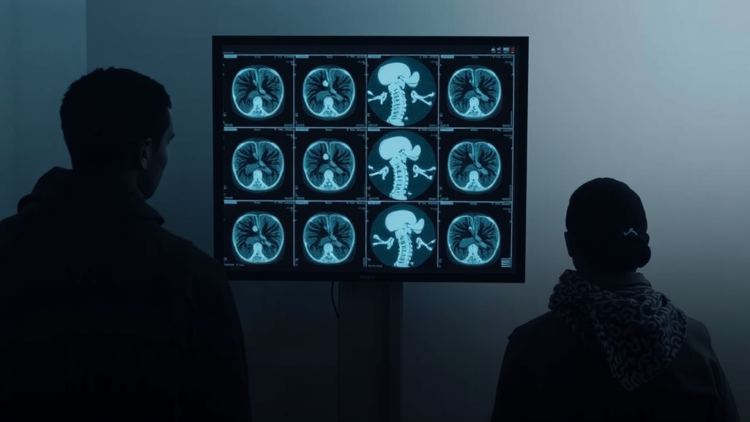
Deep inside the human body, a tumor can be starved, burned, or destroyed through a needle thinner than a pencil — no open incision required. This is the promise of interventional radiology, a medical specialty that combines real-time imaging with catheters, wires, and ablative energy to treat disease at its source. Yet across sub-Saharan Africa, home to more than a billion people, this form of medicine has historically been almost entirely absent. A new editorial published in CVIR Oncology by Fabian M. Laage Gaupp of Yale School of Medicine and colleagues lays out both the scale of that gap and a strikingly concrete roadmap for closing it. Just a decade ago, not a single country in the region offered dedicated, accredited training in the specialty, and in most countries there was not one practicing interventional radiologist at all.
The stakes could hardly be higher. Africa comprises 54 countries, 1.5 billion people, and more than 2,000 spoken languages, and it is now the fastest-growing continent on Earth, with its population projected to reach 3 billion by 2060 and 4 billion by 2100. Against that demographic surge, the cancer care infrastructure of sub-Saharan Africa remains among the weakest in the world. Current estimates suggest that nearly 1 million Africans will die each year from cancer by 2030, an increase of 106 percent from 2018. Late-stage diagnoses compound the crisis: because many patients present only when disease has already spread, a large proportion need metastatic disease management and palliative pain strategies — precisely the domains where minimally invasive, image-guided techniques excel.
The technical repertoire of interventional oncology is broad and increasingly sophisticated. Transarterial chemoembolization, for example, threads a microcatheter through the arterial system directly into the vessel feeding a liver tumor, delivering concentrated chemotherapy mixed with embolic particles that simultaneously cut off the tumor’s blood supply. Radioembolization goes further, infusing millions of microscopic resin or glass beads loaded with yttrium-90, a beta-emitting isotope that irradiates tumor tissue from within while sparing healthy liver. Thermal ablation, guided by ultrasound, computed tomography, or magnetic resonance imaging, applies radiofrequency energy, microwave fields, or cryogenic probes to coagulate tumor cells in situ, achieving local tumor control with a fraction of the morbidity of open surgery. These therapies have become standard of care for selected liver cancers and oligometastatic disease in high-income settings.
The flagship example of unmet need is hepatocellular carcinoma, the most common primary liver cancer and a disease driven in Africa by endemic hepatitis B infection, aflatoxin exposure, and other regional factors. HCC ranks as the fourth most common cancer in Africa and the sixth worldwide, and fully 80 percent of cases occur in low- and middle-income countries. Yet despite decades of evidence supporting locoregional therapies elsewhere, there are only a handful of reports on the use of interventional oncology treatments in sub-Saharan Africa, and no clinical trials at all on ablation, radioembolization, or transarterial chemoembolization in the region. A 2025 study from an African cohort comparing transarterial chemoembolization outcomes for advanced HCC against sorafenib and best supportive care underscores how much local evidence remains to be generated.
The consequences of this near-total absence of image-guided intervention extend far beyond cancer. The editorial’s authors describe children dying during open surgery simply because image-guided drainage of an abscess or fluid collection was unavailable — a procedure that, in equipped hospitals, can be performed through a needle track of a few millimeters using ultrasound or fluoroscopic guidance. Women continue to die in large numbers from obstetric hemorrhage, a condition that interventional radiologists can often resolve with selective uterine artery embolization, in which coils or particles are deployed through a catheter in the femoral artery to block bleeding vessels while preserving the uterus. And countless cancer patients never receive a definitive diagnosis because no one can perform a core needle biopsy under imaging guidance, the foundational step that allows tumor tissue to be sampled safely and accurately for pathology and molecular profiling.
Against this backdrop, a new generation of African physicians and their international partners has begun building the specialty from nothing. In 2018, the newly founded Society of African Interventional Radiology and Endovascular Therapy, known as SAFIRE, set an audacious benchmark: one practicing interventional radiologist per 1 million population across the continent. That ratio may sound modest by Western standards — the United States and Europe operate at many times that density — but reaching it in Africa would require a fundamental expansion of training capacity, equipment, and hospital infrastructure. The target reflects a pragmatic calculation of the minimum specialist density needed to deliver core services such as biopsies, drainages, vascular access, embolization, and tumor ablation nationwide.
The centerpiece of this effort is the Road2IR consortium, which in 2019 launched the first accredited two-year interventional radiology fellowship in sub-Saharan Africa, based at Muhimbili National Hospital in Dar es Salaam, Tanzania. The program expanded to Uganda in 2023 and to Rwanda in 2025, creating a small but growing pipeline of locally trained specialists. The training model is deliberately structured around sustainability: international teams of faculty, nurses, and technologists — more than 130 visiting teams to date, drawn from institutions including Emory, Duke, Michigan, Wits, and Yale — make monthly two-week teaching visits, with a gradual transition to locally led training planned after five years. Rather than fly patients out or fly individual doctors in for brief observerships, the consortium embeds a complete clinical ecosystem, ensuring that nursing staff, technologists, and catheterization laboratory protocols mature alongside the physicians.
The results so far are tangible. The programs have produced 22 graduates, with 12 fellows currently in training. Crucially, the trainees include not only citizens of the host nations but also international fellows from Eritrea, Nigeria, Sierra Leone, Somalia, and the Democratic Republic of the Congo — a demographic spread that both demonstrates the desperate continental demand and seeds the specialty in countries that have no programs of their own. The success of Road2IR has already inspired additional interventional radiology training initiatives in Eastern and Western Africa, suggesting a self-reinforcing pattern in which each graduating cohort becomes the faculty for the next.
Yet the arithmetic of the challenge remains sobering. To achieve SAFIRE’s goal of a steady state of one interventional radiologist per 1 million population by 2060, the annual output of graduates in Africa must rise from currently fewer than 20 to at least 100 within the next decade — a fivefold increase. The editorial identifies the binding constraints: a lack of adequate imaging equipment, from angiography suites to ultrasound machines, and a largely nonexistent supply chain for consumables such as catheters, guidewires, embolic agents, and ablation probes. Solving these problems, the authors argue, will require sustained engagement and investment from industry, which so far has had little commercial incentive to build distribution networks for the region. International societies can accelerate progress by coordinating and financing training efforts, raising awareness, and guiding industry partners; the Cardiovascular and Interventional Radiological Society of Europe, CIRSE, is currently leading the way with a dedicated task force and investment focused on Africa in partnership with Road2IR and other organizations.
What makes this story remarkable is that the transformation is being engineered rather than awaited. The combination of a defined workforce target, an accredited fellowship model proven across three countries, a deliberate handover to local training capacity, and emerging society and industry partnerships amounts to one of the most concrete plans anywhere in global oncology for building a high-technology specialty from the ground up. If the trajectory holds — if graduate output multiplies fivefold, if equipment and supply chains follow the clinicians, and if the first African trials of ablation and transarterial therapies eventually enroll patients — then the patients most likely to benefit are those for whom the stakes are highest: children with drainable infections, mothers hemorrhaging in delivery wards, and hundreds of thousands of cancer patients whose tumors could be treated through a pinhole rather than an incision. The needle, in sub-Saharan Africa, is finally pointing in the right direction.
Subject of Research: Expansion of interventional radiology training and interventional oncology services for cancer care in sub-Saharan Africa
Article Title: The impact of interventional radiology on cancer care in sub-Saharan Africa
Article References: The impact of interventional radiology on cancer care in sub-Saharan Africa. (n.d.). https://doi.org/10.1007/s44343-026-00034-6
Image Credits: AI Generated
DOI: 10.1007/s44343-026-00034-6
Keywords: interventional radiology, interventional oncology, sub-Saharan Africa, cancer care, hepatocellular carcinoma, transarterial chemoembolization, radioembolization, thermal ablation, Road2IR, SAFIRE, medical training, global health
Cite Scienmag News
APA MLA Chicago
Nathaniel Bowman. (September 26, 2026). How Image-Guided Medicine Could Transform Cancer Care Across Sub-Saharan Africa. Scienmag. https://scienmag.com/how-image-guided-medicine-could-transform-cancer-care-across-sub-saharan-africa/
Nathaniel Bowman. “How Image-Guided Medicine Could Transform Cancer Care Across Sub-Saharan Africa.” Scienmag, 26 September 2026, https://scienmag.com/how-image-guided-medicine-could-transform-cancer-care-across-sub-saharan-africa/. Accessed 26 September 2026.
Nathaniel Bowman. “How Image-Guided Medicine Could Transform Cancer Care Across Sub-Saharan Africa.” Scienmag. September 26, 2026. https://scienmag.com/how-image-guided-medicine-could-transform-cancer-care-across-sub-saharan-africa/
Copy citation Download RIS
Tags: advancing cancer treatment through imagingcancer carecancer care challenges in Africacancer treatment infrastructure in Africademographic growth and healthcare needsdevelopment of interventional radiology trainingfuture of radiology in AfricaGlobal Healthhealthcare gaps in sub-Saharan Africahepatocellular carcinomaimage-guided medicine for cancerinnovative medical technologies for low-resource settingsinterventional oncologyinterventional radiologyinterventional radiology in sub-Saharan Africamedical trainingminimally invasive cancer therapiesradioembolizationregional disparities in cancer careRoad2IRSAFIREsub-Saharan Africathermal ablationtransarterial chemoembolization