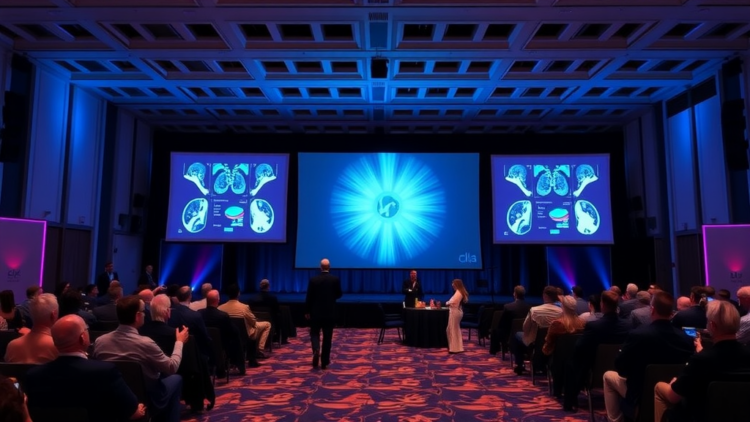
BOSTON — The world’s largest gathering of radiation oncology professionals opens here this week, and the research lineup suggests the field is approaching an inflection point. At the 2026 Annual Meeting of the American Society for Radiation Oncology, better known as ASTRO, more than 2,500 abstracts will be presented across five days, September 26 through 30, both in person at the Boston convention venue and online. Among them, a select group of studies has been singled out by ASTRO experts as highlights for the news media, spanning breast cancer, liver cancer, lung cancer, prostate cancer, pediatric sarcoma and health equity in treatment access.
The meeting, led by ASTRO President Neha Vapiwala, MD, FASTRO, is expected to draw roughly 10,000 oncologists, clinicians, physicists, researchers and other health care professionals from around the globe. Its theme this year, “Data to Dialogue: Communicating Radiotherapy’s Value to Advance Care,” signals a deliberate push to translate dense clinical trial results into conversations that patients, policymakers and the broader public can actually use. The program includes keynote addresses from former U.S. Food and Drug Administration Commissioner Scott Gottlieb, MD, and the award-winning oncologist and bioethicist Ezekiel Emanuel, MD, PhD, along with expert panels on two of the most consequential frontiers in cancer medicine today: artificial intelligence and radiopharmaceutical therapy.
One of the most anticipated presentations is a ten-year outcomes report from a phase 3 randomized trial comparing hypofractionated versus conventional fractionated postmastectomy radiotherapy in high-risk breast cancer patients. Fractionation — the practice of dividing a total radiation dose into many smaller daily treatments — has been a cornerstone of radiotherapy for decades, but the standard schedule for patients who have undergone mastectomy has historically been longer than for those who had lumpectomy. Hypofractionation compresses treatment by delivering larger doses per session over fewer visits, and long-term phase 3 data in the postmastectomy setting could reshape how clinicians counsel tens of thousands of women each year about the trade-offs between convenience, toxicity and cancer control.
The breast cancer theme continues with a study that addresses a different kind of gap: not biological, but logistical. The Navigator-Assisted Hypofractionation program, known as NAVAH, examined the impact of patient navigation within a cancer center-community partnership on access to short-course radiation therapy for African-American breast cancer patients. Shorter hypofractionated courses reduce the burden of daily travel, missed work and childcare conflicts — burdens that fall disproportionately on under-resourced patients — yet adoption has lagged in exactly the communities that stand to benefit most. Early results from this program, presented by Afua Ofori-Darko, BS, MPH, offer a test of whether structured navigation and community partnerships can close that gap, an approach that aligns squarely with the meeting’s “Data to Dialogue” theme.
Liver cancer takes center stage in two separate highlight abstracts. The first is the initial results of NRG-GI003, a phase III randomized trial from NRG Oncology comparing protons with photons — that is, proton beam therapy versus conventional X-ray-based radiotherapy — for hepatocellular carcinoma, the most common form of primary liver cancer. Proton therapy has long been promoted on theoretical grounds: protons deposit most of their energy at a precise depth and stop, sparing healthy tissue downstream of the tumor. In the liver, where patients often have compromised organ function and limited reserve, that dosimetric advantage could translate into meaningful clinical differences. Whether those physics advantages hold up as survival and toxicity outcomes in a rigorous randomized comparison is precisely the question NRG-GI003 was designed to answer, with results presented by Theodore Hong, MD.
A second liver cancer study, from a Chinese research group led by Lihong Wang, MD, tackles an earlier stage of disease. In an interim analysis of a prospective, single-center, non-inferiority randomized clinical trial registered as ChiCTR2000039404, researchers compared stereotactic body radiation therapy, or SBRT, against radiofrequency ablation for small hepatocellular carcinomas measuring two centimeters or less. Radiofrequency ablation has been a standard local treatment for small liver tumors, but it has limitations: tumors in difficult locations may be incompletely treated, and the technique’s effectiveness can depend heavily on tumor position and operator skill. SBRT delivers highly focused, ablative doses of radiation in just a few sessions, and a randomized non-inferiority comparison against ablation could establish radiation as an equally valid first-line option for the smallest liver tumors — a potentially practice-changing result if the interim data hold.
Lung cancer features prominently as well, with two distinct studies. The I-SABR trial reported six-year overall survival data for patients with early-stage non-small cell lung cancer who received nivolumab, an immune checkpoint inhibitor, following stereotactic ablative radiotherapy. The rationale behind combining radiation with immunotherapy rests on a compelling biological idea: radiation can kill tumor cells in ways that release tumor antigens and may prime the immune system, potentially turning a localized treatment into a systemic one. Randomized evidence on whether that synergy improves long-term survival in early-stage disease, presented by Joe Chang, MD, PhD, MS, FASTRO, is among the most closely watched data of the meeting.
The second lung cancer study addresses a frustrating clinical scenario. In the phase 2 MDT-Bridge study, patients with resectable or borderline resectable stage IIB–IIIB non-small cell lung cancer who became unresectable during neoadjuvant treatment were treated with chemoradiotherapy followed by consolidation durvalumab. For these patients, the surgical option disappears mid-treatment, and the study — presented as a late-breaking abstract by Andrea Filippi, MD — explores whether a bridge of definitive chemoradiation plus immunotherapy can salvage outcomes when surgery is no longer on the table. The strategy reflects a broader shift in thoracic oncology, where the boundaries between surgery, radiation and drug therapy are increasingly treated as fluid rather than fixed.
Prostate cancer and pediatric oncology round out the highlight list. NRG Oncology GU003 reported five-year results of a phase 3 trial comparing hypofractionated with conventional postprostatectomy radiotherapy, presented by Mark Buyyounouski, MD, MS, FASTRO — another test of whether shorter schedules can match longer ones in the adjuvant setting after surgery. And from the Children’s Oncology Group, Nadia Laack, MD, MS, presented results from AEWS1221 examining stereotactic body radiation therapy and comprehensive metastasis-directed therapy for patients with Ewing sarcoma, an aggressive cancer of bone and soft tissue that primarily strikes children and young adults. Metastasis-directed therapy — using precisely targeted radiation to attack individual sites of spread — represents one of the most conceptually ambitious ideas in modern radiation oncology, and applying it within a cooperative group pediatric trial marks an important step in bringing that approach to younger patients.
Taken together, the highlighted studies sketch a portrait of a field in transition. Shorter, more convenient treatment schedules are being validated across tumor types. Particle therapy is being put to the test in randomized trials rather than relying on dosimetric theory alone. Radiation is being combined with immunotherapy in ways that exploit its biological, not just its physical, effects. And the field is confronting directly who gets access to its advances, and why. ASTRO, the world’s largest professional society dedicated to advancing radiation medicine with 11,000 members, notes that radiation therapy is integral to 40 percent of cancer cures worldwide and that more than one million Americans receive radiation treatment for cancer each year. The data presented in Boston this week — and the conversations they are designed to spark — will help determine what those treatments look like for the next generation of patients.
Subject of Research: Clinical trial highlights in radiation oncology presented at the 2026 ASTRO Annual Meeting
Article Title: Additional research highlights from the 2026 ASTRO Annual Meeting
Article References: Additional research highlights from the 2026 ASTRO Annual Meeting. (n.d.). Original publication
Image Credits: AI Generated
DOI: Not provided
Keywords: ASTRO 2026, radiation oncology, hypofractionation, proton therapy, hepatocellular carcinoma, SBRT, nivolumab, immunotherapy, Ewing sarcoma, breast cancer, lung cancer, health equity
Cite Scienmag News
APA MLA Chicago
Nathaniel Bowman. (September 26, 2026). Radiation Oncology’s Biggest Meeting Returns to Boston With Landmark Trials in Breast, Liver and Lung Cancer. Scienmag. https://scienmag.com/radiation-oncologys-biggest-meeting-returns-to-boston-with-landmark-trials-in-breast-liver-and-lung-cancer/
Nathaniel Bowman. “Radiation Oncology’s Biggest Meeting Returns to Boston With Landmark Trials in Breast, Liver and Lung Cancer.” Scienmag, 26 September 2026, https://scienmag.com/radiation-oncologys-biggest-meeting-returns-to-boston-with-landmark-trials-in-breast-liver-and-lung-cancer/. Accessed 26 September 2026.
Nathaniel Bowman. “Radiation Oncology’s Biggest Meeting Returns to Boston With Landmark Trials in Breast, Liver and Lung Cancer.” Scienmag. September 26, 2026. https://scienmag.com/radiation-oncologys-biggest-meeting-returns-to-boston-with-landmark-trials-in-breast-liver-and-lung-cancer/
Copy citation Download RIS
Tags: ASTRO 2026ASTRO annual meeting 2026breast cancerbreast cancer radiation therapyclinical trials in radiation oncologycommunication of radiotherapy benefitsEwing sarcomaglobal oncology professional gatheringhealth equityhealth equity in cancer treatmenthepatocellular carcinomahypofractionationImmunotherapyliver cancer radiotherapy researchlung cancerlung cancer treatment advancementsnivolumabpediatric sarcoma radiation studiesprostate cancer radiotherapyproton therapyradiation oncologyRadiation oncology conferenceSBRTtranslating clinical trial data into patient care