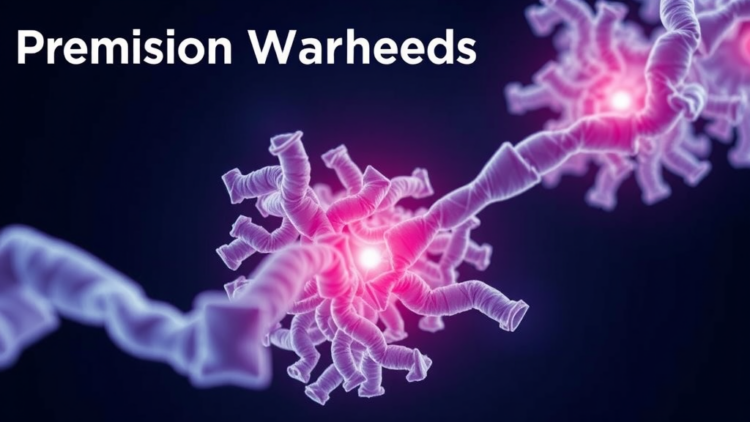
Lung cancer remains the deadliest malignancy worldwide, and non-small cell lung cancer (NSCLC) accounts for roughly 85 percent of all cases. Yet a new class of engineered molecules is rapidly rewriting the treatment landscape. Antibody–drug conjugates, or ADCs, are often described as biological guided missiles: a monoclonal antibody that homes in on a tumor-specific antigen, a chemical linker that holds the weapon steady in the bloodstream, and a cytotoxic payload thousands of times more potent than conventional chemotherapy. A comprehensive review published in Holistic Integrative Oncology by researchers at Jiangsu Cancer Hospital and Nanjing Medical University charts how these agents have moved from experimental curiosities to central players in advanced NSCLC, and what obstacles still stand between today’s results and tomorrow’s cures.
The concept is deceptively simple, but the engineering is anything but. A classical ADC must remain stable in circulation, recognize its target antigen on the tumor surface, bind specifically, and then be internalized so the payload can enter the lysosome and trigger programmed cell death. Every component matters. The antibody is usually a humanized immunoglobulin G1, chosen for its long serum half-life of roughly two to three weeks and its ability to recruit immune effector mechanisms such as antibody-dependent cell-mediated cytotoxicity. The linker, whether cleavable or non-cleavable, governs when and where the toxin is released. The payload itself must be extraordinarily potent, because only about two percent of an administered ADC dose ever reaches its target antigen, demanding warheads two to six orders of magnitude stronger than standard chemotherapy drugs.
Among the payload classes, tubulin inhibitors such as auristatins and maytansines sabotage cell division, while DNA-damaging agents including topoisomerase I inhibitors, calicheamicins, and pyrrolobenzodiazepines attack the genome directly. A third emerging category uses immunomodulators such as Toll-like receptor and STING agonists to rouse innate immunity. One of the most consequential design features is the bystander effect: membrane-permeable payloads released either inside a tumor cell or in the surrounding microenvironment can diffuse into neighboring cells with low or absent antigen expression, killing tumor cells that would otherwise escape. The drug-to-antibody ratio, determined by the conjugation chemistry, is a delicate balancing act, since lowering it reduces toxicity but also weakens antitumor activity.
No target illustrates the clinical promise of ADCs better than TROP2, a transmembrane glycoprotein highly expressed in roughly 64 percent of lung adenocarcinomas and 75 percent of lung squamous cell carcinomas, where it drives proliferation, invasion, and metastasis. Datopotamab deruxtecan, a humanized anti-TROP2 antibody linked to the topoisomerase I inhibitor DXd, extended median progression-free survival to 4.4 months versus 3.7 months with docetaxel in the phase III TROPION-Lung01 trial, with the benefit concentrated in non-squamous disease, where PFS reached 5.5 months. While overall survival did not reach statistical significance in the overall population, grade three or higher treatment-related adverse events were far less frequent than with chemotherapy. In combination with pembrolizumab in TROPION-Lung02, objective response rates climbed to nearly 55 percent regardless of PD-L1 expression, and pairing the drug with the bispecific antibody rilvegostomig in TROPION-Lung04 produced a confirmed response rate of 57.5 percent with disease control in 95 percent of patients.
Chinese-developed agents are pushing the field further. Sacituzumab tirumotecan, the first domestically developed TROP2 ADC in China, carries a proprietary toxin at a high drug-to-antibody ratio of 7.4 and produced striking results in EGFR-mutant NSCLC: in the OptiTROP-Lung03 trial it nearly tripled progression-free survival compared with docetaxel, at 6.9 versus 2.8 months, with no interstitial lung disease observed. When combined with the immunotherapy tagitanlimab as first-line treatment in OptiTROP-Lung01, the confirmed response rate reached 66.7 percent, and even patients with PD-L1 scores below one percent, who typically respond poorly to immunotherapy alone, achieved a 47.1 percent response rate and 12.4 months of progression-free survival. A phase III trial is now testing this combination against standard chemo-immunotherapy in that difficult population. Sacituzumab govitecan, meanwhile, showed a clinically meaningful survival benefit in patients refractory to prior immunotherapy in the EVOKE-01 study, even though the overall result narrowly missed its statistical threshold.
HER2-targeted ADCs have delivered perhaps the most dramatic transformation. Before their arrival, patients with HER2-mutant NSCLC faced response rates below 15 percent and progression-free survival of only three to four months on standard chemotherapy. Trastuzumab deruxtecan changed that calculus entirely: in DESTINY-Lung02, the 5.4 mg/kg dose produced a confirmed response rate of 50 percent, progression-free survival of 10 months, and median overall survival of 19 months, while the Chinese DESTINY-Lung05 study confirmed a 56.9 percent response rate and 21 months of overall survival, with sustained intracranial control of brain metastases. The next-generation agent trastuzumab rezetecan, known as SHR-A1811, went further still, achieving an unprecedented 73.4 percent response rate and 11.5 months of progression-free survival in heavily pretreated patients, with an interstitial lung disease incidence of just 8.5 percent and a discontinuation rate of only 2.1 percent. The eribulin-based BB-1701 added a 50 percent response rate in a small phase II study, though efficacy in HER2-overexpressing disease remains unresolved.
The target landscape continues to widen. The c-MET-directed ADC SHR-1826 achieved a 39.7 percent response rate and 94.8 percent disease control rate among 58 evaluable NSCLC patients, offering a new strategy against a pathway notorious for driving resistance to EGFR inhibitors. The Nectin-4-targeting SHR-A2102 produced a 43.5 percent response rate in heavily pretreated EGFR-mutant patients, and the integrin beta-6-targeting sigvotatug vedotin reached a 32.5 percent response rate in taxane-naive non-squamous disease, rising to 42.9 percent when combined with pembrolizumab in the first-line setting. Most ambitious of all are bispecific constructs such as izalontamab brengitecan, which targets both EGFR and HER3 simultaneously; in pooled phase I and II analyses of EGFR-mutant NSCLC after TKI failure, it delivered a 48.8 percent response rate, 6.9 months of progression-free survival, and 24.8 months of overall survival, with interstitial lung disease occurring in fewer than one percent of patients, supporting its advance to global phase III registration.
Yet the review is candid about the field’s vulnerabilities. Resistance emerges through multiple routes: tumors downregulate or shed the target antigen, mask it with extracellular matrix proteins, upregulate efflux pumps such as MDR1 and ABCG2 that expel the payload, impair internalization through altered endocytic pathways, or raise lysosomal pH so the linker never releases its cargo. In TROP2-directed therapy, antigen-negative subclones gradually dominate under treatment pressure, while resistance to trastuzumab deruxtecan frequently involves HER2 extracellular domain truncations that preserve kinase activity but eliminate antibody binding. Toxicity remains a serious concern, above all interstitial lung disease, a potentially fatal inflammation of lung tissue associated particularly with topoisomerase I inhibitor payloads, which demands baseline pulmonary testing, vigilant imaging, and prompt corticosteroid intervention. And perhaps most frustratingly, reliable predictive biomarkers are still lacking: conventional immunohistochemistry scores correlate inconsistently with outcomes, and no standardized thresholds exist across platforms, although emerging tools such as circulating tumor DNA analysis and spatial transcriptomics offer hope for smarter patient selection.
The future directions outlined by the authors suggest the field is only beginning to mature. ADCs are moving into earlier disease settings, with the NeoCOAST-2 trial showing that perioperative datopotamab deruxtecan plus durvalumab and chemotherapy achieved a 35.2 percent pathological complete response rate in resectable NSCLC, the best among all tested cohorts. Novel targets including B7-H3, PTK7, and AXL are entering clinical evaluation, while next-generation engineering, from conditionally activated smart linkers and dual-payload constructs to site-specific conjugation platforms and PROTAC-based warheads, aims to widen the therapeutic window. Combination strategies with immune checkpoint inhibitors, EGFR tyrosine kinase inhibitors, and even radiotherapy are under active investigation. What emerges from this sweeping analysis is a clear trajectory: ADCs are transitioning from a promising salvage option to a foundational pillar of NSCLC care, and the coming decade will determine whether rational design, biomarker integration, and combination science can convert their remarkable response rates into durable, personalized cures.
Subject of Research: Antibody–drug conjugate therapy for non-small cell lung cancer
Article Title: Antibody–drug conjugates in non-small cell lung cancer: current landscape and future directions
Article References: Chen, X., Wu, S., Li, F., Yao, C., Liu, Y., & Zhou, G. (2026). Antibody–drug conjugates in non-small cell lung cancer: current landscape and future directions. Holistic Integrative Oncology, 5(1), Article 56. https://doi.org/10.1007/s44178-026-00276-7
Image Credits: AI Generated
DOI: 10.1007/s44178-026-00276-7
Keywords: antibody–drug conjugates, non-small cell lung cancer, TROP2, HER2, c-MET, datopotamab deruxtecan, sacituzumab tirumotecan, trastuzumab deruxtecan, bispecific antibodies, drug resistance, interstitial lung disease, biomarkers
Cite Scienmag News
APA MLA Chicago
Nathaniel Bowman. (September 26, 2026). Precision Warheads: How Antibody–Drug Conjugates Are Redefining Lung Cancer Treatment. Scienmag. https://scienmag.com/precision-warheads-how-antibody-drug-conjugates-are-redefining-lung-cancer-treatment/
Nathaniel Bowman. “Precision Warheads: How Antibody–Drug Conjugates Are Redefining Lung Cancer Treatment.” Scienmag, 26 September 2026, https://scienmag.com/precision-warheads-how-antibody-drug-conjugates-are-redefining-lung-cancer-treatment/. Accessed 26 September 2026.
Nathaniel Bowman. “Precision Warheads: How Antibody–Drug Conjugates Are Redefining Lung Cancer Treatment.” Scienmag. September 26, 2026. https://scienmag.com/precision-warheads-how-antibody-drug-conjugates-are-redefining-lung-cancer-treatment/
Copy citation Download RIS
Tags: ADC engineering challengesadvances in lung cancer immunotherapyantibody-drug conjugatesantibody-drug conjugates in oncologybiological guided missile cancer drugsBiomarkersbispecific antibodiesc-METcytotoxic payload deliverydatopotamab deruxtecandrug resistanceHER2interstitial lung diseaselung cancer treatmentmonoclonal antibody drug conjugatesnon-small cell lung cancernon-small cell lung cancer therapiesovercoming obstacles in ADC developmentsacituzumab tirumotecanstable drug delivery systemstargeted cancer therapytrastuzumab deruxtecanTROP2tumor-specific antigens