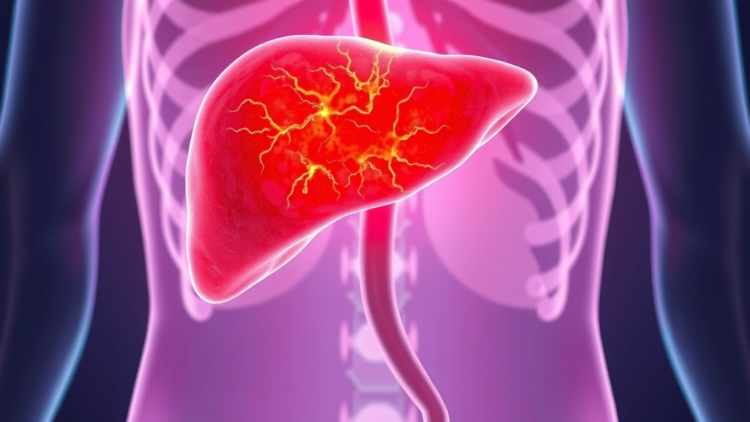
When doctors destroy a liver tumor with heat, the body responds in a remarkable and fleeting way: the tissue immediately surrounding the dead zone floods with blood, forming a hyperemic ring that is far more richly perfused than the healthy liver around it. For years, interventional radiologists have suspected that this reactive zone could be exploited to deliver chemotherapy directly to any tumor cells that survive at the ablation margin. What they lacked was a precise map of when this window of heightened blood flow opens, how wide it becomes, and how quickly it closes. A new prospective clinical study from Lund University and Skåne University Hospital in Sweden now provides that map, and its findings suggest that the golden opportunity for combination therapy may be measured in hours, not days.
The research, published in CVIR Oncology, focused on patients undergoing microwave ablation, a technique in which a needle-like antenna inserted into the tumor generates electromagnetic fields that heat and coagulate cancerous tissue. Thermal ablation and transarterial chemoembolisation, known as TACE, are both mainstays of hepatocellular carcinoma treatment and are included as first-line options for selected patients in the Barcelona Clinic Liver Cancer recommendations as well as in American, Asian-Pacific and European guidelines. Ablation is generally reserved for patients with three or fewer tumors no larger than three centimeters, while TACE serves patients with larger or more numerous tumors who are ineligible for transplantation. Because survival after TACE alone remains limited, clinicians have increasingly experimented with combining the two approaches, and several studies have shown that the combination improves overall survival, progression-free survival and local tumor control compared with chemoembolisation alone. What has been missing is any consensus on the optimal sequence and timing.
Two competing strategies dominate the field. In the TACE-first approach, embolising the hepatic arterial branches before ablation reduces the so-called heat-sink effect, in which flowing blood carries heat away from the tumor and shrinks the zone of destruction; blocking that flow first can enlarge the ablation zone. The alternative is to ablate first and follow with adjuvant TACE, a strategy motivated by the peri-ablational hyperemic response. The logic is elegant: the inflamed, hyperperfused tissue ringing the ablation cavity, with its increased blood flow, vascular permeability and reduced drug resistance, could act as a delivery corridor, allowing chemoembolic material loaded with cytotoxic drugs to reach vulnerable but potentially viable tumor cells lurking at the margin. Animal models had already demonstrated the existence of this hyperemic zone, including reports of erythrocyte congestion after thermal injury, but its temporal evolution in humans had never been systematically characterized.
To fill that gap, the Swedish team enrolled 38 patients scheduled for microwave ablation of primary liver tumors or metastases between February and October 2024 at their tertiary referral centre, ultimately analyzing 34 patients evenly split between those with cirrhosis and those without. All ablations were performed under general anesthesia in the angiography suite using Medtronic Emprint HP or Amica microwave systems under ultrasound guidance, with confirmation by cone-beam computed tomography. Each patient then underwent four contrast-enhanced ultrasound examinations at fixed intervals: immediately after the procedure, and again at two, six and twenty-four hours. The technique relies on microbubble contrast agents roughly the size of red blood cells, which are injected into a peripheral vein and tracked as they course through the liver, allowing repeated perfusion assessments without the radiation burden of repeated CT scans.
The analytical approach was as important as the imaging itself. Using dedicated quantification software, the researchers compared the mean linearized signal in the hyperemic zone immediately adjacent to the ablation cavity with the signal in normal liver parenchyma at matching depths, avoiding artifacts and shadowed regions. The result was a hyperemia-to-normal-liver ratio, or HTNL, expressing how many times more intensely perfused the reactive zone was than healthy tissue. Motion compensation algorithms corrected for respiratory movement, and the width of the hyperemic rim was measured on arterial-phase images in a joint consensus reading by three board-certified radiologists blinded to clinical information and time points. Statistical comparisons against baseline used pairwise Wilcoxon signed rank tests, with each patient serving as their own control.
The numbers were striking. Immediately after ablation, the hyperemic zone was perfused at 567.5 percent of normal liver intensity in the overall group, an almost sixfold arterial oversupply, with values of 464.8 percent in cirrhotic livers and 625.0 percent in non-cirrhotic ones. That peak proved transient. By two hours the overall group’s ratio had fallen by a median of 158.9 percentage points, by six hours the drop reached 283.8 points, and at twenty-four hours it stood at 270.9 points below baseline, with all changes statistically significant. The decline was steepest in the first six hours and then leveled off, suggesting the hyperemic response collapses rapidly and then plateaus at a lower intensity. Critically, the pattern held in both cirrhotic and non-cirrhotic patients, indicating that the vascular reactivity to thermal injury operates independently of the altered hepatic hemodynamics that cirrhosis produces.
The spatial dimension of the response told the same story. The hyperemic rim measured a median of twelve millimeters wide immediately after ablation in the overall group, ten millimeters in cirrhotic patients and fourteen in non-cirrhotic ones. Over the following day it shrank steadily, narrowing by two millimeters at two hours, three at six hours and five at twenty-four hours, with parallel trends in both patient subgroups. The portal venous phase, by contrast, showed only modest enhancement, around 181.8 percent at baseline in the overall group, and no meaningful temporal decline, which the authors interpret as strong evidence that the hyperemia is supplied principally by the hepatic artery rather than the portal vein. Some portal contribution or arterial recirculation of contrast through the inflamed area cannot be excluded, but the arterial signal dwarfs everything else.
These findings carry immediate implications for trial design. Because the hyperemic zone is widest and most intensely arterialized in the first hours after ablation, an ablation-first strategy followed by TACE would plausibly need to be executed within that early window to exploit the biology. Existing evidence on sequencing remains inconclusive: one study favored ablation followed by chemoembolisation, another found no difference by order, and crucially the intervals between the two treatments varied enormously across studies, meaning any timing-dependent advantage could have been washed out. By providing high temporal resolution of the hyperemic response in humans, the Swedish data give future combination trials a concrete physiological target: the first twenty-four hours after ablation, and arguably the first six.
The authors acknowledge limitations inherent to a real-world clinical study. Ultrasound is operator-dependent, mitigated here by a small number of experienced examiners, and the consensus approach to rim measurement, while pragmatic, suppresses inter-reader variability and precludes formal reproducibility analysis. Examination times, though closely approximating the intended intervals, could not always be identical, and ablation energy and duration were chosen for treatment benefit rather than standardized, though using each patient as their own control partially offsets that. Even so, the study’s strengths, repeated quantitative imaging without radiation exposure and objective software-based perfusion measurement, make the conclusion robust: the post-ablation hyperemia is arterially supplied, peaks immediately, and fades fast. For a treatment concept that has hovered between promise and practice for years, the clock has now been set, and the race to deliver drugs into that glowing ring of healing liver may finally have a schedule.
Subject of Research: Temporal characterization of peri-ablational hyperemia after microwave ablation of liver tumors using quantitative contrast-enhanced ultrasound
Article Title: Quantitative analysis of peri-ablational hyperemia after microwave ablation of liver tumors – exploring the timing for future combination therapies
Article References: Norström Svensson, M., Will, L., Östrand, E., Sartor, H., Tingstedt, B., Andersson, B., & Baubeta, E. (2026). Quantitative analysis of peri-ablational hyperemia after microwave ablation of liver tumors – exploring the timing for future combination therapies. CVIR Oncology, 2(1), Article 8. https://doi.org/10.1007/s44343-026-00040-8
Image Credits: AI Generated
DOI: 10.1007/s44343-026-00040-8
Keywords: microwave ablation, peri-ablational hyperemia, hepatocellular carcinoma, transarterial chemoembolisation, contrast-enhanced ultrasound, liver tumors, thermal ablation, liver cirrhosis, combination therapy, interventional radiology, tumor ablation margin, hepatic perfusion
Cite Scienmag News
APA MLA Chicago
Nathaniel Bowman. (September 24, 2026). Liver Tumor Ablation Leaves a Fleeting Blood-Surge Window That Could Transform Cancer Therapy. Scienmag. https://scienmag.com/liver-tumor-ablation-leaves-a-fleeting-blood-surge-window-that-could-transform-cancer-therapy/
Nathaniel Bowman. “Liver Tumor Ablation Leaves a Fleeting Blood-Surge Window That Could Transform Cancer Therapy.” Scienmag, 24 September 2026, https://scienmag.com/liver-tumor-ablation-leaves-a-fleeting-blood-surge-window-that-could-transform-cancer-therapy/. Accessed 24 September 2026.
Nathaniel Bowman. “Liver Tumor Ablation Leaves a Fleeting Blood-Surge Window That Could Transform Cancer Therapy.” Scienmag. September 24, 2026. https://scienmag.com/liver-tumor-ablation-leaves-a-fleeting-blood-surge-window-that-could-transform-cancer-therapy/
Copy citation Download RIS
Tags: advances in interventional radiology for liver cancerclinical mapping of blood flow changes after tumor destructioncombination therapycombination therapy windows in liver cancercontrast-enhanced ultrasoundhepatic perfusionhepatocellular carcinomahyperemic ring formation after microwave ablationinterventional radiologyliver cirrhosisLiver tumor ablation blood flow dynamicsliver tumorsmicrowave ablationmicrowave ablation for hepatocellular carcinomaoptimizing chemoembolperi-ablational hyperemiarapid blood flow changes in ablation marginsreactive zone blood perfusion in hepatic tumorstargeted chemotherapy delivery during tumor ablationthermal ablationtiming of chemo delivery post-ablationtransarterial chemoembolisationtransient blood surge window in liver cancer treatmenttumor ablation margin