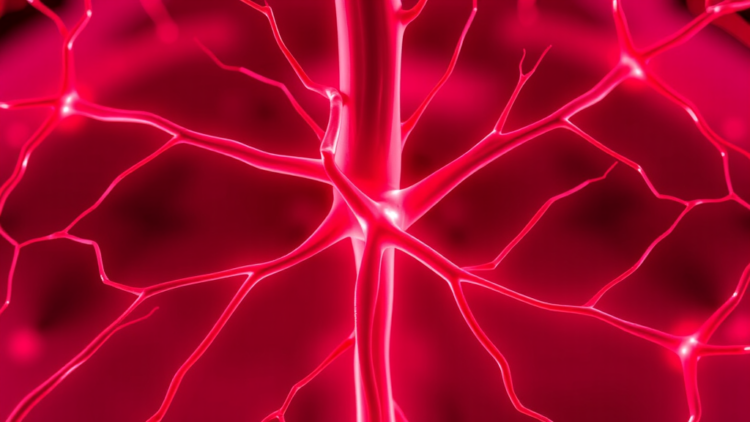
For millions of cancer survivors, the most enduring legacy of chemotherapy is not the tumor it destroyed but the tingling, burning, and numbness left behind in hands and feet. Chemotherapy-induced peripheral neuropathy, or CIPN, is one of the most common and stubborn adverse effects of modern cancer treatment, and it can persist for months or years after the last infusion. A new study published in the Journal of Cancer Survivorship now suggests that how patients mentally frame this nerve damage may be just as important as the damage itself in determining how much they suffer. The research, led by Qingchun Geng and Yanfei Jin of Nanjing Medical University together with colleagues at Tianjin Union Medical Center and The First Affiliated Hospital of Nanjing Medical University, offers a detailed psychological map of the pathways connecting belief, coping, and symptom experience in patients receiving platinum-based chemotherapy.
The study is grounded in the Common-Sense Model of self-regulation, a well-established framework in health psychology that describes how people respond to illness in much the same way they respond to any other threat. According to the model, patients build internal, common-sense representations of their condition: What is it? How long will it last? Can I control it? How much will it disrupt my life? These illness perceptions then drive coping behavior, and coping in turn shapes emotional and physical outcomes. The Chinese research team set out to test whether this chain holds for CIPN, a condition that is often dismissed as a manageable side effect yet frequently imposes a heavy burden on daily functioning, sleep, mood, and quality of life.
To do so, the investigators conducted a two-center cross-sectional survey of 563 adults who were receiving platinum-based chemotherapy and reported CIPN symptoms. Platinum drugs such as oxaliplatin and cisplatin are mainstays of treatment for colorectal, ovarian, lung, and many other cancers, and they are notorious for damaging the peripheral nerves. Participants completed validated questionnaires measuring CIPN symptom severity, psychological distress, illness perceptions, positive coping strategies, mindfulness, and physical activity. The researchers then used structural equation modeling with bootstrapping, a statistical technique that estimates networks of direct and indirect relationships while accounting for measurement error, to test whether positive coping mediated the link between illness perceptions and outcomes, and whether mindfulness moderated those pathways. Covariates were adjusted throughout the analysis to reduce the risk of confounding.
The results were striking. Patients who perceived their neuropathy as more threatening, more chronic, less controllable, or more disruptive reported significantly greater CIPN symptom burden and higher levels of psychological distress. But the more important finding concerned what lay in between. Positive coping, meaning active, constructive strategies for managing the condition, partially mediated these associations. In other words, part of the reason threatening illness perceptions translated into worse outcomes was that they undermined patients’ ability to cope constructively. The mediation was substantial: positive coping accounted for 51 percent of the total association between illness perceptions and symptom burden, and 37 percent of the association with psychological distress. The remaining portion reflects direct effects, suggesting that beliefs about the illness also influence outcomes through channels beyond coping.
The study then added a second psychological layer. Mindfulness, the capacity to attend to present-moment experience with openness and without judgment, moderated key pathways in the model. This means the strength of the relationships linking illness perceptions to coping and to outcomes varied according to patients’ mindfulness levels. In practical terms, the same degree of perceived threat appears to carry different consequences depending on how mindfully a patient relates to their symptoms. Patients with higher mindfulness may be better buffered against the cascade that turns frightening beliefs into escalating symptom burden and emotional distress, while those with lower mindfulness may be more vulnerable across these pathways. The finding positions mindfulness not as a cure for nerve damage but as a psychological amplifier or damper on the self-regulatory process.
The technical architecture of the analysis deserves attention because it strengthens the credibility of these conclusions. Structural equation modeling allowed the researchers to test an entire system of hypothesized relationships simultaneously rather than examining correlations one at a time. Bootstrapping, which involves repeatedly resampling the data to estimate the stability of indirect effects, provided confidence in the mediation results, following methods pioneered by Preacher and Hayes that have become standard in this field. The team also took explicit steps to control for common method bias, a known pitfall in self-report research, and used dynamic fit index cutoffs to evaluate model fit. The study was approved by the Ethics Committee of Nanjing Medical University, and all participants provided written informed consent.
Why does this matter clinically? CIPN has long frustrated oncologists because there is no reliably effective drug treatment for it. Dose reduction and treatment interruption are the main tools for prevention, but once neuropathy develops, options are limited. Recent research has explored cryotherapy, compression, exercise programs, electrical dry needling, and neural mobilization, with mixed and often modest results. Systematic reviews of exercise interventions have found improvements in some symptoms, balance, and strength, but effects vary widely across the many exercise modalities tested. Against this backdrop, the new study points to a complementary target that has been largely overlooked in routine oncology care: the patient’s own mental model of the condition.
The self-regulatory perspective reframes CIPN as a problem that unfolds in a feedback loop between body and mind. A patient who believes the numbness signals permanent, uncontrollable damage may withdraw from activity, disengage from self-care, and ruminate on worst-case scenarios, which can amplify both the perceived severity of symptoms and emotional suffering. A patient who understands the condition as manageable, temporary, or at least partially controllable is more likely to adopt positive coping strategies, such as seeking information, adapting daily routines, staying physically active, and maintaining social connection. The study’s mediation figures suggest that this coping pathway is not a marginal effect; it carries roughly half of the total relationship between beliefs and physical symptom burden.
The authors emphasize that their findings have direct implications for survivorship care. Interventions targeting illness perceptions, coping skills, and mindfulness may help patients better manage CIPN symptoms and psychological distress, supporting more comprehensive and integrated symptom management. Concretely, this could mean brief psychoeducational conversations during chemotherapy visits that correct catastrophic misinterpretations of neuropathy symptoms, structured coping-skills training, or mindfulness-based programs adapted for patients undergoing cancer treatment. Mindfulness interventions have shown promise in other clinical populations for reducing anxiety and improving acceptance, and the moderation findings here provide a theoretical rationale for testing them specifically in patients at high risk of CIPN-related distress.
As with any cross-sectional study, there are limits to interpretation. The data capture a single moment in time, so the direction of the pathways, while theoretically grounded, cannot be definitively established; it is possible, for example, that heavier symptom burden also feeds back into more threatening illness perceptions. Self-report measures, however well validated, remain subject to individual differences in response style. Longitudinal and intervention studies will be needed to confirm that reshaping illness perceptions or raising mindfulness actually reduces symptom burden over the course of treatment. Even so, the study offers something oncology has lacked for CIPN: a coherent, testable psychological model of why some patients suffer more than others from the same nerve damage, and a set of modifiable targets, beliefs, coping, and mindfulness, that could be woven into supportive care. For the growing population of cancer survivors living with numb hands and painful feet, that shift in perspective may prove to be a meaningful part of the answer.
Subject of Research: Illness perceptions, coping, and mindfulness in chemotherapy-induced peripheral neuropathy symptom burden
Article Title: Illness perceptions and symptom burden in chemotherapy-induced peripheral neuropathy: a moderated mediation analysis from a self-regulatory perspective
Article References: Geng, Q., Gao, X., Zhao, Q., Ma, H., Xu, R., Luo, J., Tang, C., & Jin, Y. (2026). Illness perceptions and symptom burden in chemotherapy-induced peripheral neuropathy: a moderated mediation analysis from a self-regulatory perspective. Journal of Cancer Survivorship. https://doi.org/10.1007/s11764-026-02081-7
Image Credits: AI Generated
DOI: 10.1007/s11764-026-02081-7
Keywords: chemotherapy-induced peripheral neuropathy, illness perception, self-regulation, positive coping, mindfulness, symptom burden, psychological distress, cancer survivorship, platinum chemotherapy, structural equation modeling, Common-Sense Model, supportive care
Cite Scienmag News
APA MLA Chicago
Nathaniel Bowman. (September 24, 2026). How Patients Think About Nerve Damage From Chemotherapy Shapes Their Suffering, Study Finds. Scienmag. https://scienmag.com/how-patients-think-about-nerve-damage-from-chemotherapy-shapes-their-suffering-study-finds/
Nathaniel Bowman. “How Patients Think About Nerve Damage From Chemotherapy Shapes Their Suffering, Study Finds.” Scienmag, 24 September 2026, https://scienmag.com/how-patients-think-about-nerve-damage-from-chemotherapy-shapes-their-suffering-study-finds/. Accessed 24 September 2026.
Nathaniel Bowman. “How Patients Think About Nerve Damage From Chemotherapy Shapes Their Suffering, Study Finds.” Scienmag. September 24, 2026. https://scienmag.com/how-patients-think-about-nerve-damage-from-chemotherapy-shapes-their-suffering-study-finds/
Copy citation Download RIS
Tags: cancer survivors nerve damagecancer survivorshipcancer treatment side effect perceptionchemotherapy side effects mental framingchemotherapy-induced peripheral neuropathyCIPN patient perceptionsCommon-Sense ModelCommon-Sense Model in health psychologyillness perceptionlong-term effects of chemotherapymindfulnesspain management in cancer survivorspatient coping strategies with neuropathyplatinum chemotherapyplatinum-based chemotherapy adverse effectspositive copingpsychological distresspsychological factors in symptom severitypsychological impact of nerve damageself-regulationstructural equation modelingsupportive caresymptom burden