For millions of women of reproductive age, the days surrounding menstruation are defined not just by cramping in the lower abdomen but by a constellation of symptoms that reach far beyond pain itself. A new cross-sectional study published in BMC Complementary Medicine and Therapies offers one of the clearest snapshots yet of how women actually cope with primary dysmenorrhea in everyday life, revealing that nearly seven in ten women reach for non-pharmacological strategies, most often a simple hot water bottle, while also carrying a heavier multidimensional symptom burden than pain scores alone would suggest. The findings, drawn from 199 women, underscore a growing tension in women’s health: patients are self-managing menstrual pain with complementary approaches at remarkable rates, yet clinicians rarely have systematic data on what those patients are using or how their broader symptom profiles relate to those choices.
Primary dysmenorrhea, menstrual pain that occurs in the absence of any identifiable pelvic pathology, is among the most common gynecological complaints worldwide, and its impact on quality of life, school attendance, and workplace productivity is well documented. Pharmacological options such as nonsteroidal anti-inflammatory drugs remain first-line treatments, but they carry limitations, including contraindications, gastrointestinal side effects, and incomplete relief for many women. That gap has fueled widespread reliance on complementary and alternative approaches, from heat therapy and massage to herbal teas and dietary adjustments. What has been missing, the study’s authors argue, is a detailed picture of how the use of these strategies intersects with the full, multidimensional symptom experience of menstruation rather than pain intensity alone.
The research team, led by Sibel Küçük of Harran University in Şanlıurfa, Turkey, together with Sezer Avcı of Kahramanmaraş Sütçü İmam University and Ümran Sevil of Hasan Kalyoncu University, designed a descriptive cross-sectional study to address that gap. They enrolled 199 women aged 18 and older and collected data through three instruments: a structured Descriptive Information Form capturing demographic and menstrual characteristics, the Menstrual Symptom Questionnaire, a validated instrument that measures the breadth of menstrual symptoms across multiple domains, and the Visual Analog Scale, a standard tool for quantifying pain intensity. Statistical analysis included descriptive statistics, independent samples t-tests, one-way analysis of variance, and Pearson correlation analysis, with significance set at p less than 0.05. Because the study was explicitly exploratory, the researchers confined themselves to unadjusted bivariate analyses, a methodological choice that shapes how the results should be read.
The demographic and clinical profile of the participants tells its own story. The mean age of the women was 23.18 years, with a standard deviation of 4.30, and the mean age at menarche was 13.16 years. A striking 60.3 percent of participants reported a family history of dysmenorrhea, a figure consistent with the growing body of evidence suggesting a heritable component to menstrual pain severity. Perhaps most telling, 44.7 percent of the women stated that dysmenorrhea substantially affected their daily lives, a reminder that for nearly half of those surveyed, menstrual pain is not a minor monthly inconvenience but a recurring disruption to work, study, and social functioning.
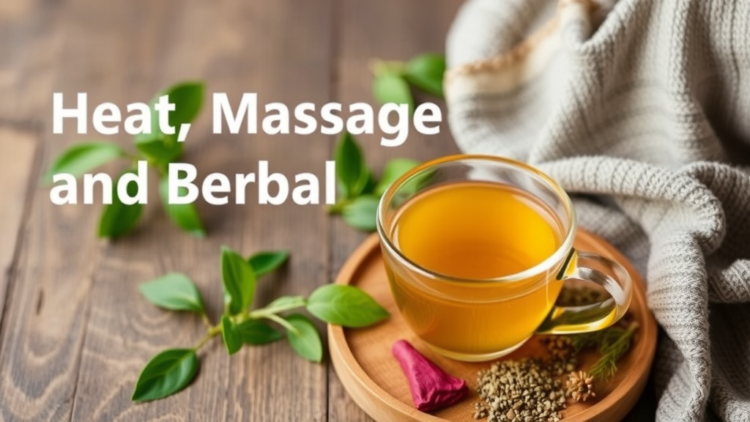
When it came to self-management, the numbers were unambiguous. Overall, 68.8 percent of participants reported using non-pharmacological methods to cope with menstrual symptoms. Among the 137 women identified as users of complementary and alternative medicine, heat application dominated overwhelmingly, used by 80.3 percent of respondents. Massage and the consumption of chamomile or fennel tea tied as the second most common strategies, each reported by 35.8 percent of users, followed closely by dark chocolate consumption at 32.8 percent. The pattern is notable for how ordinary the remedies are: these are not exotic interventions but accessible, low-cost practices embedded in daily life, which likely explains both their popularity and the difficulty clinicians face in tracking their use.
The study’s most scientifically interesting findings emerged from the correlation analyses. Pain intensity, measured on the Visual Analog Scale, was positively correlated with both the total score of the Menstrual Symptom Questionnaire and all of its subscale scores, with p values below 0.001. In practical terms, women who reported more severe pain also reported a broader and heavier burden of associated symptoms, spanning the physical, psychological, and behavioral domains that the questionnaire captures. This supports a view of primary dysmenorrhea as a genuinely multidimensional syndrome rather than an isolated pain complaint, a framing with direct implications for how clinicians assess and counsel affected patients.
Even more provocative was the association between specific strategies and symptom severity. Women who used heat application, massage, progressive muscle relaxation, or dark chocolate had significantly higher lower abdominal pain scores than women who did not use these methods, with p values below 0.05. The authors are careful, and rightly so, about interpretation. Because the design was cross-sectional and exploratory, these findings cannot establish whether women with more severe pain gravitate toward these strategies, whether the strategies are somehow markers of a more symptomatic phenotype, or whether any causal relationship exists in either direction. The most parsimonious reading is intuitive: women whose pain is worse try more things, and the strategies most strongly associated with higher pain scores are precisely those most commonly deployed as first responses to cramping.
That caveat does not diminish the study’s practical value. The authors conclude that women with primary dysmenorrhea experience a multidimensional symptom burden extending well beyond pain intensity, and that greater symptom burden and the use of non-pharmacological methods frequently co-occur in real-world settings. Their recommendation is that routine multidimensional symptom assessment, rather than pain scoring alone, may support patient-centered, evidence-informed counseling on non-pharmacological management options. In other words, a clinician who asks not just how much it hurts but how menstruation affects sleep, mood, digestion, energy, and daily function will be far better positioned to discuss which self-care strategies might fit a given patient’s symptom profile and life circumstances.
The study also carries broader implications for the field of complementary and alternative medicine research. Heat therapy, the single most used strategy in this cohort, has accumulated the strongest evidence base among non-pharmacological options for dysmenorrhea, with trials suggesting topical warmth can rival analgesics for cramping relief. Herbal teas such as chamomile and fennel have plausible anti-inflammatory and antispasmodic mechanisms, though rigorous clinical evidence remains limited. Dark chocolate’s popularity likely reflects both folk belief and its magnesium content, a nutrient occasionally implicated in muscle relaxation, but here too the evidence is thin. The gap between what women actually do and what clinical trials have rigorously tested is precisely where studies like this one are most useful: by documenting real-world use patterns and linking them to symptom profiles, they help prioritize which folk remedies deserve formal evaluation.
For now, the message for patients and providers alike is one of informed pragmatism. Non-pharmacological strategies are nearly universal among women with primary dysmenorrhea, they are generally low-risk, and the most popular among them, particularly heat application, have at least partial scientific support. But symptom burden is broader than pain, and the women who suffer most are also the ones experimenting most actively with self-care. Embedding systematic, multidimensional symptom assessment into routine gynecological and primary care, the authors suggest, would close the loop between what patients are already doing in their living rooms and what clinicians can responsibly recommend. As the researchers emphasize, their findings describe association, not effectiveness, and should not be read as proof that any of these strategies treat dysmenorrhea. What they do prove is that self-management is the norm, not the exception, and that women’s health care has some catching up to do with the realities of how patients already cope.
Subject of Research: Non-pharmacological self-management strategies and multidimensional symptom burden in primary dysmenorrhea
Article Title: Real-life use of non-pharmacological strategies and their relationship with symptom burden in primary dysmenorrhea: a cross-sectional study
Article References: Küçük, S., Avcı, S., & Sevil, Ü. (2026). Real-life use of non-pharmacological strategies and their relationship with symptom burden in primary dysmenorrhea: a cross-sectional study. BMC Complementary Medicine and Therapies. https://doi.org/10.1186/s12906-026-05601-1
Image Credits: AI Generated
DOI: 10.1186/s12906-026-05601-1
Keywords: primary dysmenorrhea, menstrual pain, complementary and alternative medicine, non-pharmacological interventions, heat application, massage, herbal teas, Menstrual Symptom Questionnaire, Visual Analog Scale, symptom burden, women’s health, cross-sectional study
Cite Scienmag News
APA MLA Chicago
Ophelia Keating. (September 22, 2026). Heat, Massage and Herbal Teas: What Women Really Use for Menstrual Pain. Scienmag. https://scienmag.com/heat-massage-and-herbal-teas-what-women-really-use-for-menstrual-pain/
Ophelia Keating. “Heat, Massage and Herbal Teas: What Women Really Use for Menstrual Pain.” Scienmag, 22 September 2026, https://scienmag.com/heat-massage-and-herbal-teas-what-women-really-use-for-menstrual-pain/. Accessed 22 September 2026.
Ophelia Keating. “Heat, Massage and Herbal Teas: What Women Really Use for Menstrual Pain.” Scienmag. September 22, 2026. https://scienmag.com/heat-massage-and-herbal-teas-what-women-really-use-for-menstrual-pain/
Copy citation Download RIS
Tags: alternative treatments for menstrual paincomplementary and alternative medicinecomplementary medicine for menstrual discomfortcross-sectional studycultural practices in menstrual pain reliefheat applicationheat therapy for menstrual crampsherbal teasherbal teas for menstrual symptom reliefimpact of menstrual pain on quality of lifemassagemenstrual painMenstrual pain managementMenstrual Symptom Questionnairenon-pharmacological interventionsnon-pharmacological remedies for dysmenorrheaprimary dysmenorrheaself-management strategies for dysmenorrheasymptom burdensymptom burden of primary dysmenorrheause of hot water bottles in menstrual pain reliefVisual Analog Scalewomen’s health and self-care practicesWomen’s health