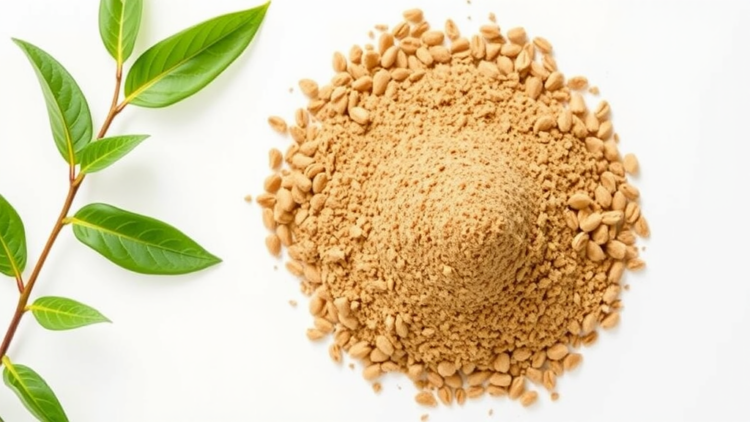
A humble grain long relegated to the margins of the cereal aisle is stepping back into the scientific spotlight. Tartary buckwheat, a bitter-tasting relative of common buckwheat cultivated for centuries in the mountainous regions of China, has now been transformed into an instant tea powder whose ability to lower blood lipids has been examined in new research published in npj Food. The work, titled ‘Preparation and hypolipidemic effect of instant tartary buckwheat tea powder,’ documents both a manufacturing strategy designed to preserve the grain’s most valuable bioactive compounds and evidence that the resulting beverage can meaningfully improve lipid profiles. At a moment when consumers worldwide are searching for convenient, food-based approaches to cardiometabolic health, the findings carry considerable practical weight.
The nutritional case for tartary buckwheat rests on its remarkable phytochemical content. Unlike most cereal grains, tartary buckwheat is exceptionally rich in rutin, a flavonoid glycoside also known as vitamin P, along with quercetin, phenolic acids, and the sulfur-containing compound D-chiro-inositol. These molecules have been associated in prior laboratory and animal studies with antioxidant activity, improved glucose regulation, and reduced lipid accumulation. The catch has always been delivery: rutin is notoriously sensitive to heat, light, and enzymatic degradation, and traditional processing methods for buckwheat tea, which involve prolonged roasting at high temperatures, can strip away a substantial fraction of the very compounds that make the grain medicinally interesting.
The research team behind the new study confronted this trade-off directly. Their goal was to develop an instant tea powder that could be dissolved quickly in hot water, offering the convenience that modern consumers demand, while retaining as much of the native rutin and associated polyphenols as possible. The preparation process described in the paper involves careful control of roasting conditions, extraction parameters, and drying techniques. By optimizing the interplay between temperature, time, and moisture, the researchers were able to strike a balance between the flavor development that roasting imparts and the chemical preservation that milder conditions allow. The result is a powdered product engineered to deliver both sensory appeal and functional potency in a single cup.
Technical characterization of the powder formed a central pillar of the study. The authors report detailed measurements of the rutin content, total phenolic levels, and antioxidant capacity of the finished product, comparing them against conventionally processed tartary buckwheat preparations. These analyses serve two purposes. First, they demonstrate quantitatively that the optimized process succeeds in safeguarding thermolabile flavonoids that would otherwise be lost. Second, they establish a chemical fingerprint that links the product’s composition to its biological activity, a crucial step for any food-derived intervention hoping to make credible health claims. In an era when functional foods face increasing regulatory scrutiny, this kind of rigorous compositional documentation is not merely good practice; it is a prerequisite for the field’s maturation.
With the product’s chemistry established, the study turned to the central question of hypolipidemic effect. Elevated blood lipids, particularly high levels of total cholesterol, low-density lipoprotein cholesterol, and triglycerides, remain among the most significant modifiable risk factors for atherosclerotic cardiovascular disease, which continues to lead global mortality statistics. While statin therapy has transformed the treatment landscape, there is enduring interest in dietary interventions that could either complement pharmacological approaches or serve as preventive strategies for populations with mildly elevated lipid levels. Food-based interventions occupy a unique position in this space because they combine accessibility, cultural acceptability, and a favorable safety profile.
The hypolipidemic evaluation reported in the paper provides evidence that consumption of the instant tartary buckwheat tea powder can shift lipid parameters in a favorable direction. The authors attribute this effect primarily to the rutin and other polyphenols preserved by their processing strategy, molecules that are understood to interfere with lipid absorption, modulate hepatic lipid metabolism, and influence the activity of enzymes central to cholesterol homeostasis. Rutin and its metabolites have been shown in experimental systems to inhibit pancreatic lipase, reduce cholesterol micellar solubility in the intestine, and upregulate the expression of cholesterol efflux transporters. By documenting that a realistic, drinkable food product retains and delivers these bioactives, the study bridges a persistent gap between laboratory evidence of flavonoid activity and the practical question of whether a consumer product can achieve measurable benefit.
What distinguishes the work from much of the functional food literature is its integrated design. Rather than treating processing science and biological evaluation as separate silos, the researchers pursued both in a single study, creating a closed loop from raw grain to finished effect. This approach matters because the bioactive content of a food ingredient is only as good as the processing pipeline that preserves it. Many promising candidates have faltered at the commercialization stage precisely because scaled-up manufacturing destroyed the compounds responsible for the observed health effects. By demonstrating that their instant powder maintains rutin integrity while achieving hypolipidemic outcomes, the team has produced a template that other grain-based functional food developers may well follow.
The broader implications extend to public health strategy, particularly in regions where tartary buckwheat is already grown. Buckwheat cultivation thrives in cool, high-altitude environments with thin soils, making it an economically important crop for farmers in southwest China and other marginal agricultural zones. A validated, convenient, health-promoting product built on this crop could raise its commercial value, support rural livelihoods, and simultaneously offer consumers an evidence-based beverage option. There is also a sustainability dimension to consider: buckwheat generally requires fewer agricultural inputs than major cereals, and expanding its use fits neatly into discussions about diversifying the global food system beyond a narrow set of staple crops.
Cautious readers will note the usual caveats that accompany early-stage food science. The magnitude of lipid changes, the appropriate consumption dose, the duration of use required for full effect, and the transferability of results across different populations all warrant further investigation, ideally through well-designed human dietary trials. The authors’ findings establish a strong mechanistic and product-development foundation, but the path from a promising instant tea powder to a clinically endorsed dietary recommendation runs through the familiar gauntlet of larger cohorts, longer follow-up periods, and independent replication. Nonetheless, the study’s dual achievement, a processing innovation that protects fragile bioactives and evidence that the resulting product acts on a major cardiovascular risk factor, gives the field concrete reasons for optimism.
For now, the image of a steaming cup of tartary buckwheat tea, once a regional tradition, has been reframed as a subject of rigorous food science. The new research suggests that with the right preparation technology, convenience and functionality need not be adversaries. As consumers grow increasingly sophisticated about the relationship between diet and chronic disease, and as researchers continue to unlock the chemistry of underutilized grains, products like this instant powder may come to occupy a meaningful place in everyday cardiometabolic prevention. The bitter grain of the mountains, it turns out, may have been storing its most valuable compounds all along, waiting for the science to catch up with the tradition.
Subject of Research: Preparation and hypolipidemic effect of instant tartary buckwheat tea powder
Article Title: Preparation and hypolipidemic effect of instant tartary buckwheat tea powder
Article References: Preparation and hypolipidemic effect of instant tartary buckwheat tea powder. (n.d.). https://doi.org/10.1038/s41538-026-01135-5
Image Credits: AI Generated
DOI: 10.1038/s41538-026-01135-5
Keywords: tartary buckwheat, instant tea powder, hypolipidemic effect, rutin, flavonoids, blood lipids, functional foods, cholesterol, food processing, cardiovascular health, polyphenols, npj Food
Cite Scienmag News
APA
MLA
Chicago
Alan Morgan. (September 20, 2026). Instant Tartary Buckwheat Tea Powder Shows Cholesterol-Lowering Promise. Scienmag. https://scienmag.com/instant-tartary-buckwheat-tea-powder-shows-cholesterol-lowering-promise/
Alan Morgan. “Instant Tartary Buckwheat Tea Powder Shows Cholesterol-Lowering Promise.” Scienmag, 20 September 2026, https://scienmag.com/instant-tartary-buckwheat-tea-powder-shows-cholesterol-lowering-promise/. Accessed 20 September 2026.
Alan Morgan. “Instant Tartary Buckwheat Tea Powder Shows Cholesterol-Lowering Promise.” Scienmag. September 20, 2026. https://scienmag.com/instant-tartary-buckwheat-tea-powder-shows-cholesterol-lowering-promise/
Copy citation
Download RIS
Tags: antioxidant-rich tea beveragesbioactive compounds in buckwheatblood lipidsCardiovascular Healthcholesterolcholesterol-lowering tea powderflavonoidsflavonoids for cardiovascular healthfood processingfunctional food for cardiometabolic healthfunctional foodshypolipidemic effectinnovative food processing methodsinstant herbal tea for blood lipidsinstant tea powdernatural lipid profile improvementnpj Foodphytochemicals in Tartary buckwheatplant-based approaches to cholesterol managementpolyphenolsrutinTartary buckwheatTartary buckwheat health benefitstraditional grains with modern health applications