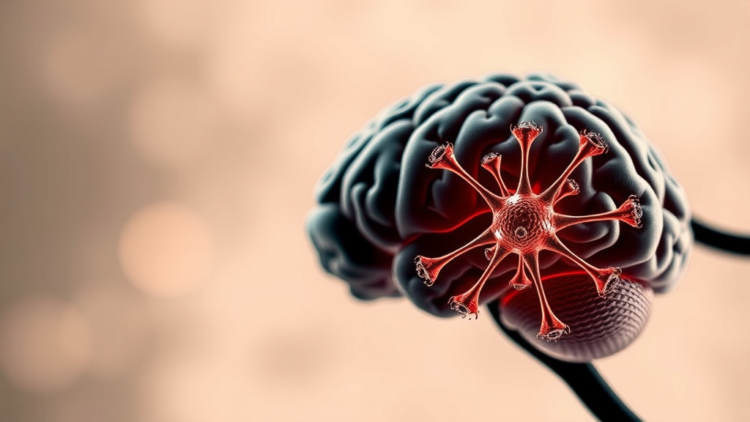
The complement system, a sprawling network of plasma and membrane-bound proteins long regarded as little more than a first-response killing machine against microbes, is now recognized as one of the most consequential players in neurology. A comprehensive new review published in Nature Reviews Neurology by Marinos C. Dalakas of Thomas Jefferson University and the National and Kapodistrian University of Athens, and Jan D. Lünemann of the University of British Columbia and University Hospital Münster, maps out how this ancient arm of innate immunity shapes brain development, guards nervous system homeostasis, and, when it misfires, drives some of the most devastating autoimmune and neurodegenerative diseases known to medicine. Just as importantly, the review charts the astonishingly rapid rise of complement-targeted drugs, several already approved by regulators and many more advancing through phase II and phase III clinical trials, that are poised to reshape the therapeutic landscape of neuroimmunology.
At its core, the complement cascade is a proteolytic amplification machine. It can be triggered through three converging routes: the classical pathway, initiated when the C1 complex binds antibody-antigen complexes or other target structures; the lectin pathway, ignited when pattern-recognition molecules such as mannose-binding lectin and ficolins detect carbohydrate motifs on pathogens or damaged cells; and the alternative pathway, which samples surfaces continuously through spontaneous hydrolysis and is stabilized by properdin. All three routes converge on C3, whose cleavage generates the opsonin C3b that tags targets for phagocytosis and the anaphylatoxin C3a that recruits and activates inflammatory cells. Further cleavage of C5 releases the potent anaphylatoxin C5a and assembles the C5b-9 membrane attack complex, a pore-forming structure that can lyse susceptible cells. In host defence, this is a marvel of efficiency. In the nervous system, where many cell types are exquisitely vulnerable to lysis and inflammation, the same machinery can become an instrument of destruction.
What makes complement particularly fascinating in a neurological context is that it is not merely a circulating defence system but an active participant in normal brain physiology. Seminal experimental work has shown that classical pathway components, including C1q and C3, physically tag synapses during postnatal development, allowing microglia to prune weak or inactive connections in an activity-dependent manner. This complement-dependent synaptic sculpting is essential for wiring the developing brain, and related mechanisms continue to influence adult neural circuit plasticity, including microglia-mediated elimination of synapses linked to forgetting. The complement system also contributes to the clearance of apoptotic cells and cellular debris, processes fundamental to maintaining tissue health. These physiological roles carry a sobering implication: any therapeutic strategy that blanketly suppresses complement risks interfering with brain development, synaptic maintenance, and debris clearance, a concern that hangs over much of the current drug pipeline.
In autoimmune neurological disease, aberrant complement activation is now documented with striking consistency. In myasthenia gravis, autoantibodies against the acetylcholine receptor recruit complement to the neuromuscular junction, where the membrane attack complex destroys the postsynaptic membrane, a mechanism established experimentally decades ago and confirmed ultrastructurally by localization of the lytic component C9 at the motor end-plate. Complement activation profiles correlate with disease severity, and eculizumab, a monoclonal antibody that blocks cleavage of C5, demonstrated efficacy in refractory generalized disease in the pivotal REGAIN trial, earning regulatory approval and opening the floodgates for a broader class of anti-C5 agents, including the longer-acting ravulizumab and the subcutaneous peptide zilucoplan, alongside newer C5-targeting candidates such as gefurulimab now in phase 3 testing.
The antibody-mediated demyelinating diseases of the central nervous system tell a similarly compelling story. In neuromyelitis optica spectrum disorder, aquaporin-4-specific IgG1 antibodies bind astrocytic endfeet, fix complement, and generate astrogliotic, necrotic lesions; passive transfer experiments show that immunoglobulin G plus complement reproduces the pathology in animals. Blocking C5 with eculizumab dramatically reduced relapse rates in aquaporin-4-positive patients, and ravulizumab has since replicated these results with a more convenient dosing schedule. The related condition, myelin oligodendrocyte glycoprotein antibody-associated disease, displays its own distinctive complement activation signatures, with recent work showing that activation patterns downstream of C5 cleavage differ between MOGAD and aquaporin-4 antibody-positive neuromyelitis optica, and that complement profiles can predict clinical outcomes. In multiple sclerosis, complement deposition is a prominent feature of lesions, oligodendrocytes are peculiarly susceptible to complement lysis even in the absence of antibody, and growing clinical evidence links circulating complement activation products to structural brain damage, disease severity, and disability progression, including in primary progressive disease. Notably, animal studies reveal that some complement components, such as C5-derived signals, may actually facilitate remyelination, reinforcing the argument for nuanced, pathway-selective modulation rather than indiscriminate shutdown.
In disorders of the peripheral nervous system, complement has moved from suspected accomplice to validated therapeutic target. In Guillain-Barré syndrome, autoantibodies against gangliosides on motor nerve terminals and perisynaptic Schwann cells recruit the membrane attack complex, and complement inhibition protects nerve terminals in murine models. Eculizumab was tested in a large phase 3 trial and, although the primary endpoint was not met, encouraging signals and real-world comparative data for the proximal inhibitor ANX005, which blocks C1q, suggest that early, pathway-targeted intervention may still prove valuable. Chronic inflammatory demyelinating polyneuropathy has emerged as a particularly fertile field: recent complement profiling of sural nerves, together with the demonstration that terminal pathway activation tracks with disease severity, has set the stage for phase 2 studies of the C1s inhibitor riliprubart, with promising early efficacy and safety findings. Multifocal motor neuropathy and IgM anti-MAG antibody neuropathies are likewise being reinterpreted through a complement lens, with the C2-blocking antibody empasiprubart, derived from the ARGX-117 program, advancing through clinical development on the logic that IgM-driven complement activation depends critically on the classical pathway component C2.
Perhaps the most provocative frontier is neurodegeneration. In Alzheimer disease, genetic association studies first implicated complement genes as susceptibility loci, and mechanistic work then showed that C1q and C3 drive early synapse loss in mouse models, with microglia engulfing complement-tagged synapses. Complement C3 deficiency protects aged, plaque-laden mice from neurodegeneration, yet other data indicate that specific complement components exert tissue-protective effects, promoting clearance of amyloid debris and supporting repair. Similarly, in amyotrophic lateral sclerosis, elevations of C5a and the membrane attack complex in patient blood and dysregulation of the cascade in the hSOD1G93A mouse model motivated a randomized trial of ravulizumab, which did not slow disease progression but provided dose-finding and safety data that will inform future, more precisely targeted efforts. These mixed results crystallize the central dilemma of the field: complement is both arsonist and firefighter, and the therapeutic challenge is to extinguish the destructive arm of the cascade while preserving its reparative functions.
The authors of the review emphasize that the existing complement drug arsenal, which includes C5 inhibitors such as eculizumab, ravulizumab, and crovalimab; the C1s inhibitor sutimlimab; the C3-targeting peptide pegcetacoplan; factor B and factor D blockers such as iptacopan and danicopan; C1-esterase inhibitor concentrates; and the C2-blocking antibody empasiprubart, was largely forged in hematology, ophthalmology, and nephrology before being imported into neurology. Expanding these agents to the brain raises distinctive pharmacological hurdles, including the blood-brain barrier, the need for sustained pathway suppression in a compartment with limited drug access, and the infection risks inherent in disabling a key arm of host defence, particularly meningococcal disease in patients receiving terminal pathway inhibitors. Proximal inhibitors that block C1 or C2 confer broader cascade suppression and may better preserve certain distal functions, but they carry their own trade-offs in infection susceptibility and disruption of physiological opsonization and debris clearance.
Looking ahead, Dalakas and Lünemann argue that the future of complement-targeted neurology will depend on systematic, biomarker-guided patient selection. Reliable, disease-specific measures of complement activation, whether from cerebrospinal fluid, blood, or tissue, will be essential to identify which patients are most likely to benefit from proximal versus distal inhibition, and to time intervention before irreversible tissue injury has occurred. As biologics targeting other axes of autoimmunity, from FcRn antagonists and neonatal Fc receptor blockers to B-cell-depleting agents and, increasingly, CAR T-cell therapies, crowd the neurological treatment landscape, complement inhibitors will need to demonstrate not just efficacy but a rational, mechanistically defined place in therapeutic algorithms. What is no longer in doubt is the direction of travel: from a system once studied almost exclusively by immunologists, complement has become a frontier of clinical neurology, and the coming decade will determine how precisely medicine can wield its power without extinguishing its gifts.
Subject of Research: The role of the complement system and complement-targeted therapeutics in autoimmune and neurodegenerative neurological diseases
Article Title: Role of complement and complement-targeted therapeutics in neurological diseases
Article References: Dalakas, M. C., & Lünemann, J. D. (2026). Role of complement and complement-targeted therapeutics in neurological diseases. Nature Reviews Neurology. https://doi.org/10.1038/s41582-026-01261-4
Image Credits: AI Generated
DOI: 10.1038/s41582-026-01261-4
Keywords: complement system, neuroimmunology, myasthenia gravis, neuromyelitis optica, multiple sclerosis, Guillain-Barré syndrome, Alzheimer disease, amyotrophic lateral sclerosis, eculizumab, ravulizumab, membrane attack complex, complement inhibitors
Cite Scienmag News
APA
MLA
Chicago
Cassandra Pierce. (September 12, 2026). Complement Emerges as Central Player and Drug Target in Neurological Disease. Scienmag. https://scienmag.com/complement-emerges-as-central-player-and-drug-target-in-neurological-disease/
Cassandra Pierce. “Complement Emerges as Central Player and Drug Target in Neurological Disease.” Scienmag, 12 September 2026, https://scienmag.com/complement-emerges-as-central-player-and-drug-target-in-neurological-disease/. Accessed 12 September 2026.
Cassandra Pierce. “Complement Emerges as Central Player and Drug Target in Neurological Disease.” Scienmag. September 12, 2026. https://scienmag.com/complement-emerges-as-central-player-and-drug-target-in-neurological-disease/
Copy citation
Download RIS
Tags: Alzheimer diseaseamyotrophic lateral sclerosisautoimmune neurological disorders and complement activationclinical trials of complement inhibitors for neurological diseasescomplement cascade and nervous system homeostasiscomplement inhibitorscomplement proteins as drug targets in neurodegenerationcomplement systemcomplement system in neurodegenerative diseasescomplement system’s impact on neuroinflammationcomplement-targeted therapies in neurologyeculizumabGuillain-Barré syndromemechanisms of complement activation in brain healthmembrane attack complexMultiple Sclerosismyasthenia gravisneuroimmunologyneuroimmunology and complement pathwayneuromyelitis opticaravulizumabrole of complement in autoimmune brain diseasesrole of innate immunity in brain developmenttherapeutic advances in complement modulation for neurological disorders