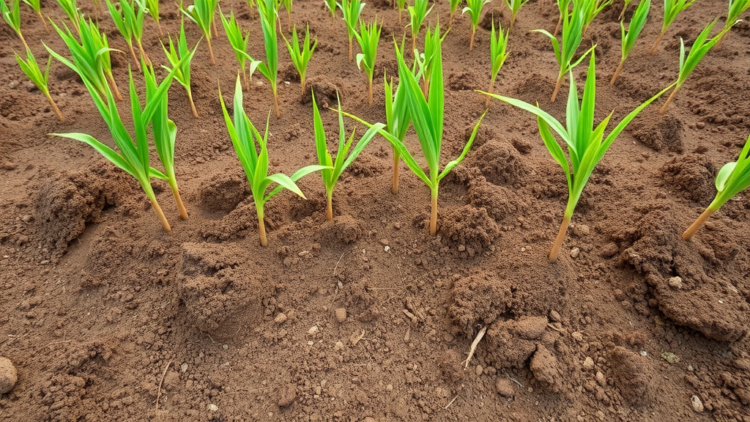
Beneath every rice paddy and wheat field lies an intricate economy of organisms, from bacteria and fungi to nematodes, mites, springtails, potworms and earthworms, all connected through chains of consumption and decomposition that determine how nutrients cycle and how fertile the soil remains. A new long-term study from China now offers one of the most comprehensive pictures yet of how decades of different fertilization practices reshape this hidden food web, and the answer points decisively to a familiar ecological principle: what happens at the bottom flows upward. The research, published in the Journal of Integrative Agriculture, draws on a thirty-year field experiment in a rice–wheat cropping system, one of the most widespread and productive agricultural rotations in Asia, where farmers alternate flooded rice in summer with wheat in winter on the same land.
The study was designed to address a persistent gap in soil ecology. Although many investigations have examined how fertilization affects individual groups of soil organisms, comparatively few have traced the consequences across the entire food web, spanning microbes at the base to earthworms near the top, and fewer still have done so over a time frame long enough to capture the slow, cumulative changes that define soil health. To fill that gap, a team of researchers led by first and corresponding author Professor Yunfeng Chen of the Hubei Academy of Agricultural Sciences compared four long-term treatments: chemical fertilizer supplying nitrogen, phosphorus and potassium, known as NPK; organic manure alone; a combined treatment of manure plus NPK; and an unfertilized control plot that served as the experimental baseline.
The measurement strategy was deliberately broad. Rather than tracking a single indicator organism, the team quantified biomass or abundance across key taxonomic and functional groups, including microorganisms, protozoa, nematodes, mites, collembolans, enchytraeids and earthworms. They also calculated nematode ecological indices, a set of established metrics that soil ecologists use to infer the structure and maturity of soil food webs. Together, these measurements allowed the researchers to evaluate the relative strength of two competing regulatory forces: bottom-up control, in which the availability of resources such as organic carbon and nutrients determines how many organisms higher trophic levels can support, and top-down control, in which predators and higher consumers suppress or structure the populations below them.
The headline finding was unambiguous. Long-term fertilization increased the inputs of resources entering the soil, and that surge in resources enhanced most of the functional groups the team measured. Fertilized plots supported larger and more complex communities than the unfertilized control, confirming that sustained nutrient management is a powerful lever for shaping the living architecture of agricultural soils. But the differences among fertilization strategies proved just as consequential, and here the organic treatments stood out clearly.
Manure alone and the combined manure-plus-NPK treatment outperformed pure chemical fertilizer across most groups. When the researchers expressed these gains as relative increases compared with the NPK treatment, the manure plots showed improvements ranging from 20.69 to 972.52 percent, with an average of 241.62 percent, while the combined plots ranged from 26.55 to 792.30 percent, averaging 189.02 percent. Those are not marginal differences; they represent order-of-magnitude shifts in the abundance of some soil organisms. The practical implication is that organic amendments, whether applied alone or alongside mineral fertilizers, deliver substantially more nourishment to the soil food web than chemical fertilizer alone.
Interestingly, the manure-only and combined treatments did not differ significantly from each other. The researchers attribute this convergence to high soil fertility: once fertility reaches a sufficiently high level, the distinction between the two organic approaches diminishes, and both support similarly rich communities. In other words, the food web appears to saturate, and beyond a certain threshold of resource abundance, adding mineral fertilizer on top of manure yields little additional biological benefit even though it may still matter for crop nutrition.
The evidence for bottom-up regulation was strong and came from multiple independent lines. Functional groups showed positive correlations with one another, a pattern consistent with resources flowing upward through the web and lifting every level together rather than predators imposing their own structure from above. The enrichment index, a nematode-based metric that signals an abundance of opportunistic, resource-responsive organisms, rose by 51.27 percent under manure and 28.49 percent under the combined treatment relative to chemical fertilizer alone. The enrichment footprint, a complementary measure that captures the cumulative enrichment signal across the food web, increased even more dramatically, by 11.80 percent under manure and 47.17 percent under the combined treatment relative to NPK.
To synthesize these patterns into a causal framework, the team employed partial least squares path modeling, a statistical technique well suited to disentangling direct and indirect pathways among correlated variables. The modeling confirmed what the correlations and indices had suggested: bottom-up forces predominantly determined both the structure and the total biomass of the soil food web. Resource availability, shaped by decades of fertilization, was the dominant driver, while top-down influences played a comparatively minor role in this system. For a rice–wheat rotation, where flooded and aerobic phases alternate and organic matter dynamics are complex, this finding provides a clear conceptual anchor for future soil management research.
The implications extend well beyond the experimental plots. Soil food webs underpin essential ecosystem services, including decomposition, nutrient mineralization, suppression of plant pathogens and the maintenance of soil structure. A food web enriched through bottom-up channels is, in effect, a soil with greater biological capacity to sustain crop productivity over time. The study suggests that sustained organic inputs, particularly when integrated with mineral fertilizers, effectively enhance both the complexity and the size of the soil food web primarily through this bottom-up regulatory mechanism. For farmers and policymakers weighing the trade-offs between organic and conventional inputs, the results add a biological argument in favor of manure-based strategies, whether used alone or in combination with chemical fertilizer.
The research also carries a cautionary note for the long term. Because the experiment spanned thirty years, it captured changes that short-term studies inevitably miss, including the slow accumulation of soil organic matter and the gradual response of larger, slower-reproducing organisms such as earthworms and enchytraeids. The authors’ conclusion is that fertilization is not merely a plant nutrition tool but a food-web engineering instrument, and that its effects compound over decades. As agriculture worldwide faces pressure to maintain yields while restoring degraded soils, this long-term evidence from a major cereal rotation offers a template: feed the base of the soil food web, and the rest of the web, along with the services it provides, is likely to follow.
Subject of Research: Long-term effects of chemical and organic fertilization on the soil food web in a rice–wheat cropping system
Article Title: Long-term fertilization enriches soil food web mainly through bottom-up regulation in a rice–wheat cropping system
Article References: Long-term fertilization enriches soil food web mainly through bottom-up regulation in a rice–wheat cropping system. (n.d.). Original publication
Image Credits: AI Generated
DOI: Not provided
Keywords: soil food web, long-term fertilization, rice–wheat rotation, bottom-up regulation, manure, NPK fertilizer, nematodes, earthworms, soil fertility, enrichment index, agroecology, soil biodiversity
Cite Scienmag News
APA
MLA
Chicago
Alan Morgan. (September 12, 2026). Thirty Years of Manure and Fertilizer Reveal Bottom-Up Rules That Reshape the Soil Food Web in Rice–Wheat Fields. Scienmag. https://scienmag.com/thirty-years-of-manure-and-fertilizer-reveal-bottom-up-rules-that-reshape-the-soil-food-web-in-rice-wheat-fields/
Alan Morgan. “Thirty Years of Manure and Fertilizer Reveal Bottom-Up Rules That Reshape the Soil Food Web in Rice–Wheat Fields.” Scienmag, 12 September 2026, https://scienmag.com/thirty-years-of-manure-and-fertilizer-reveal-bottom-up-rules-that-reshape-the-soil-food-web-in-rice-wheat-fields/. Accessed 12 September 2026.
Alan Morgan. “Thirty Years of Manure and Fertilizer Reveal Bottom-Up Rules That Reshape the Soil Food Web in Rice–Wheat Fields.” Scienmag. September 12, 2026. https://scienmag.com/thirty-years-of-manure-and-fertilizer-reveal-bottom-up-rules-that-reshape-the-soil-food-web-in-rice-wheat-fields/
Copy citation
Download RIS
Tags: agricultural soil food web restructuringagroecologybottom-up regulationbottom-up regulation in soil ecosystemsearthwormsecological principles in soil healtheffects of fertilization on soil biodiversityenrichment indeximpact of manure and fertilizer on soil organismslong-term fertilizationlong-term fertilization effectslong-term soil health studiesmanurenematodesNPK fertilizernutrient cycling in agricultural soilsrice-wheat cropping systemrice–wheat rotationsoil biodiversitysoil fertilitysoil food websoil food web dynamicssoil microbial ecologysustainable farming practices in rice-wheat systems