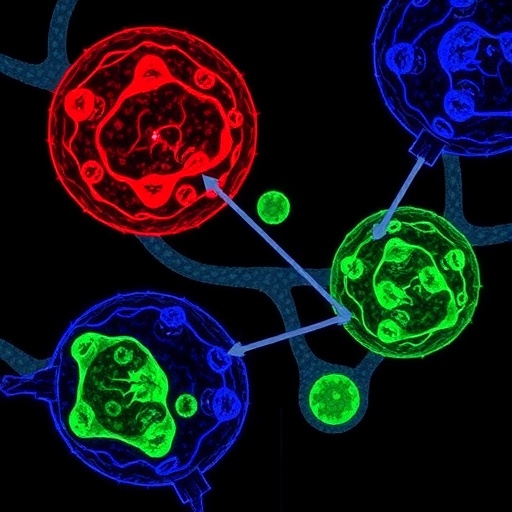
In a discovery that could reshape how scientists think about cancer immunotherapy, researchers in Japan have uncovered the hidden mechanism behind one of the most promising antibody strategies now moving through clinical development. The study, led by Masaki Hagiwara and Naganari Ohkura of The University of Osaka in collaboration with Shionogi & Co., Ltd., reveals that depleting a specialized population of immunosuppressive T cells inside tumors works not primarily by unleashing killer T cells directly, but by liberating a crucial class of antigen-presenting cells—the dendritic cells—from paralyzing suppression. The finding, published open access in Cancer Immunology, Immunotherapy, provides the clearest picture yet of how a drug targeting the CCR8 molecule restarts the so-called cancer-immunity cycle, and it offers immunologists a new blueprint for designing the next generation of anti-tumor therapies.
The target of the therapy is the regulatory T cell, or Treg, a population of white blood cells whose normal job is to prevent the immune system from attacking the body’s own tissues. Tregs are essential for avoiding autoimmune disease, but tumors have learned to exploit them, recruiting Tregs into the tumor microenvironment where they act as immunological bodyguards for the cancer. Among Tregs, those expressing the chemokine receptor CCR8 have emerged as a particularly attractive drug target, because CCR8 is highly and preferentially expressed on Tregs that accumulate inside tumors while remaining largely absent from Tregs circulating in healthy tissue. An antibody that binds CCR8 can therefore eliminate tumor-resident suppressor cells with minimal collateral damage to the broader immune system. Clinical trials of anti-CCR8 antibodies are already underway, yet a fundamental question has lingered: when these suppressor cells are removed, what exactly changes inside the tumor to ignite an immune attack?
To answer that question, the Osaka-led team turned to some of the most powerful tools in modern immunology: single-cell RNA sequencing and spatial transcriptomics. Applied to a murine colon carcinoma model, these techniques allowed the researchers to inventory, cell by cell, the gene-expression programs at work inside the tumor, and to map precisely where each cell type sat in relation to its neighbors before and after anti-CCR8 antibody treatment. The analysis zeroed in on a population known as mature regulatory dendritic cells, abbreviated mregDCs. These are dendritic cells that have reached a mature state but carry an unusual load of immunoregulatory molecules—a molecular signature that, under normal conditions, lets them temper immune responses rather than amplify them. In tumors, mregDCs had been suspected of acting as reluctant accomplices of the cancer, and the new data show why: they were being actively held in check by the CCR8-positive Tregs clustered around them.
What happened after anti-CCR8 treatment was striking. Within a short window following depletion of the CCR8-positive Treg population, intratumoral mregDCs rapidly ramped up expression of costimulatory and activation signals—the molecular handshakes dendritic cells use to educate T cells. In effect, the dendritic cells snapped out of their suppressed state and reverted to their proper role as immune ignition switches. The spatial transcriptomic data added a crucial dimensional layer: after treatment, mregDCs were found sitting farther away from remaining suppressive Treg cells and in closer contact with both CD4-positive and CD8-positive effector T cells, the workhorses of adaptive immunity. This physical repositioning matters, because T cell activation depends on intimate cell-to-cell contact, and the antibody treatment effectively rewired the social geography of the tumor, replacing inhibitory encounters with activating ones.
But the story did not end inside the tumor itself. Dendritic cells that engulf tumor antigen do not simply linger at the scene; a subset migrates through the lymphatic vessels to the tumor-draining lymph nodes, where they present their cargo to naive T cells in a process called priming. The researchers found that the migratory dendritic cells in these lymph nodes—the counterparts of the intratumoral mregDCs—also showed enhanced maturation after anti-CCR8 therapy. This maturation was accompanied by robust priming of tumor-specific CD8-positive T cells, the cytotoxic lymphocytes capable of recognizing and destroying cancer cells. The result is a coherent mechanistic chain: removing CCR8-positive Tregs frees intratumoral mregDCs, freed mregDCs mature and migrate, matured migratory dendritic cells prime tumor-specific killers in the lymph nodes, and those killers return to attack the tumor.
To prove that this peripheral priming step was not incidental, the team performed a decisive experiment: blocking the egress of lymphocytes from the lymph nodes abolished the therapeutic efficacy of the anti-CCR8 antibody. If activated T cells could not leave the lymph nodes and traffic to the tumor, the treatment lost its power. That dependency confirms that the lymph-node priming arm of the response is not a side effect but a load-bearing pillar of the therapy’s success. It is a reminder that tumor immunity is a cycle rather than a single local event: antigen release, presentation, priming, trafficking, infiltration and tumor-cell killing are links in a chain, and the strength of the whole depends on each link. Anti-CCR8 therapy, the study shows, re-initiates that cycle at its most upstream and most vulnerable point—antigen presentation.
Perhaps the most clinically significant part of the work concerns humans. Using multiplex immunohistochemistry on tissue from patients with colorectal cancer, the researchers examined whether the CCR8-Treg/mregDC axis seen in mice exists in human tumors. The answer was yes. In human colorectal cancer specimens, CCR8-positive Treg cells showed a preferential spatial association with dendritic cells positive for LAMP3, a marker that identifies human dendritic cells exhibiting features associated with the mregDC state. In other words, the suppressive partnership that the antibody disrupts in mice appears to be physically conserved in human tumors, lending weight to the idea that patients treated with anti-CCR8 antibodies could experience the same liberation of dendritic cells observed in the preclinical model.
The implications for drug development are considerable. Checkpoint inhibitors such as anti-PD-1 and anti-CTLA-4 antibodies work by releasing brakes on T cells that have already been activated, but they depend on the existence of a pre-existing anti-tumor T cell response to release. Many patients, particularly those with so-called cold tumors, lack such a response, and checkpoint blockade fails them. The new study suggests anti-CCR8 therapy operates one step earlier in the immunological cascade—by restoring the dendritic cell function needed to generate a T cell response in the first place. This makes CCR8-targeted depletion a candidate for rational combination strategies, potentially pairing it with checkpoint inhibitors to both ignite and sustain an immune attack, and it provides biomarkers for identifying the patients most likely to benefit, such as those whose tumors are infiltrated by CCR8-positive Tregs and LAMP3-positive dendritic cells in close proximity.
The study also carries a cautionary note that immunologists will appreciate. mregDCs are not inherently enemies; they are versatile cells whose regulatory properties may serve useful purposes in limiting collateral tissue damage. The finding that their immunosuppressive phenotype is imposed by the tumor-associated Treg environment—rather than being an intrinsic, irreversible property—reframes them as recoverable allies. It suggests that therapies aimed at changing the environment of these cells, rather than deleting them, may unlock their potent antigen-presenting capacity. That principle could extend beyond CCR8, informing efforts to reprogram other suppressive niches within tumors. At the same time, the reliance on lymphocyte egress underscores that the full anti-tumor effect requires an intact lymphoid architecture, something that may vary across patients and treatment histories.
The work emerged from a collaboration bridging academia and industry, combining the Treg expertise of Osaka University’s immunology frontier laboratories—including Shimon Sakaguchi, whose pioneering work established the field of regulatory T cell biology—with the drug discovery capabilities of Shionogi & Co., Ltd. and surgical oncologists from Osaka University’s Department of Gastroenterological Surgery, who contributed the human colorectal cancer samples. Funded by a JSPS KAKENHI grant, the research exemplifies the translational arc now common in cancer immunology: a clinical observation in patients, a mechanistic question in mouse models, and high-dimensional molecular technologies that connect the two. As anti-CCR8 antibodies advance through clinical trials, the field now possesses a mechanistic compass pointing to what to measure—dendritic cell maturation, T cell priming, and the spatial relationships between these cell types—to understand whether the drug is doing in patients what it does so elegantly in mice. For a cancer immunotherapy landscape hungry for approaches that work where checkpoint inhibitors fail, the liberation of dendritic cells may prove to be one of the most consequential ideas of the decade.
Subject of Research: Mechanism of anti-CCR8 antibody therapy: depletion of CCR8-positive regulatory T cells restores mature regulatory dendritic cell (mregDC) function to drive anti-tumor immunity
Subject of Research: Cancer
Article Title: Depletion of CCR8+ Treg cells restores dendritic cell function to drive anti-tumor immunity
Article References: Hagiwara, M., Ueyama, A., Morishita, K., Nakamura, Y., Aoyama, S., Saito, T., Noda, T., Uemura, M., Eguchi, H., Nagira, Y., Sakaguchi, S., & Ohkura, N. (2026). Depletion of CCR8+ Treg cells restores dendritic cell function to drive anti-tumor immunity. Cancer Immunology, Immunotherapy. https://doi.org/10.1007/s00262-026-04526-5
Image Credits: AI Generated
DOI: 10.1007/s00262-026-04526-5
Keywords: CCR8, Regulatory T cells, mregDCs, Dendritic cells, Tumor microenvironment, Cancer immunotherapy, Single-cell RNA sequencing, Spatial transcriptomics, CD8+ T cells, Tumor-draining lymph nodes, Colorectal cancer
Cite Scienmag News
APA
MLA
Chicago
Nathaniel Bowman. (September 10, 2026). Depleting CCR8+ Treg cells restores dendritic cell function against tumors. Scienmag. https://scienmag.com/depleting-ccr8-treg-cells-restores-dendritic-cell-function-against-tumors/
Nathaniel Bowman. “Depleting CCR8+ Treg cells restores dendritic cell function against tumors.” Scienmag, 10 September 2026, https://scienmag.com/depleting-ccr8-treg-cells-restores-dendritic-cell-function-against-tumors/. Accessed 10 September 2026.
Nathaniel Bowman. “Depleting CCR8+ Treg cells restores dendritic cell function against tumors.” Scienmag. September 10, 2026. https://scienmag.com/depleting-ccr8-treg-cells-restores-dendritic-cell-function-against-tumors/
Copy citation
Download RIS
Tags: antibody-based cancer treatmentsantigen-presenting cell reactivationcancer immunotherapycancer immunotherapy mechanismscancer-immunity cycleCCR8+ regulatory T cellsCCR8+ Treg cell depletiondendritic cell activation in tumor microenvironmentdendritic cell activation in tumorsimmune suppression in cancerimmune system modulation in cancer treatmentimmunosuppressive T cell populationsimmunotherapy clinical developmentnext-generation anti-tumor therapiesregulation of cancer-immunity cyclerole of regulatory T cells in cancertargeting chemokine receptors in immunotherapyTreg cell depletionTumor immune evasion mechanismstumor immune evasion strategiestumor immune microenvironmenttumor-associated immune suppression