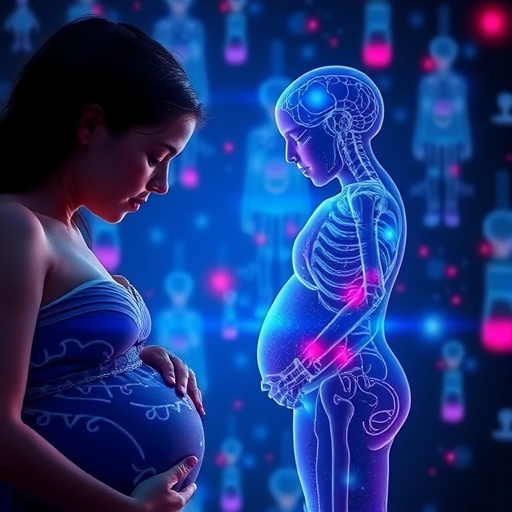
Pregnancy may be one of the most physiologically demanding experiences the human body can undergo, and a new review suggests that its biological costs are written into our cells. Writing in the journal Biogerontology, researchers Laura Collopy and Yana Kolenichenko of Imperial College London synthesised evidence from telomere biology, epigenetics, and epidemiology to argue that pregnancy, childbirth, and the postpartum period leave measurable molecular signatures of accelerated ageing in mothers. The review, published as an open-access article in August 2026, frames maternity not as a single event but as a cumulative biological ledger, one that is written during gestation, amended during the postpartum year, and only fully legible decades later around the menopausal transition.
At the heart of the analysis is telomere length, one of the most widely used biomarkers of biological ageing. Telomeres are repetitive stretches of the DNA sequence TTAGGG that cap the ends of chromosomes and protect them from degradation and fusion. Because DNA polymerase cannot fully replicate chromosome ends, telomeres shorten with every cell division, and when they become critically short, cells enter senescence or die. Oxidative stress accelerates this process, because 8-oxoguanine lesions in telomeric DNA impede the replication fork, while chronic inflammation raises cellular turnover and reactive oxygen species production. A 2023 meta-analysis of 414 study samples covering more than 743,000 individuals estimated an average loss of roughly 38 base pairs of telomeric DNA per year across adulthood, with the steepest attrition in early childhood and a non-linear trajectory thereafter. Short telomeres are associated with cardiovascular disease, type 2 diabetes, neurodegenerative disorders, cancer, and all-cause mortality, which is why any factor that accelerates their erosion attracts intense scientific scrutiny.
The central question the review tackles is whether bearing children ages mothers at the cellular level. The evidence, while heterogeneous, points in that direction. In a cross-sectional analysis of 1,954 US women aged 20 to 44 drawn from the National Health and Nutrition Examination Survey, women with a history of live birth had leukocyte telomeres that were 4.2 per cent shorter than those of women who had never given birth, equivalent to roughly 116 base pairs. That magnitude exceeded the shortening attributable to obesity or smoking. Work from the Sister Study of 1,048 postmenopausal women found that higher parity, particularly four or more births, was associated with shorter relative telomere length. In the Cebu Longitudinal Health and Nutrition Survey of young Filipino women, each additional pregnancy was linked to shorter telomeres and greater epigenetic age acceleration, and crucially, baseline telomere measures did not predict subsequent pregnancies, supporting a causal direction from reproduction to cellular ageing rather than the reverse. Notably, fathers show no equivalent effect, which supports the interpretation that it is the physical demands of gestation, birth, and lactation, rather than shared socioeconomic circumstances, that drive the association.
Pregnancy itself may be best understood as a transient episode of accelerated ageing. Using epigenetic clocks, computational models that estimate biological age from DNA methylation patterns, researchers have shown that maternal biological age rises across gestation and falls significantly by three months postpartum, though the reversal is only partial. This fits a broader biological principle demonstrated in animal models and humans alike: severe physiological stressors can transiently increase biological age, and recovery can restore it. Pre-pregnancy body mass index and breastfeeding emerged as key modifiers in a US pregnancy cohort, with higher BMI amplifying the pregnancy-associated ageing signal and exclusive breastfeeding partially reversing it after delivery. The authors of the review stress that this reframing matters clinically, because it suggests the biological costs of pregnancy are not fixed but modifiable through health behaviours and postpartum care.
The molecular toolkit behind these findings deserves explanation. Beyond direct telomere measurement by quantitative PCR or Southern blotting, researchers now use second- and third-generation epigenetic clocks. PhenoAge, trained on nine blood biomarkers from an Italian ageing cohort, predicts phenotypic age from 513 methylation sites and captures physiological health. GrimAge incorporates methylation-based surrogates for seven plasma proteins linked to inflammation and metabolic dysfunction, plus a smoking estimate, and predicts time to death. DunedinPACE, trained on two decades of longitudinal data from the Dunedin birth cohort, estimates not a static age but the current pace of ageing across cardiovascular, metabolic, renal, hepatic, immune, and pulmonary systems. A methylation-based telomere estimator, DNAmTL, uses 140 CpG sites to approximate telomere length in kilobases. These markers frequently diverge from one another, and the review is careful to note that they index components of ageing that are only partially overlapping, meaning the findings are best read as evidence that reproduction leaves a measurable molecular signature, not proof that telomere erosion itself causes maternal ageing.
Among the most striking findings is the role of timing. Women who have their last child later, at 34 or beyond, tend to have longer telomeres, with one study estimating that mothers delivering at age 40 or older carry telomeres equivalent to roughly nine years less biological ageing than those whose last birth occurred before 25. The most plausible interpretation, given cross-sectional designs, is not that late childbearing rejuvenates cells but that women with inherently robust telomere maintenance are biologically better equipped to sustain pregnancy into their late thirties, consistent with the telomeric theory of reproductive senescence in which telomere erosion in oocytes and granulosa cells limits ovarian reserve. Each additional pregnancy, meanwhile, has been estimated to shorten telomeres by roughly 0.011 kilobases, a cost detectable by sensitive multi-system biomarkers even in the mid-twenties.
The postpartum period emerges as a critical and chronically underexplored window. New mothers lose 40 to 60 minutes of sleep per night during the early postpartum months, with fragmentation that may be more physiologically disruptive than equivalent reductions in non-caregiving adults. Sleep loss elevates reactive oxygen species, activates the DNA damage response and the senescence-associated secretory phenotype, raises interleukin-6 and tumour necrosis factor-alpha, and disrupts cortisol and melatonin rhythms that regulate telomerase activity. In the Healthy Babies Before Birth study, mothers sleeping fewer than seven hours per night at six months postpartum showed accelerated epigenetic ageing and shorter methylation-estimated telomere length at twelve months, with effect sizes corresponding to multiple years of additional biological ageing. A pilot study also found that postpartum leukocyte telomeres were significantly shorter after caesarean delivery than after vaginal birth, and that poor sleep quality was the primary stressor associated with shorter telomeres across gestation. Mendelian randomisation analyses, which use genetic variants as natural experiments, lend causal weight to the sleep-telomere link.
Mental health adds a bidirectional dimension to the model. Postpartum depression affects an estimated 17 per cent of women worldwide, and telomere length at delivery correlates negatively with the severity of depressive symptoms at week 32 of pregnancy and six weeks postpartum. Persistent postpartum depression is associated with shorter telomeres, particularly among women with a high burden of adverse childhood experiences, and neither TERT nor TERC genotype moderated the effect, pointing to cumulative environmental rather than genetic influences. Most provocatively, shorter prenatal telomeres predicted greater postpartum depression symptom severity weeks later, independent of baseline psychosocial variables, suggesting that cellular ageing is not merely a consequence of perinatal stress but potentially an upstream biomarker of vulnerability. The review proposes a self-amplifying cycle: distress shortens telomeres, and shortened telomeres, through impaired stress regulation and heightened inflammation, predispose to further psychological deterioration.
The picture around menopause is subtler still. A study of more than 4,400 US women found that parity predicted biological age acceleration, measured by clinical composite indices, in postmenopausal but not premenopausal women, with ageing lowest among those reporting three to four live births. This hints that cellular markers register reproductive costs earlier and more sensitively than clinical measures, which only reveal them after menopause, when compensatory mechanisms of the reproductive years lapse. The oestrogen story is similarly complicated: although an oestrogen response element exists in the promoter of telomerase’s catalytic subunit, and longer reproductive lifespan is associated with longer telomeres in some studies, other large datasets show faster telomere attrition before menopause than after it, and no clear protective effect of exogenous oestrogen. The prevailing model is that the cumulative oxidative, immune, and energetic burden of repeated pregnancies and lactation outweighs any telomerase-stimulating benefit of oestrogen across the reproductive lifespan.
The authors conclude with a call for longitudinal studies tracking telomeres and epigenetic clocks from pre-conception through menopause, mechanistic work on the pathways linking sleep, delivery mode, lactation, and parity to telomere maintenance, and intervention trials that treat postpartum sleep and mental health support not as amenities but as measurable determinants of long-term maternal ageing. Given rising global caesarean rates and growing recognition that reproductive costs fall unevenly across socioeconomic and racial lines, the review argues that maternal cellular ageing should move from the margins of biogerontology to its centre. The biological price of motherhood, the evidence suggests, is real, quantifiable, and, at least in part, recoverable, provided the postpartum body gets the sleep, support, and care it needs to pay down the debt.
Subject of Research: The impact of pregnancy, parity, and postpartum stressors on maternal biological ageing, measured through telomere length and epigenetic clocks
Subject of Research: Medicine
Article Title: Maternal biological ageing and telomere attrition across parity, pregnancy, and the postpartum period
Article References: Collopy, L., & Kolenichenko, Y. (2026). Maternal biological ageing and telomere attrition across parity, pregnancy, and the postpartum period. Biogerontology, 27(4), Article 138. https://doi.org/10.1007/s10522-026-10487-0
Image Credits: AI Generated
DOI: 10.1007/s10522-026-10487-0
Keywords: biological ageing, telomere length, epigenetic clocks, pregnancy, parity, postpartum period, postpartum depression, sleep deprivation, menopause, oestrogen, DNAmTL, GrimAge
Cite Scienmag News
APA MLA Chicago
Beatrice Stafford. (September 7, 2026). Motherhood accelerates biological ageing through pregnancy and postpartum telomere loss. Scienmag. https://scienmag.com/motherhood-accelerates-biological-ageing-through-pregnancy-and-postpartum-telomere-loss/
Beatrice Stafford. “Motherhood accelerates biological ageing through pregnancy and postpartum telomere loss.” Scienmag, 7 September 2026, https://scienmag.com/motherhood-accelerates-biological-ageing-through-pregnancy-and-postpartum-telomere-loss/. Accessed 7 September 2026.
Beatrice Stafford. “Motherhood accelerates biological ageing through pregnancy and postpartum telomere loss.” Scienmag. September 7, 2026. https://scienmag.com/motherhood-accelerates-biological-ageing-through-pregnancy-and-postpartum-telomere-loss/
Copy citation Download RIS
Tags: biological costs of maternitybiomarkers of reproductive agingcumulative biological costs of maternitycumulative biological effects of motherhoodeffects of oxidative stress on telomereseffects of reproductive stress on cellular agingepigenetic changes during pregnancyimpact of childbirth on cellular senescenceimpact of childbirth on molecular aginginfluence of pregnancy on cellular agingmenopausal transition and agingmolecular signatures of aging in mothersoxidative stress and telomere degradationpostpartum molecular aging markerspostpartum molecular signatures of agingPregnancy and postpartum biological ageingPregnancy and postpartum biological agingpregnancy as a biological ledgerreproductive-related biomarkers of agingtelomere biology and epigenetics in pregnancytelomere biology in maternal healthtelomere length and cellular senescencetelomere length as an aging biomarkertelomere shortening during motherhood