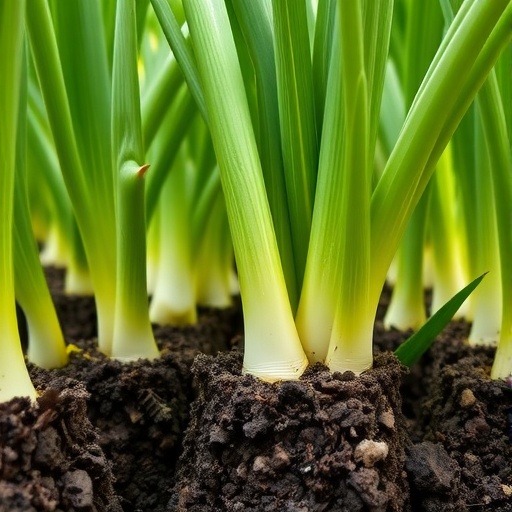
The invisible world of bacteria, fungi, and other microorganisms living in the soil around plant roots may hold one of the keys to feeding a growing planet without exhausting the land that feeds us. A new study published in the journal MicrobiologyOpen has used cutting-edge DNA sequencing to reveal, in remarkable detail, how different fertilization strategies reshape the microbial ecosystem surrounding Allium ampeloprasum, a vegetable crop closely related to leeks that is prized both in the kitchen and in traditional medicine. The findings suggest that organic biofertilizers do far more than simply nourish plants directly. Instead, they cultivate a richer, more functionally diverse community of soil microbes, a discovery with significant implications for sustainable agriculture across the globe.
The research, conducted at Rosaly Farm, a commercial leek operation in South Africa’s Gauteng Province, took advantage of an unusual natural experiment. Three adjacent fields, each measuring 60 by 60 meters and separated by 20-meter buffers to prevent cross-contamination, were managed under entirely different regimes. One plot received a heavy program of synthetic chemical fertilizers, including calcium nitrate, ammonium sulfate, potassium nitrate, magnesium nitrate, and potassium sulfate. A second was treated with a cocktail of organic biofertilizers: Terramax, a naturally derived extract containing plant growth-promoting rhizobacteria; Humesoil, a blend of plant- and tree-derived organic materials; and Soluphos, a microbial inoculant containing Bacillus licheniformis and Pseudomonas putida designed to unlock phosphorus in the soil. The third plot was left unfertilized as an uncultivated control. The region’s mild climate, with average temperatures around 22 degrees Celsius and roughly 794 millimeters of annual rainfall, provided stable conditions for comparison.
Rather than relying on traditional methods that capture only the microbes capable of growing in a laboratory dish, the team turned to shotgun metagenomics, a technique that sequences all of the DNA extracted directly from environmental samples. The researchers collected rhizosphere soil, the thin layer of earth tightly bound to plant roots, from healthy A. ampeloprasum plants 57 days after planting, during the crop’s flowering phase. Twelve biological samples in total were gathered, representing the chemically fertilized plot, the biofertilizer plot, and the untreated bulk soil. Genomic DNA was extracted using a commercial soil kit, sheared into fragments of roughly 350 base pairs, and sequenced on an Illumina NovaSeq X Plus platform using paired-end 150-base-pair reads, generating an enormous dataset that captured not just which organisms were present, but what they were genetically equipped to do.
The bioinformatics pipeline behind the study was as demanding as the fieldwork. After trimming adapters and filtering out low-quality reads with the software Fastp, the team used Bowtie2 to remove any contaminating host plant DNA. Clean reads were then assembled de novo into longer sequences with MEGAHIT, and potential protein-coding regions were predicted using MetaGeneMark. Redundant sequences were collapsed with CD-HIT to create a nonredundant gene catalog, and the original reads were mapped back to this catalog to estimate the abundance of each gene. Taxonomic identities were assigned by aligning sequences against comprehensive reference databases, including NCBI’s nonredundant protein database and the Micro_NR database covering bacteria, archaea, and viruses, using the fast aligner DIAMOND. Functional annotation drew on two major resources: the Kyoto Encyclopedia of Genes and Genomes, known as KEGG, which maps genes onto metabolic pathways, and eggNOG, which groups genes into evolutionarily related families with broad functional categories. Statistical tools ranging from diversity indices computed in the R package vegan to LEfSe biomarker discovery and random forest classification with tenfold cross-validation rounded out the analysis.
The results painted a striking picture of how farming choices echo through the soil’s microbial web. Across all plots, the rhizosphere harbored broadly similar microbial orders, but the biofertilized plot stood apart in a crucial way: it was uniquely enriched with members of the phyla Bacteroidota, Proteobacteria, Actinobacteria, Myxococcota, and Verrucomicrobiota. These are not obscure players. Proteobacteria alone include famous plant allies such as Pseudomonas, which solubilizes phosphorus, and nitrogen-fixing partners, while Myxococcota are predatory bacteria known to suppress fungal pathogens. Actinobacteria are prolific producers of antibiotics and other bioactive compounds. Their combined enrichment under biofertilization suggests that organic amendments actively recruit a protective, nutrient-cycling workforce to the root zone.
Functional analysis reinforced this picture. Biofertilizer-treated soil supported a wider range of microbial functions, particularly when genes were grouped at the broadest level of the eggNOG classification. In practical terms, this means the microbial community in the biofertilized rhizosphere carried genetic instructions for a richer repertoire of metabolic activities, from nutrient transformation to stress response. The study also found that alpha diversity, a mathematical measure of how many species coexist and how evenly they are distributed, differed significantly among the three soil treatments, with a statistical significance level below 0.05. Diversity in this context is not simply an aesthetic measure; diverse communities tend to be more resilient, better at suppressing disease, and more capable of sustaining nutrient flows under stress.
Perhaps the most mechanistically revealing result came from redundancy analysis, a statistical technique that relates community composition to environmental gradients. The functional diversity of the rhizosphere microbiome tracked the soil’s physical and chemical properties, and two variables stood out: carbon content and moisture. Organic amendments, by their nature, add carbon-rich material to the soil, effectively feeding the microbes themselves. This creates a feedback loop in which better-fed microbes improve nutrient availability for plants, whose root exudates in turn sustain more microbes. Chemical fertilizers, by contrast, deliver nitrogen, phosphorus, and potassium in immediately available mineral forms, favoring a narrower set of fast-growing, nutrient-loving organisms while suppressing nitrogen-fixing bacteria and mycorrhizal fungi, a pattern consistent with a growing body of literature warning that long-term synthetic fertilizer use can erode soil health.
The crop at the center of the study deserves attention in its own right. Allium ampeloprasum, encompassing leek, elephant garlic, and wild relatives, is packed with vitamins, minerals, and antioxidant compounds, including the phenolics, flavonoids, terpenoids, and alkaloids that have made allium vegetables staples of both cuisine and traditional healing. The rhizosphere microbiome profoundly influences these qualities. Beneficial microbes facilitate nutrient cycling through processes such as diazotrophy by organisms like Rhizobium and Azospirillum, phosphorus solubilization by Pseudomonas and Bacillus, and iron chelation through siderophores, small molecules that snatch scarce iron from the soil and deliver it to the plant. They also prime plant immune systems and compete with or inhibit soil-borne pathogens, functions that reduce the need for chemical pesticides and fertilizers alike.
The choice of shotgun metagenomics was central to the study’s ambitions. Conventional 16S ribosomal RNA sequencing, the workhorse of earlier microbiome research, captures only bacterial and archaeal taxonomy and says little about function. Culturing-based approaches miss the vast majority of soil microbes, which resist growth under laboratory conditions. By sequencing total environmental DNA, the researchers could simultaneously map taxonomy across bacteria, archaea, fungi, and even viruses, and quantify the functional genes those organisms carry. This dual lens is what allowed the team to detect not only shifts in which microbes were present, but shifts in what the community as a whole could accomplish, a distinction that matters enormously when the goal is managing soil as a living system rather than a passive growth medium.
The broader significance of the work extends to global food policy. The authors frame their findings explicitly within United Nations Sustainable Development Goal 2, particularly Target 2.4, which calls for sustainable food production systems and resilient agricultural practices that improve soil quality. As synthetic fertilizer prices fluctuate and nitrogen runoff continues to degrade waterways worldwide, understanding how to harness native soil microbiomes becomes an economic as well as ecological imperative. Biofertilizers, living or organic formulations that seed the soil with beneficial microbes or feed those already present, offer a route to maintain yields while rebuilding the biological infrastructure of farmland. The South African study provides some of the most detailed molecular evidence yet that these products do what their advocates have long claimed, enriching both the diversity and the functional capacity of the root-zone microbiome.
There remain open questions. The study captured a single time point in a single season, and microbial communities are notoriously dynamic, shifting with weather, plant growth stage, and management history. Follow-up work will need to track these communities over multiple growing cycles and test whether the functional richness observed under biofertilization translates into measurable gains in crop yield, nutritional quality, and disease resistance. Still, the message of the research is clear and hopeful. The soil beneath a farmer’s boots is not inert matter to be chemically topped up, but a bustling ecosystem that responds intelligently to how it is treated. Treat it with living amendments, the study suggests, and it responds with living abundance.
Subject of Research: The functional diversity and taxonomic composition of the rhizosphere microbiome of Allium ampeloprasum under chemical fertilizer, biofertilizer, and unfertilized soil conditions, analyzed using shotgun metagenomics.
Subject of Research: Biology
Article Title: Functional Metagenomics Insights Into the Allium ampeloprasum Rhizosphere Microbiome Under Different Fertilization Regimes
Article References: Shittu, O. E., Enagbonma, B. J., & Babalola, O. O. (2026). Functional Metagenomics Insights Into the Allium ampeloprasum Rhizosphere Microbiome Under Different Fertilization Regimes. MicrobiologyOpen, 15(3), Article e70307. https://doi.org/10.1002/mbo3.70307
Image Credits: AI Generated
DOI: 10.1002/mbo3.70307
Keywords: rhizosphere microbiome, shotgun metagenomics, biofertilizer, Allium ampeloprasum, soil health, sustainable agriculture, microbial diversity, fertilization regimes
Cite Scienmag News
APA MLA Chicago
Alan Morgan. (September 6, 2026). Metagenomics Reveals How Fertilization Shapes Leek Rhizosphere Microbes. Scienmag. https://scienmag.com/metagenomics-reveals-how-fertilization-shapes-leek-rhizosphere-microbes/
Alan Morgan. “Metagenomics Reveals How Fertilization Shapes Leek Rhizosphere Microbes.” Scienmag, 6 September 2026, https://scienmag.com/metagenomics-reveals-how-fertilization-shapes-leek-rhizosphere-microbes/. Accessed 6 September 2026.
Alan Morgan. “Metagenomics Reveals How Fertilization Shapes Leek Rhizosphere Microbes.” Scienmag. September 6, 2026. https://scienmag.com/metagenomics-reveals-how-fertilization-shapes-leek-rhizosphere-microbes/
Copy citation Download RIS
Tags: DNA sequencing in soil microbiologyeffects of fertilization strategies on microbial diversityeffects of synthetic vs organic fertilizersfertilization impact on soil microbesimplications of fertilization on soil microbial sustainabilityinfluence of fertilization strategies on soil bacteria and fungileek rhizosphere microbial communitiesleek rhizosphere microbial diversitymicrobial community functions in leek cultivationmicrobial ecosystem in vegetable crop soilsmicrobial functional diversity in soilnatural experiment in soil microbiome researchorganic biofertilizers and soil healthorganic biofertilizers vs chemical fertilizersplant-microbe interactions in leek cultivationsoil health and crop productivitysoil microbial ecosystem in vegetable croppingsoil microbiomesustainable agriculture and microbial communitiessustainable agriculture and soil health