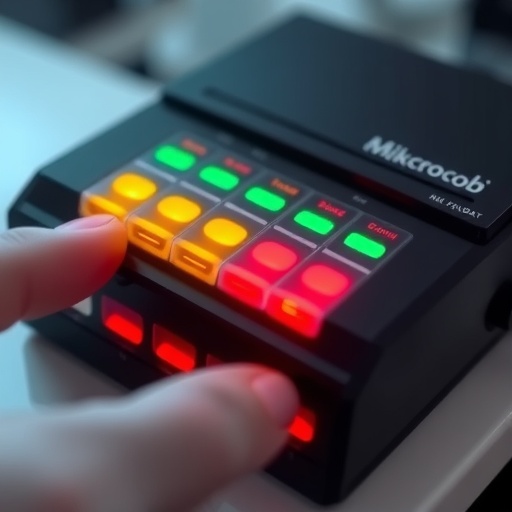
Hemoglobin disorders remain among the most widespread inherited conditions on the planet, yet the laboratory infrastructure needed to detect their carriers is often missing precisely where the need is greatest. A new validation study from Türkiye now reports that a portable, battery-operated microchip electrophoresis device matched the gold-standard laboratory method with perfect agreement in premarital screening, raising the prospect of a fundamental shift in how thalassemia and sickle cell carriers are identified in clinics, rural centers, and low-resource regions worldwide.
The study, published in eJHaem, evaluated the Gazelle platform—a miniaturized, point-of-care hemoglobin electrophoresis system—against high-performance liquid chromatography, the established laboratory benchmark, in a real-world premarital screening program in Antalya. Across 616 participants, including 100 individuals with confirmed hemoglobin variants serving as controls, the two methods reached 100 percent diagnostic concordance. Every carrier detected by HPLC was detected by Gazelle; every normal result on one was normal on the other. When the researchers compared the devices against beta-gene sequencing, the molecular gold standard, the diagnostic outcomes were again identical, with 116 true positives, 500 true negatives, and no false positives or false negatives—yielding sensitivity, specificity, and accuracy of 100 percent across all comparisons.
The scale of the underlying public health problem is difficult to overstate. Hemoglobinopathies, which include the thalassemia syndromes and structural hemoglobin variants such as sickle hemoglobin (HbS), hemoglobin E, and hemoglobin C, are the most prevalent recessive monogenic disorders globally. More than five percent of the world’s population carries a hemoglobin variant, and each year roughly 315,000 infants are born with sickle cell disease while about 56,000 are born with clinically significant thalassemia. The burden is concentrated in the Mediterranean Basin, parts of Africa, the Middle East, India, and Southeast Asia—regions where advanced diagnostic facilities and trained laboratory personnel are frequently in short supply. The World Health Organization recognized this gap in 2019 when it designated anemia and sickle cell disease as critical diagnostic priorities for low- and middle-income countries, explicitly calling for affordable point-of-care technologies.
Conventional hemoglobinopathy screening rests on a layered pipeline. A complete blood count flags microcytic red cell indices suggestive of thalassemia trait; quantitative hemoglobin analysis by HPLC or capillary electrophoresis identifies and measures hemoglobin fractions such as HbA, HbA2, HbF, and HbS; and suspicious results are confirmed by molecular genetic testing. Each step requires centralized laboratories, expensive instrumentation, and skilled technicians. In many high-prevalence areas, these requirements place definitive screening out of reach, which is why community-based prevention programs—carrier detection, education, and prenatal diagnosis—have been promoted since the 1970s as the most cost-effective strategy for reducing the incidence of severe disease.
Türkiye offers an instructive case in how such programs evolve. Hemoglobinopathies pose a significant public health challenge in the country, and policy has responded accordingly: a 1993 law on hereditary blood diseases led to regional thalassemia centers, the Turkish National Hemoglobinopathy Council was formed in 2000, and a Hemoglobinopathy Prevention Program launched in 33 provinces by 2003. By November 2018, the effort had matured into a nationwide Pre-Marriage Hemoglobinopathy Screening Program that mandates free premarital testing for all couples, with genetic counseling and in vitro fertilization support offered to carrier pairs. Yet even this mature system depends on centralized HPLC analysis, and couples in rural provinces can face delays or travel burdens to reach testing facilities.
The Gazelle device was designed to close that gap. It is a battery- or mains-powered, miniaturized electrophoresis platform built around a single-use disposable cartridge containing a cellulose acetate test strip. From roughly 20 microliters of blood, hemoglobin fractions migrate across the strip under an electric field and separate into visible bands corresponding to HbA (normal adult hemoglobin), HbS (sickle hemoglobin), HbF (fetal hemoglobin), and a combined band for HbA2, HbC, and HbE. Separation takes about eight minutes. The reader then quantifies each band and displays the hemoglobin types and percentages on screen; results can be printed, stored digitally, and transmitted via Wi-Fi or Bluetooth. The combination of speed, minimal blood volume, portability, and built-in data handling addresses several of the practical barriers that keep conventional electrophoresis out of primary care settings.
The Antalya trial was designed as an observational validation study with careful statistical framing. The researchers enrolled couples applying for premarital screening at the Mediterranean Blood Diseases Foundation Hemoglobinopathy Diagnostic Center, excluding individuals with serious chronic illness, iron deficiency anemia—which can confound red cell indices—and those declining consent. A sample of 516 screening participants was calculated to detect a three percent carrier prevalence with 95 percent confidence and 80 percent statistical power. Each participant provided a five-milliliter EDTA blood sample that was split across the full testing pipeline: complete blood count on a Sysmex XN-1000, HPLC on a BioRad Variant II, Gazelle microchip testing, and beta-globin gene sequencing for any positive finding. A separate control group of 100 known carriers—81 with beta-thalassemia trait and 19 with sickle cell trait—was included to test the device’s performance on confirmed hemoglobinopathies.
The results were striking. Among the 516 screened individuals, 284 women and 232 men with an average age of 32.75 years, 16 carriers were identified—a prevalence of 3.2 percent that matched national estimates. Fourteen carried beta-thalassemia trait, one carried HbS, and one carried HbD, a variant that Gazelle detects as an abnormal band because HbD and HbS co-migrate on the cellulose acetate strip. The quantitative hemoglobin fractions tracked closely between methods: in healthy participants, mean HbA2 measured 2.8 percent by HPLC and 2.4 percent by Gazelle, while in the beta-thalassemia control subgroup the corresponding values were 4.46 percent and 4.24 percent—both comfortably above the diagnostic cutoffs of 3.65 percent for HPLC and 3.5 percent for Gazelle that define beta-thalassemia trait.
Statistical analysis formalized the agreement. Cohen’s Kappa, which corrects for chance agreement, reached 1.000 across 600 valid comparisons—perfect concordance between the two devices. Receiver operating characteristic analysis produced an area under the curve of 0.796 for Gazelle’s HbA2 measurement against 0.942 for HPLC, with sensitivity of 75 percent and 76 percent respectively and 100 percent specificity for both. The researchers note that despite the modestly lower HbA2 sensitivity of the microchip, no carriers were actually missed, because the screening protocol integrates the complete blood count alongside electrophoresis, allowing microcytic red cell indices to flag cases the HbA2 measurement alone might not. Spearman correlation coefficients of 0.557 between each of Gazelle, HPLC, and the complete blood count against beta-gene sequencing, all significant at p less than 0.001, showed that the point-of-care device aligned with molecular confirmation to the same degree as the laboratory methods.
The authors are careful to frame what the device can and cannot do. Gazelle, like HPLC, is a screening tool rather than a replacement for molecular diagnostics when definitive mutation identification is required—couples who are both carriers, for instance, still need DNA analysis to guide reproductive decisions. The study also has limitations: it was conducted at a single center in Antalya, a city with an established thalassemia infrastructure that may not reflect conditions in remote regions; the cohort of 616 is modest relative to Türkiye’s population; participants with serious illness were excluded; and the device was not validated for alpha-thalassemia or for hemoglobin C and E variants, which are uncommon in the local population. Future work, the researchers say, will focus on formal analytical validation—assessing sample stability, operator-to-operator variability, and repeatability and reproducibility in clinical settings—as well as multicenter trials, cost-effectiveness analyses, and potential extension to neonatal and antenatal screening.
Even so, the implications are considerable. A device that fits the essential analytical power of HPLC into a portable unit delivering results in minutes from a finger-prick-scale blood volume, with printed and wirelessly shareable reports, could meaningfully ease the testing load on centralized laboratories while extending carrier detection to communities that have never had reliable access to it. In a world where hundreds of thousands of children are born each year with severe hemoglobin disorders that are, in principle, preventable through carrier screening, a validated point-of-care electrophoresis platform that achieves perfect agreement with the laboratory standard represents exactly the kind of technology the WHO’s diagnostic priorities envisioned. If larger multicenter studies replicate the Antalya results, the premarital screening model pioneered in Türkiye—one of the more ambitious prevention programs in the world—may soon be exportable to the places that need it most, carried in a case small enough to fit on a primary care desk.
Subject of Research: Validation of the Gazelle point-of-care microchip electrophoresis platform against HPLC and beta-gene sequencing for premarital hemoglobinopathy (beta-thalassemia and hemoglobin variant) screening in Antalya, Türkiye.
Subject of Research: Cancer
Article Title: Validation of Gazelle Microchip Electrophoresis for Premarital Hemoglobinopathy Screening in Türkiye
Article References: Canatan, D., Delibaş, S., Altunsoy, E., Gökkaya, E. G., Aydın, S., Tuncel, D. A., Natu, R., Thota, P., & Gurkan, U. A. (2026). Validation of Gazelle Microchip Electrophoresis for Premarital Hemoglobinopathy Screening in Türkiye. eJHaem, 7(3), Article e70310. https://doi.org/10.1002/jha2.70310
Image Credits: AI Generated
DOI: 10.1002/jha2.70310
Keywords: hemoglobinopathy, beta-thalassemia, sickle cell trait, point-of-care diagnostics, microchip electrophoresis, HPLC, premarital screening, HbA2, Türkiye, carrier detection
Cite Scienmag News
APA MLA Chicago
Nathaniel Bowman. (September 6, 2026). Microchip Electrophoresis Validated for Premarital Hemoglobinopathy Screening in Türkiye. Scienmag. https://scienmag.com/microchip-electrophoresis-validated-for-premarital-hemoglobinopathy-screening-in-turkiye/
Nathaniel Bowman. “Microchip Electrophoresis Validated for Premarital Hemoglobinopathy Screening in Türkiye.” Scienmag, 6 September 2026, https://scienmag.com/microchip-electrophoresis-validated-for-premarital-hemoglobinopathy-screening-in-turkiye/. Accessed 6 September 2026.
Nathaniel Bowman. “Microchip Electrophoresis Validated for Premarital Hemoglobinopathy Screening in Türkiye.” Scienmag. September 6, 2026. https://scienmag.com/microchip-electrophoresis-validated-for-premarital-hemoglobinopathy-screening-in-turkiye/
Copy citation Download RIS
Tags: accuracy and sensitivity of microchip electrophoresiscomparison of microchip electrophoresis and high-performance liquid chromatographycomparison with high-performance liquid chromatographyearly detection of hemoglobinopathGazelle device validation studyGazelle point-of-care hemoglobin analysisgenetic screening for inherited blood disordershealthcare infrastructure for inherited blood disordershemoglobin disorder screeninghemoglobin variant detection in rural and low-resource settingshemoglobinopathy screeninginnovations in laboratory infrastructure for hemoglobinopathy detectionmicrochip electrophoresis for hemoglobinopathiesmicrochip electrophoresis validationmolecular validation of hemoglobinopathy screening methodsportable hemoglobin testing devicesportable point-of-care hemoglobin testingpremarital screening for hemoglobin disorderspremarital screening for thalassemia and sickle cell diseasepublic health impact of hemoglobin disorder detectionrural and low-resource hemoglobin diagnosticsthalassemia and sickle cell detection