In a striking illustration of how little medicine sometimes understands its own most basic assumptions, physicians have described the case of a young man with a rare congenital absence of fibrinogen—the blood protein that forms the structural backbone of every clot—who nonetheless developed extensive deep vein thrombosis. The report, published in the open-access hematology journal eJHaem, details not only a diagnostic puzzle in which every conventional laboratory signal pointed in the wrong direction, but also a delicate therapeutic balancing act between a body prone to bleeding and a clot that refused to yield. The patient, a Turkish male in his early twenties, arrived with a week of progressive pain and swelling in his left leg after playing soccer, and left clinicians with a case that underscores why anticoagulation science cannot always rely on its standard instruments.
Congenital afibrinogenemia is an autosomal recessive disorder affecting roughly one in one million people worldwide. It results from pathogenic variants in the genes encoding the fibrinogen protein chain, most commonly the FGA, FGB, or FGG genes, and is defined by the complete or near-complete absence of circulating fibrinogen. Because fibrinogen is the precursor of fibrin—the polymerized protein mesh that stabilizes platelet plugs and forms the scaffold of mature clots—its absence has classically been associated with bleeding. Patients with the condition suffer from everything from umbilical stump hemorrhage in infancy to spontaneous muscle, joint, and intracranial bleeds throughout life. Fibrinogen also serves as a critical bridge for platelet aggregation, binding to the platelet glycoprotein IIb/IIIa receptor to link platelets to one another. Remove fibrinogen entirely, the textbook reasoning goes, and robust clot formation becomes nearly impossible. That reasoning, as this case demonstrates, is incomplete.
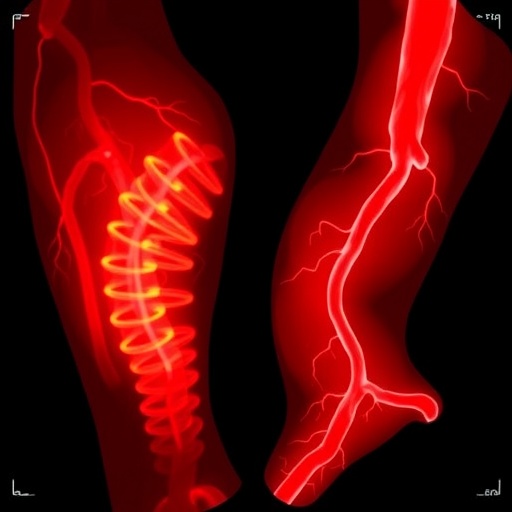
The patient presented with laboratory results that, to any clinician unfamiliar with the disorder’s paradoxes, would suggest a state of profound anticoagulation rather than one of active thrombosis. His prothrombin time, partial thromboplastin time, and thrombin time all exceeded 200 seconds, with reference ranges of under 15, under 38, and under 17 seconds respectively. His international normalized ratio exceeded 16. Both fibrinogen activity, measured by the Clauss method, and fibrinogen antigen were below the level of quantification. Most strikingly, his D-dimer—the fibrin degradation product used around the world as a screening tool for venous thromboembolism—was low, measuring under 215 ng/mL against a reference ceiling of 500 ng/mL. Yet venous duplex ultrasound revealed an extensive acute occlusive deep vein thrombosis extending from the left peroneal vein all the way to the femoral profunda vein.
The explanation for this contradiction lies in the biology of the assays themselves. D-dimer is generated when plasmin cleaves cross-linked fibrin. If there is no fibrinogen to form fibrin in the first place, there can be no cross-linked fibrin to degrade, and therefore no D-dimer released into the circulation, regardless of how much thrombotic activity is actually occurring within the vessels. The clotting times tell a similar story: PT, PTT, and thrombin time all depend on the conversion of fibrinogen to fibrin as a terminal readout, so when fibrinogen is absent, these assays are uniformly and maximally prolonged, bearing no relationship to a patient’s actual thrombotic risk. The authors of the report emphasize that in afibrinogenemia, the entire battery of fibrin-dependent laboratory tests becomes functionally blind. Diagnosis of venous thromboembolism in such patients must rest on clinical suspicion and imaging alone.
Why a person without the principal clotting scaffold develops clots at all remains only partly understood, but several mechanisms have been proposed. Chief among them is the notion of unopposed thrombin. In normal hemostasis, thrombin generated at the site of injury is progressively sequestered and neutralized by binding to fibrin, which absorbs the enzyme into the clot structure. In the absence of fibrin, free thrombin persists in the circulation, free to activate platelets, catalyze downstream coagulation cascades, and promote thrombus growth through fibrin-independent pathways. Impaired fibrinolysis compounds the problem, since the fibrinolytic system that normally remodels and dissolves clots loses its principal substrate and regulatory anchor. Von Willebrand factor-mediated platelet activation may also contribute independently of fibrin. A review of 128 patients with inherited fibrinogen disorders cited in the report found that thrombotic events occurred frequently, both spontaneously and in association with triggers such as trauma, surgery, and pregnancy, confirming that the risk is clinically meaningful and multifactorial rather than a curiosity of case reports.
In this patient, the trigger appears to have been a soccer match—an episode of minor tissue injury and relative immobilization sufficient, in a susceptible individual, to tip the hemostatic balance toward thrombosis. His childhood history included a diagnosis of congenital afibrinogenemia with prior bleeding episodes treated with fibrinogen replacement, which made the therapeutic challenge all the more acute. Treatment began with enoxaparin, a low molecular weight heparin administered at 1 mg/kg twice daily, chosen for its predictable pharmacokinetics and reversibility. Anti-Xa monitoring was not performed given standard weight-based dosing and the absence of renal impairment. Two days later he was transitioned to apixaban, a direct oral factor Xa inhibitor, at 5 mg twice daily—primarily because of the patient’s religious restriction regarding porcine-derived products, which made continued heparin therapy impractical, and because apixaban allowed feasible outpatient management. The authors acknowledge that evidence for direct oral anticoagulants in afibrinogenemia is limited, but argue for their cautious practicality in carefully selected patients.
Alongside anticoagulation came the equally delicate task of fibrinogen replacement, which risks pouring fuel on the thrombotic fire if overdone, yet must provide enough hemostatic reserve to prevent bleeding in a therapeutically anticoagulated patient. The team initially targeted fibrinogen activity of at least 50 mg/dL, using human fibrinogen concentrate (RiaSTAP) at a starting dose of one vial of 1026 mg. When fibrinogen levels remained persistently undetectable, the dose was escalated to two vials, approximately 2052 mg or 29 mg/kg, and the target was raised to above 100 mg/dL to provide a more reliable reserve given the concurrent anticoagulation. Subsequent dosing was adjusted according to serial measurements, with trough levels checked before infusions and peak levels approximately one hour after, typically administered every two to three days. D-dimer was deliberately not trended after replacement began, given the known limitations of the assay in this condition. The patient remained hospitalized for 14 days, during which his pain decreased, his limb swelling improved, and his ambulation recovered, all without any bleeding complications.
Follow-up genetic testing confirmed the reported diagnosis at the molecular level. The patient was found to be homozygous for a pathogenic variant in the FGB gene, c.862G>A, classified as likely pathogenic. This variant has a reported allele frequency of only 0.0026% among individuals of European non-Finnish descent in the gnomAD database, and has previously been described in the homozygous state in individuals with afibrinogenemia and in the heterozygous state in a person with hypofibrinogenemia. The authors note that genetic testing plays a crucial role in confirming and classifying quantitative fibrinogen disorders, particularly when activity and antigen levels are undetectable, and that it informs inheritance patterns essential for counseling, especially in consanguineous families. However, the variant has not been consistently associated with increased thrombotic risk, and genotype–phenotype correlations in these disorders remain poorly defined—leaving clinicians without a genetic roadmap for predicting who among these rare patients might clot.
The patient completed three months of therapy with apixaban twice daily and fibrinogen replacement using Fibryga three times weekly, with interval fibrinogen monitoring. At the end of treatment, his symptoms had resolved and repeat ultrasound showed only chronic, non-occlusive thrombotic changes—a residual scar of the episode rather than an active threat. Long-term fibrinogen prophylaxis was deliberately not initiated, a decision reflecting the need to balance his history against future thrombotic risk: with no recurrent bleeding, routine replacement might paradoxically expose him to further clots. He finished the treatment course with no major adverse events, an outcome the authors present as anecdotal support for the cautious combined approach they adopted.
The broader lessons of the case extend well beyond a single rare disease. For clinicians, the report is a warning that D-dimer, one of the most widely deployed screening tests in medicine, can fail catastrophically in patients with quantitative fibrinogen disorders, and that normal clotting screens in such patients say nothing about thrombotic danger. When afibrinogenemia is known or suspected and a patient presents with limb swelling, pain, or other features of venous thromboembolism, imaging must take precedence over laboratory screening. For researchers, the case highlights the absence of standardized regimens for fibrinogen replacement in the setting of concurrent anticoagulation, and the need for prospective studies to define thrombotic risk and develop evidence-based management strategies for this population. Nearly a century after congenital afibrinogenemia was first described in 1920, the disorder continues to challenge the assumption that bleeding and clotting occupy opposite ends of a single dial—and to show that in hemostasis, as in much of biology, the absence of a system does not mean the absence of surprises.
Subject of Research: Paradoxical deep vein thrombosis in a patient with genetically confirmed congenital afibrinogenemia, including diagnostic pitfalls of fibrin-dependent assays and individualized management with anticoagulation and fibrinogen replacement.
Subject of Research: Cancer
Article Title: Diagnosing and Managing Paradoxical Deep Vein Thrombosis in a Patient With Congenital Afibrinogenemia
Article References: Jawadi, A., Alqawasmi, M., Abdelsamia, M., Assed, H., Adawee, M., Badawy, M., Nguyen, X. T. T., Romero, A. E. M., Burnett, A., & Ebaid, A. (2026). Diagnosing and Managing Paradoxical Deep Vein Thrombosis in a Patient With Congenital Afibrinogenemia. eJHaem, 7(3), Article e70328. https://doi.org/10.1002/jha2.70328
Image Credits: AI Generated
DOI: 10.1002/jha2.70328
Keywords: congenital afibrinogenemia, deep vein thrombosis, fibrinogen replacement, D-dimer, apixaban, low molecular weight heparin, FGB variant, thrombotic paradox, venous thromboembolism diagnosis, rare bleeding disorder, anticoagulation management, fibrin-dependent assays
Cite Scienmag News
APA MLA Chicago
Juliet Wilcox. (September 3, 2026). Treating Paradoxical Deep Vein Thrombosis in Congenital Afibrinogenemia. Scienmag. https://scienmag.com/treating-paradoxical-deep-vein-thrombosis-in-congenital-afibrinogenemia/
Juliet Wilcox. “Treating Paradoxical Deep Vein Thrombosis in Congenital Afibrinogenemia.” Scienmag, 3 September 2026, https://scienmag.com/treating-paradoxical-deep-vein-thrombosis-in-congenital-afibrinogenemia/. Accessed 3 September 2026.
Juliet Wilcox. “Treating Paradoxical Deep Vein Thrombosis in Congenital Afibrinogenemia.” Scienmag. September 3, 2026. https://scienmag.com/treating-paradoxical-deep-vein-thrombosis-in-congenital-afibrinogenemia/
Copy citation Download RIS
Tags: anticoagulation challengesanticoagulation management in rare blood disordersatypical clot formationatypical DVT cases in congenital bleeding disordersbalancing bleeding and clotting risksbleeding risk managementblood clotting mechanismsclinical case of thrombosis without fibrinogenCongenital afibrinogenemiadeep vein thrombosisdiagnostic challenges in afibrinogenemiafibrinogen deficiencyfibrinogen deficiency and thrombosisfibrinogen gene mutationsgenetic mutations causing fibrinogen absencehematology case reportshematology insights into rare coagulopathiesparadoxical clottingparadoxical clotting in bleeding disordersrare coagulation disordersthrombosis in rare bleeding disorderstreatment strategies for thrombotic events