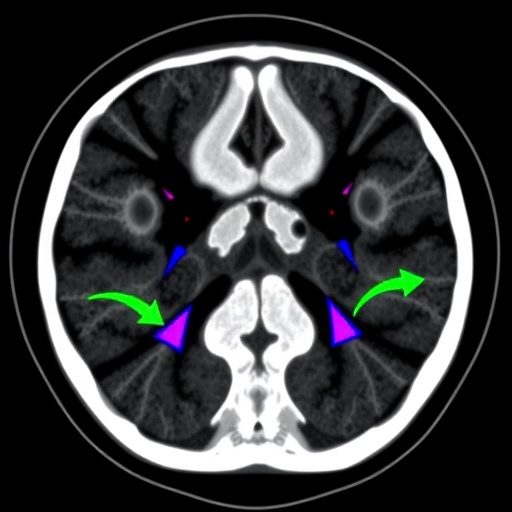
A radioactive tracer engineered to illuminate the fibrous scaffolding surrounding tumor cells — rather than the tumors’ appetite for sugar — has decisively outperformed the most widely used molecular imaging agent in medicine at detecting breast cancer that has returned after surgery. In a head-to-head comparison published on 29 August 2026 in the European Journal of Nuclear Medicine and Molecular Imaging, the investigational agent [18F]FAPI-04 uncovered recurrent disease with sensitivities approaching 100 percent in lymph nodes, pleura, and bone, while the established workhorse tracer, the glucose analog [18F]FDG, missed roughly one in three lesions at those same sites. The report, a post hoc analysis of a prospective clinical trial conducted at the Affiliated Cancer Hospital of Guangzhou Medical University in China, goes beyond diagnostic tallies: switching to the new tracer changed clinical management in 12 of 40 patients with confirmed recurrence, a 30 percent swing in real-world decisions spanning additional biopsies, restaging, and altered treatment plans. Together, the findings suggest that the next major advance in cancer imaging may come not from targeting the cancer cell itself, but from targeting the neighborhood it recruits.
The clinical problem the study addresses is among the most consequential in oncology. Breast cancer is the most commonly diagnosed cancer in women worldwide, and although surgery, radiotherapy, and systemic therapies cure a majority of patients, a substantial fraction relapse months to years after their initial treatment. Recurrence may appear as isolated disease in the chest wall or regional lymph nodes, where timely detection and localized salvage therapy are associated with longer survival, or as silent dissemination to distant organs that announces itself only once it is widespread. Pleural involvement — tumor seeding of the membranes enveloping the lungs — and skeletal spread are particularly consequential, because they often determine whether a patient can still be steered toward curative-intent treatment or has crossed into systemic territory. A meta-analysis cited by the researchers links early detection of isolated recurrences after primary treatment with improved survival, which is why surveillance programs combine mammography, ultrasound, serum tumor markers, and, in selected patients, molecular imaging. Each of these tools, however, has blind spots, and metastases in lymph nodes, pleural membranes, and bone remain among the hardest to catch before they multiply.
Positron emission tomography fused with computed tomography, or PET/CT, is the most sensitive molecular technique currently deployed for this task. The patient receives an intravenous injection of a biologically active molecule tagged with a positron-emitting radioisotope; as each isotope nucleus decays, it emits a positron that annihilates with a nearby electron, producing pairs of gamma photons at 511 kiloelectronvolts that rings of scintillator crystals register in coincidence within nanoseconds. A reconstruction algorithm converts millions of such events into a three-dimensional map of tracer concentration, which the CT component overlays with anatomical context. The dominant tracer worldwide is [18F]FDG, a radioactive glucose analog that cells import through glucose transporters and trap after phosphorylation, so the resulting signal reflects glycolytic activity — the enhanced sugar metabolism described by the Warburg effect. That strength is also its weakness. Uptake depends on a tumor’s metabolic behavior, which varies widely across breast cancer subtypes, while inflammatory cells, healing tissue, muscle, brown fat, myocardium, and brain all consume glucose avidly. The consequence is a scan with well-documented false negatives in indolent, low-glycolytic lesions and false positives in inflamed tissue, along with poor lesion contrast in organs with high baseline glucose use.
[18F]FAPI-04 takes a fundamentally different approach. Instead of interrogating tumor metabolism, it binds fibroblast activation protein, or FAP, a type II transmembrane serine protease displayed on the surface of activated cancer-associated fibroblasts — the stromal cells that tumors recruit to build extracellular matrix, suppress immune attack, and drive invasion. FAP is virtually absent from healthy adult tissues but is overexpressed by the activated fibroblasts of the vast majority of epithelial cancers, including breast cancer, making it a dense and comparatively tumor-specific molecular beacon. In breast tumors specifically, recent studies have tied distinct subsets of activated fibroblasts to immunosuppression, distant relapse, and the bone-tropic behavior of metastatic cells, a biology that plausibly explains why a stroma-targeted tracer excels at finding skeletal disease. FAPI-04 is a small-molecule, quinoline-based inhibitor of FAP; labeling it with fluorine-18, a positron emitter with a half-life of roughly 110 minutes produced in hospital cyclotrons, confers practical advantages over earlier gallium-68 versions, including centralized mass production, wider distribution networks, and sharper images at later scanning time points. In effect, the agent photographs the tumor’s construction site rather than the tumor cell itself.
To test whether that distinction matters clinically, a team led by co-first authors Hao Peng and Yu Liu, under the senior supervision of Rusen Zhang, Ming Jiang, and Linqi Zhang, performed a post hoc analysis of a prospectively enrolled, single-center clinical trial registered on ClinicalTrials.gov as NCT05485792. Forty-four patients with clinical suspicion of breast cancer recurrence after surgery were consecutively recruited, and every participant underwent both [18F]FDG PET/CT and [18F]FAPI-04 PET/CT. The paired scans yielded 880 evaluable lesions, of which 782 lesions in 40 patients were confirmed as recurrent malignancy through biopsy, multidisciplinary tumor-board consensus, imaging follow-up, or a combination of these reference standards. Because each patient served as their own control, the investigators applied paired statistics: McNemar’s test to compare sensitivity and accuracy between the two tracers, and the Wilcoxon signed-rank test to compare semi-quantitative uptake measures. Those measures included the maximum standardized uptake value, or SUVmax — the peak tracer concentration within a lesion, normalized to injected dose and body weight — and the tumor-to-background ratio, or TBR, which quantifies how brightly a lesion stands out against its surroundings. The work was supported by the National Natural Science Foundation of China and Guangdong provincial research funds.
The site-by-site results were striking. In lymph nodes, [18F]FAPI-04 PET/CT achieved a sensitivity of 98.7 percent versus 62.7 percent for [18F]FDG PET/CT, with accuracy of 93.6 percent against 54.3 percent. In pleural metastases — often minute deposits along the lung lining, where FDG’s contrast is notoriously compromised — sensitivity rose from 64.2 percent with FDG to 94.0 percent with FAPI-04, and accuracy climbed from 64.3 to 91.5 percent. Bone metastases showed the widest gulf: FAPI-04 detected 99.6 percent of confirmed lesions versus 63.4 percent for FDG, with accuracy of 98.4 percent versus 62.7 percent. Every one of these comparisons reached statistical significance at P < 0.001. The pattern is biologically coherent. Sclerotic, slow-turnover bone metastases from breast cancer often generate little glycolytic signal for FDG to register, whereas activated stromal cells densely carpet the metastatic niche, saturating it with FAP and therefore with tracer. Small lymph node deposits, meanwhile, frequently sit below FDG’s contrast threshold but not below FAPI’s.
Quantitative measurements reinforced the visual impression. Across nearly every lesion category, [18F]FAPI-04 accumulated at significantly higher concentrations than [18F]FDG, with SUVmax differences significant everywhere except liver lesions, and tumor-to-background ratios significantly elevated across all categories, all at P < 0.001. The liver exception is instructive rather than disappointing: hepatic parenchyma takes up FAPI tracers to a moderate degree, raising the background signal and compressing lesion-to-liver contrast even when absolute tumor uptake remains high. TBR, which captures relative conspicuity rather than raw uptake, remained significantly superior for FAPI-04 even in the abdomen. These metrics matter because scan interpretation ultimately hinges on contrast — a bright lesion against a quiet background is what allows a radiologist to confidently flag a five-millimeter node or a faint sclerotic vertebral focus, and it is precisely this property that translated into the sensitivity gains documented in the trial.
The most consequential number, however, was not a sensitivity figure but a management metric. In 12 of the 40 patients with confirmed recurrence — 30 percent — the information provided by [18F]FAPI-04 PET/CT changed clinical management. In oncology, where a surveillance scan is meant to resolve a decision that determines whether a patient receives curative-intent salvage therapy, palliative systemic treatment, or watchful waiting, a 30 percent decision-change rate is uncommon for a diagnostic technology. Such pivots can include adding radiotherapy fields, escalating from a localized salvage approach to systemic regimens, or expanding planned treatment volumes when previously occult metastases surface. The magnitude is all the more striking given the rigor of the comparison: both tracers were read against the same reference standard, and the 880 analyzed lesions spanned every major metastatic compartment. The authors conclude that [18F]FAPI-04 PET/CT may serve as a valuable complementary tool to [18F]FDG PET/CT in post-treatment surveillance, with the potential to refine patient stratification and inform therapeutic decisions.
Caution is nonetheless warranted before the tracer enters routine surveillance. The analysis derives from a single center and 40 confirmed recurrence patients, and although the parent trial was prospective and registered, a post hoc comparison in this cohort cannot substitute for large, multicenter validation linked to survival outcomes. FAPI tracers are also not perfectly tumor-specific: activated fibroblasts participate in wound healing, inflammation, and benign lymphoid tissue, and case reports describe false-positive FAPI uptake in non-malignant conditions, so interpretation demands the same clinical context that FDG requires. Current European and American imaging guidelines for breast cancer remain anchored to FDG, and practice will shift only if larger trials demonstrate that earlier, more sensitive detection of recurrence translates into longer lives. The trajectory, however, is unmistakable. FAP-targeted imaging is expanding across tumor types, and the same molecular target is now being exploited therapeutically with radiolabeled fibroblast inhibitors such as lutetium-177 FAP-2286, opening a route toward matched diagnostics and treatments. For patients whose returning cancer hides from sugar-hungry scanners, an agent that reads the tumor’s scaffolding may soon become the more vigilant sentinel.
Subject of Research: Head-to-head comparison of [18F]FAPI-04 PET/CT and [18F]FDG PET/CT for detecting recurrent breast cancer after surgery
Subject of Research: Medicine
Article Title: [18F]FAPI-04 PET/CT for detection of recurrent breast cancer after surgery: a post hoc analysis comparing [18F]FDG PET/CT
Article References: Peng, H., Liu, Y., Liang, J., Yan, S., Li, W., Liu, Z., Zhang, R., Jiang, M., & Zhang, L. (2026). [18F]FAPI-04 PET/CT for detection of recurrent breast cancer after surgery: a post hoc analysis comparing [18F]FDG PET/CT. European Journal of Nuclear Medicine and Molecular Imaging. https://doi.org/10.1007/s00259-026-08163-z
Image Credits: AI Generated
DOI: 10.1007/s00259-026-08163-z
Keywords: Recurrence, Breast Cancer, [18F]FAPI-04 PET/CT, [18F]FDG PET/CT, Fibroblast Activation Protein, Cancer-Associated Fibroblasts, Molecular Imaging, Lymph Node Metastases, Bone Metastases, SUVmax, Tumor-to-Background Ratio, Post-Treatment Surveillance
Cite Scienmag News
APA MLA Chicago
Nathaniel Bowman. (August 30, 2026). FAPI-04 PET/CT outperforms FDG in detecting recurrent breast cancer after surgery. Scienmag. https://scienmag.com/fapi-04-pet-ct-outperforms-fdg-in-detecting-recurrent-breast-cancer-after-surgery/
Nathaniel Bowman. “FAPI-04 PET/CT outperforms FDG in detecting recurrent breast cancer after surgery.” Scienmag, 30 August 2026, https://scienmag.com/fapi-04-pet-ct-outperforms-fdg-in-detecting-recurrent-breast-cancer-after-surgery/. Accessed 30 August 2026.
Nathaniel Bowman. “FAPI-04 PET/CT outperforms FDG in detecting recurrent breast cancer after surgery.” Scienmag. August 30, 2026. https://scienmag.com/fapi-04-pet-ct-outperforms-fdg-in-detecting-recurrent-breast-cancer-after-surgery/
Copy citation Download RIS
Tags: advancements in cancer imaging technologyadvances in breast cancer imagingBreast cancer recurrence detectioncancer microenvironment targetingclinical management of cancer recurrenceFAPI-04 PET/CT imagingFDG PET/CT comparisonFDG PET/CT limitationsfibrous scaffolding in tumorsfibrous tumor microenvironment imaginghead-to-head comparison of PET tracersimpact of imaging on clinical managementimpact of imaging on treatment decisionslymph node and bone metastasis detectionmolecular imaging for cancermolecular imaging in oncologynovel radiotracers for cancernovel radiotracers in oncologypost-surgical cancer relapse diagnosisrecurrent breast cancer diagnosissensitivity of cancer detection methodstumor microenvironment imaging