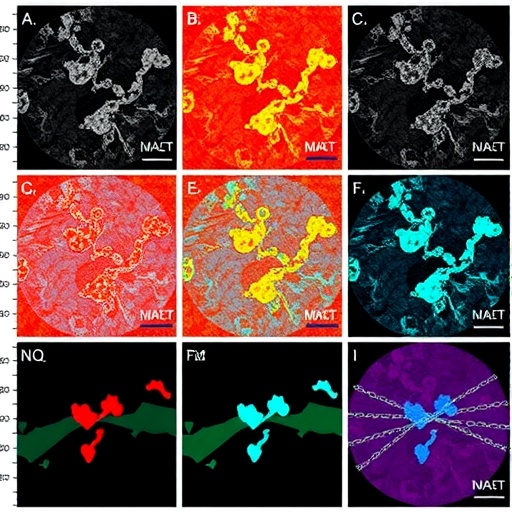
Atherosclerosis has long been described as a disease of clogged arteries, but a new study presents a more intricate picture: advanced plaques in the carotid arteries are not uniform masses of fat and scar tissue. Instead, they contain spatially distinct molecular neighborhoods, each marked by its own collection of proteins. The findings, reported in Nature Cardiovascular Research, use proteomics to examine the molecular architecture of advanced carotid artery plaques and highlight why the same diagnosis can lead to very different clinical outcomes. The research does not treat a plaque as a single object with one biological identity. It examines it as a patchwork of interacting regions whose chemistry may change from one location to another. That shift in perspective could influence how scientists understand plaque progression, instability and the risk of an artery-blocking event.
Proteomics is the large-scale study of proteins, the molecules that perform much of the work inside cells and tissues. While DNA provides a relatively stable set of instructions, proteins reflect what cells are actively doing in a particular environment. They can reveal inflammation, tissue repair, immune-cell activity, altered metabolism and structural damage. In atherosclerosis, this distinction is especially important because an arterial plaque is built from multiple cell types and extracellular materials. It may include immune cells, smooth-muscle cells, connective-tissue components, lipids, calcium deposits and regions of tissue breakdown. Each component can produce or modify proteins, creating a molecular record of the processes occurring within the lesion. By applying proteomic analysis to different areas of advanced carotid plaques, the study by Sinha and colleagues examines that record at a level of detail that conventional anatomical descriptions cannot provide.
The carotid arteries supply blood to the brain, and advanced disease in these vessels can become dangerous when a plaque narrows the artery or sheds material that travels downstream. Yet the size of a plaque alone does not fully describe its biological behavior. Two plaques with similar dimensions may differ in composition and in the processes taking place inside them. One may contain relatively organized tissue, while another may include active inflammatory signaling, weakened structural regions or extensive remodeling. The study’s emphasis on spatial heterogeneity addresses this problem directly. “Spatial” in this context means that the molecular profile depends on where a sample is taken within the plaque. A protein associated with immune activation may be abundant in one region but scarce in another, while proteins involved in tissue structure or repair may follow a different distribution. Such variation can disappear when an entire plaque is ground together and analyzed as a single sample.
This is one of the central challenges in tissue biology. An average measurement can be accurate for the sample as a whole while still concealing the most biologically important location. If a small, high-activity region represents only a fraction of a plaque, its molecular signals may be diluted by less active material. Spatially resolved approaches attempt to preserve the relationship between molecular measurements and tissue anatomy. In practice, this requires careful sampling or methods that connect protein signals to defined areas of a tissue section. The resulting data can be used to compare regions within the same plaque and to identify patterns that recur across plaques. The title of the study indicates that this strategy revealed both spatial and molecular heterogeneities, suggesting that advanced carotid lesions differ internally as well as from one patient to another. That distinction is crucial: a plaque may be heterogeneous because it contains multiple microenvironments, while different plaques may also arrive at advanced disease through different biological routes.
The molecular diversity of atherosclerotic plaques reflects the fact that atherosclerosis is not simply a storage problem caused by excess cholesterol. It is a chronic disease involving the artery wall, circulating lipoproteins, immune responses, cellular stress and tissue remodeling. Lipoproteins can enter the vessel wall, where they may be chemically modified and taken up by immune cells. These cells can accumulate lipid and alter the local inflammatory environment. Smooth-muscle cells, meanwhile, can change their behavior and contribute to structural tissue, but under some conditions they may also adopt different cellular states. The extracellular matrix—the network of proteins that gives tissue strength and organization—can be produced, rearranged or degraded. Proteomic measurements are capable of capturing many of these processes because they survey the molecules that mediate them. A complex protein pattern may therefore act as a molecular fingerprint of the local balance between injury, inflammation, repair and structural failure.
The study is also significant because carotid plaques can be examined in clinical contexts that are directly relevant to human disease. Advanced lesions removed during treatment provide an opportunity to investigate tissue that has reached a stage associated with substantial arterial pathology. Such samples can preserve evidence of the processes that shaped the plaque over time, although they represent a particular stage of disease rather than the entire history of its development. Proteomic analysis cannot, by itself, prove that a specific protein caused a plaque to progress or become dangerous. It can identify associations and molecular signatures that point to mechanisms requiring further testing. This distinction matters when translating discovery science into medical claims. A protein may be abundant because it drives disease, because it is produced in response to damage, or because it accumulates as a by-product of another process. Spatial information helps narrow those possibilities by showing whether the protein is concentrated in regions with corresponding structural or cellular features.
The work may ultimately help researchers move toward more precise descriptions of cardiovascular risk. Current clinical evaluation relies on a combination of symptoms, imaging, medical history and established risk factors. These tools are indispensable, but they do not measure every molecular process occurring within an individual plaque. A future diagnostic framework could potentially combine imaging with molecular markers that indicate particular plaque states. For example, researchers might seek signatures associated with active inflammation, matrix breakdown, calcification or organized repair. The present study does not establish such a clinical test, and its findings should not be interpreted as a ready-made predictor of stroke. Its contribution is more fundamental: it maps the complexity that any successful predictor will need to account for. If dangerous biology is localized rather than evenly distributed, sampling and measurement strategies must be designed accordingly.
The findings also raise questions about how therapies interact with plaque biology. Treatments that reduce circulating cholesterol, lower blood pressure or dampen inflammation can alter the environment in which plaques develop, but their effects may not be identical in every region of every lesion. A molecular atlas of plaque heterogeneity could help researchers determine whether particular cellular states respond differently to treatment or whether some regions remain biologically active despite improvement elsewhere. Proteomics may also support the discovery of candidate drug targets by identifying pathways shared by high-risk regions across multiple plaques. Any such application will require validation in larger patient groups and independent experimental systems. Researchers will need to establish whether the proteins detected in tissue can also be measured reliably in blood, whether they change before clinical events and whether they improve prediction beyond existing methods.
For now, the study’s most immediate message is conceptual but powerful: advanced atherosclerotic plaques should not be regarded as chemically or biologically uniform. Their internal geography matters. By linking protein composition to location, the research provides a framework for asking more precise questions about how plaques grow, remodel and potentially become harmful. It also illustrates why modern cardiovascular research increasingly combines pathology with high-throughput molecular measurement. A microscope can show the architecture of a lesion, while proteomics can reveal the active molecular programs embedded within that architecture. Together, these approaches may produce a more realistic account of disease than either can provide alone. The next challenge will be to determine which of the molecular patterns identified in advanced carotid plaques are causes, consequences or warning signals—and whether those patterns can be translated into earlier detection and safer, more individualized care.
Subject of Research: Spatial and molecular heterogeneity in advanced atherosclerotic carotid artery plaques
Subject of Research: Medicine
Article Title: Proteomics reveals spatial and molecular heterogeneities in advanced atherosclerotic carotid artery plaques
Article References: Sinha, A., Sachs, N., Kratz, E., Pauli, J., Steigerwald, S., Albrecht, V., Nordmann, T. M., Ugur, E., Rodriguez, E. H., Engl, M.-L., Skowronek, P., Oliinyk, D., Metousis, A., von Scheidt, M., Wierer, M., Winter, H., Schunkert, H., Branzan, D., Maegdefessel, L., & Mann, M. (2026). Proteomics reveals spatial and molecular heterogeneities in advanced atherosclerotic carotid artery plaques. Nature Cardiovascular Research, 5(7), 605-623. https://doi.org/10.1038/s44161-026-00827-1
Image Credits: AI Generated
DOI: 10.1038/s44161-026-00827-1
Keywords: atherosclerosis, carotid artery plaques, proteomics, cardiovascular disease, plaque heterogeneity, molecular mapping, vascular inflammation, stroke risk
Cite Scienmag News
APA MLA Chicago
Arden W. (August 29, 2026). Proteomics maps spatial and molecular diversity in advanced carotid artery plaques. Scienmag. https://scienmag.com/proteomics-maps-spatial-and-molecular-diversity-in-advanced-carotid-artery-plaques/
Arden W. “Proteomics maps spatial and molecular diversity in advanced carotid artery plaques.” Scienmag, 29 August 2026, https://scienmag.com/proteomics-maps-spatial-and-molecular-diversity-in-advanced-carotid-artery-plaques/. Accessed 29 August 2026.
Arden W. “Proteomics maps spatial and molecular diversity in advanced carotid artery plaques.” Scienmag. August 29, 2026. https://scienmag.com/proteomics-maps-spatial-and-molecular-diversity-in-advanced-carotid-artery-plaques/
Copy citation Download RIS
Tags: advanced carotid artery diseaseatherosclerosisatherosclerosis plaque heterogeneitycarotid artery plaquesheterogeneity of atherosclerotic lesionsimplications for diagnosis and treatment of carotid artery diseasemolecular architecture of atherosclerotic plaquesmolecular architecture of carotid artery plaquesmolecular diversity in arterial plaquesmolecular diversity in atherosclerotic plaquespersonalized risk assessment in carotid artery diseaseplaque instability and clinical outcomesplaque progression and stabilityprotein markers of plaque inflammationprotein markers of plaque vulnerabilityproteomics for cardiovascular diseaseproteomics in cardiovascular researchspatial proteomics in artery plaquesspatial proteomics in atherosclerosisspatially distinct molecular neighborhoods in atherosclerosistissue repair and immune activity in plaquestissue-specific proteomics in vascular healthunderstanding plaque instability through proteomics