Pancreatic cancer may gain its most dangerous advantages not from a single genetic alteration, but from a molecular partnership that dismantles one of the cell’s key safeguards, according to a study published in the Journal of Experimental & Clinical Cancer Research. Researchers report that mutations activating the cancer-driving gene KRAS can cooperate with changes in SKIL to promote pancreatic tumor formation by triggering the destruction of Smad4, a protein central to growth-regulating signals. The findings identify a previously unrecognized route by which pancreatic lesions may progress toward malignancy and suggest that people with KRAS mutations and impaired SKIL function could represent a particularly high-risk group. The work began with a germline SKIL A512T mutation identified in an infant with an intraductal papillary mucinous neoplasm, or IPMN, a cyst-forming pancreatic lesion that can sometimes evolve into invasive cancer. By tracing how this mutation interacted with an oncogenic KRAS variant, the investigators uncovered a biochemical sequence that links two otherwise incomplete cancer-promoting events.
The importance of the result lies in the biology of pancreatic tumorigenesis. Although activating mutations in KRAS are among the earliest and most common genetic changes in pancreatic cancer, they are generally not sufficient on their own to produce a fully developed tumor. Additional alterations are required to overcome tissue safeguards, change cellular identity, and enable abnormal cells to survive and expand. The new study proposes that SKIL loss supplies one of those cooperating changes. In its normal form, SKIL helps preserve Smad4, a transcriptional regulator that acts downstream of transforming growth factor beta, or TGF-β, signaling. TGF-β can restrain cell proliferation in healthy or premalignant tissues, although its effects may become more complicated in advanced tumors. Smad4 receives signals from activated TGF-β receptors through phosphorylation-dependent interactions with other Smad proteins and then helps control gene expression in the nucleus. When Smad4 is removed, the cell loses an important component of this regulatory circuitry. The researchers’ experiments indicate that KRAS activation and SKIL disruption converge on this protein-control system rather than acting as independent, interchangeable mutations.
To examine the interaction directly, the team engineered HEK293T cells to carry the SKIL A512T alteration, the KRAS G12V oncogenic mutation, or both changes. HEK293T cells are widely used human-derived laboratory cells because they can be genetically modified efficiently and support detailed molecular studies. They are not a complete model of pancreatic tissue, so the experiments were designed primarily to dissect mechanisms such as proliferation, tumorigenicity, signal transmission, and protein stability. The investigators compared how cells behaved when either mutation was introduced alone and when the two were combined. They also used transcriptomic analysis to survey broad changes in gene activity, ubiquitination assays to determine whether Smad4 was chemically tagged for destruction, and protein-interaction experiments to map physical associations among the relevant molecules. Co-immunoprecipitation, or Co-IP, allowed the researchers to isolate one protein and test which partners were attached to it, while immunofluorescence revealed where proteins were located within cells. Together, these approaches provided evidence that the mutations cooperate through post-translational regulation, altering the fate of a protein after it has already been produced.
The central protective role belongs to SKIL, which normally binds the MH2 domain of Smad4. The MH2 region is the portion of Smad4 involved in interactions with other signaling proteins and transcriptional regulators. According to the study, this binding helps shield Smad4 from ubiquitination. Ubiquitination is a molecular labeling process in which ubiquitin molecules are attached to a target protein, often marking it for delivery to the 26S proteasome, the cell’s major protein-degradation machine. The proteasome unfolds and breaks down proteins carrying the appropriate ubiquitin chains, allowing the cell to regulate signaling rapidly without waiting for gene transcription and translation to change. When SKIL is lost or altered, the MH2 domain becomes exposed and more accessible to the ubiquitination machinery. That exposure, however, does not automatically eliminate Smad4. The researchers found that degradation proceeds efficiently only when oncogenic KRAS signaling has also increased the activity or abundance of SMURF2, an E3 ubiquitin ligase.
E3 ligases are the specificity components of the ubiquitin system: they help select which proteins receive ubiquitin and therefore which molecules are sent to the proteasome. In this model, KRAS G12V establishes the conditions for Smad4 destruction by upregulating SMURF2, while the SKIL mutation removes the protective interaction that would otherwise keep Smad4 inaccessible. The two alterations therefore form a molecular relay. One mutation increases the destructive pressure, and the other removes the shield. This helps explain why the researchers describe the relationship as synergistic rather than merely additive. A mutation in SKIL alone may expose Smad4 without producing substantial degradation if SMURF2 is not elevated. Conversely, KRAS activation alone may increase SMURF2 but leave Smad4 relatively protected by intact SKIL binding. Together, the alterations make it easier for SMURF2 to ubiquitinate Smad4 and for the proteasome to eliminate it. The resulting reduction in Smad4 could weaken TGF-β-mediated growth control and create a cellular environment more permissive to uncontrolled expansion.
The experiments linked this molecular mechanism to cancer-associated behavior. Cells carrying the engineered mutations were assessed for proliferation and tumorigenic properties, allowing the researchers to determine whether the biochemical changes had functional consequences. The combined SKIL and KRAS alterations produced effects consistent with enhanced tumor development, supporting the idea that Smad4 depletion is not simply a molecular bystander event. Transcriptomic profiling further indicated that the mutations changed gene-expression programs associated with signaling and cellular growth. Such profiles cannot by themselves prove that every altered gene contributes to cancer formation, but they can reveal the broader consequences of disabling a regulatory protein. Because Smad4 operates as a transcriptional mediator, its loss is expected to influence many genes rather than a single downstream target. The findings place proteasomal degradation at the center of this process: instead of mutating the SMAD4 gene directly, the cooperating alterations reduce the amount of functional Smad4 protein by accelerating its disposal. This distinction may be important because it points toward a reversible regulatory vulnerability, at least in principle, rather than only an irreversible change in DNA sequence.
The investigators also examined human IPMN tissue carrying KRAS mutations and found a significant positive correlation between SKIL and Smad4 protein expression. A positive correlation means that samples with higher SKIL protein levels tended to retain higher levels of Smad4, while samples with lower SKIL generally contained less Smad4. This observation is consistent with the proposed protective mechanism and provides clinical context for the cell-based experiments. It does not, by itself, establish that the SKIL mutation caused Smad4 loss in every tissue sample, nor does it demonstrate that the correlation can predict which individual lesions will become invasive. Protein expression can be influenced by multiple genetic, epigenetic, and environmental factors. Nevertheless, the tissue result strengthens the link between the pathway and human pancreatic precursor lesions. IPMNs are particularly informative for studying pancreatic cancer development because they can be detected before invasion and often contain stepwise molecular changes. A molecular signature involving KRAS, SKIL, SMURF2, and Smad4 could eventually help distinguish lesions with a greater likelihood of progression, although that possibility will require validation in larger patient cohorts.
The study also raises the possibility of targeting the pathway therapeutically, but it does not yet demonstrate an effective treatment. Directly blocking mutant KRAS remains difficult because the protein cycles between active and inactive states and interacts with numerous signaling partners. Some KRAS variants can be inhibited with mutation-specific drugs, but the study concerns a mechanistic interaction rather than a clinical drug trial. The ubiquitin-proteasome system presents another potential point of intervention. Inhibiting SMURF2 could, theoretically, prevent Smad4 ubiquitination and preserve the tumor-suppressive signaling network. Stabilizing the interaction between SKIL and Smad4 might offer a second strategy. However, ubiquitin ligases regulate many proteins, and interfering with them could produce unwanted effects in normal tissues. Likewise, the TGF-β pathway has context-dependent roles: restoring its growth-suppressive activity may be beneficial in early lesions but could have different consequences in established tumors. The findings therefore offer a map of a vulnerability, not a ready-made therapy. Translating the mechanism into treatment would require experiments in pancreatic organoids, genetically engineered animal models, and carefully selected clinical samples.
For now, the most immediate significance is diagnostic and biological. The work suggests that genetic screening and protein-level analysis may need to be considered together when estimating pancreatic cancer risk. A person carrying a potentially damaging SKIL alteration might not face the same risk in the absence of oncogenic KRAS, while KRAS mutation could become more consequential when the SKIL–Smad4 protective system is compromised. The discovery also illustrates why cancer progression cannot always be understood by cataloguing mutations one at a time. The effects of a mutation depend on the signaling landscape in which it appears, including the abundance of enzymes that modify proteins and the cellular safeguards that keep those proteins intact. By connecting a germline variant found in an infant with IPMN to a specific mechanism involving SMURF2-mediated ubiquitination and proteasomal degradation, the researchers have proposed a coherent explanation for how two genetic hits can cooperate. Further studies will need to determine how frequently this pathway operates in pancreatic lesions and whether its molecular components can reliably identify people at heightened risk. If confirmed, the mechanism could help turn early genetic and protein changes into more precise warnings about pancreatic tumor development.
Subject of Research: Cooperation between KRAS and SKIL mutations in pancreatic tumorigenesis through Smad4 degradation
Subject of Research: Cancer
Article Title: KRAS and SKIL mutations synergistically promote pancreatic tumorigenesis through the ubiquitin-proteasome-mediated degradation of Smad4
Article References: Wang, C., Ma, Y., Cheng, H., Yuan, J., Zhang, Y., Liu, M., Wang, X., & Jiao, Y. (2026). KRAS and SKIL mutations synergistically promote pancreatic tumorigenesis through the ubiquitin-proteasome-mediated degradation of Smad4. Journal of Experimental & Clinical Cancer Research. https://doi.org/10.1186/s13046-026-03814-3
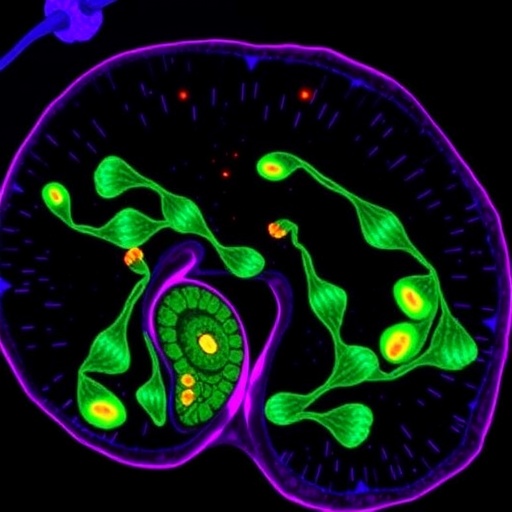
Image Credits: AI Generated
DOI: 10.1186/s13046-026-03814-3
Keywords: KRAS mutation, SKIL mutation, pancreatic tumorigenesis, Smad4, ubiquitination, SMURF2, IPMN, protein stability
Cite this news
APA MLA Chicago
SCIENMAG. (August 28, 2026). KRAS and SKIL Mutations Jointly Drive Pancreatic Cancer by Degrading Smad4. https://scienmag.com/kras-and-skil-mutations-jointly-drive-pancreatic-cancer-by-degrading-smad4/
SCIENMAG. “KRAS and SKIL Mutations Jointly Drive Pancreatic Cancer by Degrading Smad4.” Scienmag, 28 August 2026, https://scienmag.com/kras-and-skil-mutations-jointly-drive-pancreatic-cancer-by-degrading-smad4/. Accessed 28 August 2026.
SCIENMAG. “KRAS and SKIL Mutations Jointly Drive Pancreatic Cancer by Degrading Smad4.” Scienmag. August 28, 2026. https://scienmag.com/kras-and-skil-mutations-jointly-drive-pancreatic-cancer-by-degrading-smad4/
Copy citation Download RIS
Tags: but their cooperation with SKIL mutations and Smad4 degradation accelerates tumor progressiondestruction of Smad4 protein by genetic mutationsearly genetic events in pancreatic cyst transformationgenetic cooperation in pancreatic cancer developmentgenetic risk factors for pancreatic cancergermline SKIL mutations and pancreatic neoplasmshigh-risk genetic profiles for pancreatic cancerimpact of germline SKIL mutationsimpact of SKIL gene alterations on pancreatic cancer riskKRAS and SKIL gene interactionsKRAS and SKIL mutations in pancreatic cancermolecular mechanisms of pancreatic tumorigenesismolecular pathwaysoncogenic pathways in pancreatic cancer developmentpancreatic cancerpancreatic cancer geneticspancreatic cystic lesions and malignancy riskrole of KRAS mutations in pancreatic lesionsrole of Smad4 in growth regulationsignaling pathways involved in pancreatic cancer progressionsignificance of intraductal papillary mucinous neoplasm (IPMN)Smad4 degradation in tumor progression