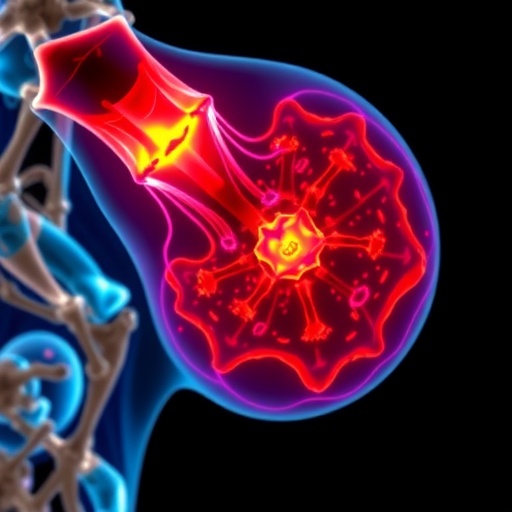
A new study is drawing attention to an overlooked command center in bone repair: the thin cortical microenvironment surrounding an injury. Published in Nature Communications, the research argues that this local setting does more than provide a rigid scaffold for healing. It helps organize immune activity during the earliest stages of repair and regulates the initial appearance of osteoclasts, the bone-resorbing cells that remodel damaged tissue. The finding places the outer architecture of bone at the center of a biological process usually described in terms of marrow, stem cells, blood vessels and inflammatory signals. It also suggests that the first immune decisions made after a fracture may be shaped by where cells are positioned, not only by which molecular signals they encounter. That idea could change how scientists think about bone healing, delayed union and diseases in which remodeling becomes excessive or fails to keep pace with new bone formation.
Bone is often portrayed as an inert mineralized material, but living bone is a densely organized ecosystem. Its hard matrix contains embedded osteocytes, while blood vessels, nerves, immune cells and connective-tissue populations occupy nearby spaces. The cortex, or compact outer shell, is particularly important because it provides mechanical strength and contains microscopic channels through which cells and signals can move. When bone is damaged, the tissue must solve several problems at once. It must stop bleeding, recruit immune cells, remove injured material, establish a temporary repair environment and begin producing new matrix. These events overlap rather than occurring as neatly separated stages. The study by Noom, Oktay, Morgan and colleagues focuses on this early period, when immune organization and osteoclastogenesis—the generation of osteoclasts—can influence the trajectory of healing before substantial new bone has formed.
Osteoclasts are specialized multinucleated cells derived from the monocyte and macrophage family of immune cells. Their best-known function is bone resorption: they attach to mineralized surfaces, create a sealed zone and release acid and protein-degrading enzymes that dissolve mineral and digest the organic matrix. In healthy remodeling, osteoclast activity is balanced by osteoblasts, which build bone, and by osteocytes, which coordinate much of the tissue’s response to mechanical and chemical change. After injury, however, resorption is not simply destructive. Removing damaged or poorly organized tissue can clear a path for repair and expose matrix-bound molecules that influence later cell behavior. The timing and location of osteoclast formation therefore matter. Too little early resorption could leave damaged material in place, while excessive activity could weaken the repair site or disturb the scaffold needed for regeneration.
The phrase “cortical microenvironment” refers to the immediate cellular, structural and chemical surroundings within and around compact bone. It includes the mineral matrix, the surfaces available for cell attachment, local oxygen and nutrient conditions, vascular access, resident bone cells and the signals released by injured tissue. These elements can affect immune cells through several mechanisms. Physical contact with matrix proteins may alter receptor signaling. Mechanical strain can change the behavior of osteocytes and other cells. Local concentrations of cytokines, chemokines and growth factors can determine which immune populations are recruited and how long they remain. Even the geometry of microscopic spaces may influence whether cells cluster together or disperse. By emphasizing this environment, the study moves beyond the idea that healing is controlled by soluble factors floating through the injury. Signals are also embedded in place.
Early immune organization is crucial because inflammation is both protective and potentially damaging. Soon after a fracture, damaged cells and extracellular matrix release molecular alarms that activate innate immune pathways. These signals can attract neutrophils, monocytes and macrophages, which help clear debris and defend against infection. Macrophages may adopt different functional states depending on the signals around them, supporting inflammation at one moment and tissue repair at another. The exact categories are more fluid in living tissue than the familiar labels often used in laboratory descriptions. What matters is the timing, location and interaction of these cells. A concentrated immune population at the cortical surface could create a different repair environment from one distributed randomly through the injury. The reported work therefore highlights organization itself as a biological variable: immune cells may be effective not merely because they are present, but because they are assembled in the right places and relationships.
That spatial principle may also explain how the immune system becomes linked to osteoclastogenesis. Osteoclast precursors arise from hematopoietic cells and respond to signals including receptor activator of nuclear factor kappa-B ligand, commonly called RANKL, along with macrophage colony-stimulating factor. These factors help determine whether precursor cells survive, proliferate, fuse and mature into bone-resorbing osteoclasts. In bone, RANKL can be supplied by osteoblast-lineage cells, osteocytes and other local populations, while inflammatory mediators may amplify or restrain the process. If the cortical microenvironment concentrates precursor cells near the relevant signals, osteoclast formation could begin rapidly and locally. Conversely, if those signals are separated in space or buffered by neighboring cells, the same precursors might remain inactive or follow another immune fate. The study’s central implication is that early osteoclastogenesis is not only a molecular switch; it is a process choreographed by tissue geography.
This perspective has significance beyond ordinary fracture repair. Bone diseases often involve a mismatch between resorption and formation. In osteoporosis, osteoclast-mediated resorption can outpace replacement, reducing bone mass and increasing fragility. In inflammatory arthritis, immune signals can stimulate pathological erosion near joints. In some settings, impaired remodeling may prevent proper repair, while in others, excessive inflammation may destabilize newly formed tissue. Treatments that broadly suppress osteoclasts can protect bone, but they may also alter the normal turnover needed for adaptation and healing. A more precise understanding of the cortical niche could eventually point toward interventions that act only during a particular phase or in a particular location. Rather than blocking osteoclast activity everywhere, future strategies might aim to adjust the signals that recruit precursors, control their positioning or limit their activation at vulnerable sites.
The findings also raise questions about why fractures heal differently in different people. Age, diabetes, smoking, medication use, systemic inflammation and mechanical instability can all alter the cellular environment around an injury. These factors may influence blood flow, oxygen availability, immune-cell recruitment and the balance of osteoclast and osteoblast signals. If the cortex actively organizes the first immune response, changes in its structure or physiology could help explain why the same type of fracture follows different biological courses. The concept may be especially relevant to older bone, in which the matrix, vascular network and resident cell populations have changed over time. It could also inform biomaterials research. A scaffold designed to replace or support damaged bone may need to provide more than mechanical strength; it may need to reproduce spatial cues that guide immune cells and regulate early remodeling.
At the same time, the study’s title describes a biological mechanism, not a ready-made clinical treatment. Translating insights about the cortical microenvironment into therapies will require determining which signals are essential, which are merely associated with healing and how those signals differ among injury types. Researchers will also need to establish whether manipulating early immune organization improves long-term strength without creating unwanted inflammation, infection risk or abnormal remodeling. The work nevertheless offers a powerful conceptual shift. Bone healing begins before a visible bridge of new tissue appears, and its outcome may be influenced by the microscopic arrangement of immune and skeletal cells along the cortical surface. By identifying that environment as a driver of early immune organization and osteoclast formation, the research connects anatomy, immunology and bone biology in one repair process. The hard shell of bone, it appears, is not just the structure being rebuilt. It is part of the system directing how rebuilding starts.
Subject of Research: The role of the cortical microenvironment in early immune organization and osteoclastogenesis during bone healing
Subject of Research: Medicine
Article Title: The cortical microenvironment drives early immune organization and controls early osteoclastogenesis in bone healing
Article References: Noom, A., Oktay, H. Z., Morgan, D. M., Kroh, S., Kasapi, A., Ellinghaus, A., Kochan, M., Bolaji, O., Uecker, R., Günther, R., Bianchi, M. P., Bucher, C. H., Hildebrandt, A., Haas, S., Schmidt-Bleek, K., Triantafyllopoulou, A., Hauser, A. E., Sawitzki, B., & Duda, G. N. (2026). The cortical microenvironment drives early immune organization and controls early osteoclastogenesis in bone healing. Nature Communications, 17(1), Article 9154. https://doi.org/10.1038/s41467-026-77196-7
Image Credits: AI Generated
DOI: 10.1038/s41467-026-77196-7
Keywords: bone healing, cortical microenvironment, immune organization, osteoclastogenesis, osteoclasts, bone remodeling, fracture repair, skeletal immunology
Cite this news
APA MLA Chicago
SCIENMAG. (August 27, 2026). Cortical microenvironment orchestrates early immune organization and osteoclast formation during bone healing. https://scienmag.com/cortical-microenvironment-orchestrates-early-immune-organization-and-osteoclast-formation-during-bone-healing/
SCIENMAG. “Cortical microenvironment orchestrates early immune organization and osteoclast formation during bone healing.” Scienmag, 27 August 2026, https://scienmag.com/cortical-microenvironment-orchestrates-early-immune-organization-and-osteoclast-formation-during-bone-healing/. Accessed 27 August 2026.
SCIENMAG. “Cortical microenvironment orchestrates early immune organization and osteoclast formation during bone healing.” Scienmag. August 27, 2026. https://scienmag.com/cortical-microenvironment-orchestrates-early-immune-organization-and-osteoclast-formation-during-bone-healing/
Copy citation Download RIS
Tags: biological processes of bone repairBone healingbone remodeling mechanismscortical bone architecturecortical microenvironmentearly immune response in fracture healingimmune cell organization during bone repairimpact of cortical structure on immune activitymicroenvironmental regulation of bone-resorbing cellsosteoclast formation regulationrole of cortical microenvironment in bone regenerationspatial cell positioning in bone healing