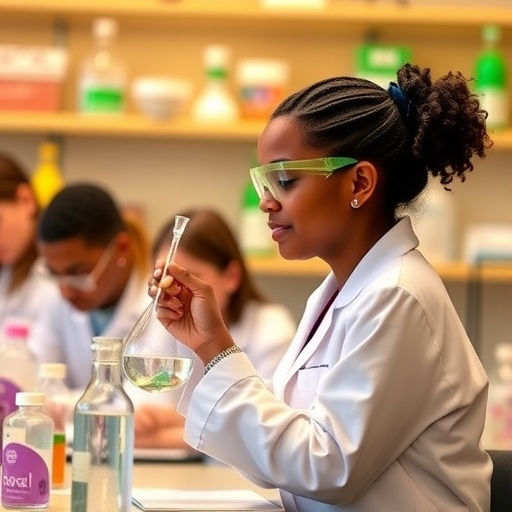
Scientific academies are being urged to turn prestige into public service, as a new perspective argues that election to an academy should mark not only exceptional achievement but also a binding responsibility to society. The authors say academies possess unusually dense concentrations of expertise, institutional credibility and professional networks—resources that could be mobilised against climate change, biodiversity loss, inequality, ecosystem degradation and threats to public health. Their central message is deliberately provocative: scientific recognition should not become an inward-looking celebration of status. Instead, academies should act as a “conscience of society”, helping communities and governments navigate crises with evidence, tolerance and intellectual integrity. The article, published in Microbial Biotechnology, does not report a new experiment or dataset. It presents a broad argument about how learned institutions can convert scientific knowledge into practical benefits, particularly when political and economic systems prevent research findings from reaching the people who need them most.
Academy membership traditionally brings recognition, access to influential peers, committee work and a voice in setting scientific priorities. It also renews an institution by adding new expertise and widening the range of disciplines represented among its members. But the authors caution that prestige can become detached from responsibility. Modern science depends on public education systems, publicly supported laboratories, research infrastructure and resources contributed by society. In that sense, academic distinction is built on a social contract: society supports the production of knowledge, while scientists and their institutions are expected to return value through discovery, education and public problem-solving. The authors acknowledge that some academies may drift towards self-congratulation or internal preoccupation. Their proposed corrective is not to diminish fundamental research, but to connect excellence more explicitly with service. An academy’s influence, they argue, should be measured partly by the improvements its knowledge helps deliver beyond its walls.
The need for such a shift arises because scientific progress and social progress do not automatically move together. A laboratory may develop a promising technology, for example, while poverty, weak infrastructure, political conflict, intellectual-property barriers or environmental damage prevent its adoption. The authors describe this gap as a failure of translation between knowledge and societal benefit. Scientific academies could help close it by identifying urgent needs, coordinating experts and communicating reliable evidence to decision-makers. Their remit should include advancing disciplinary excellence and innovation, but also mentoring early-career researchers, opening opportunities for scientists from disadvantaged backgrounds and transferring technologies to regions where they are most needed. The article particularly highlights “frugal innovation”: solutions designed to work with limited money, equipment, energy or technical support. Such approaches can be more socially valuable than sophisticated technologies that require supply chains and facilities unavailable in poorer communities.
Planetary health is presented as one of the clearest arenas for academy leadership. Climate change, desertification, ecosystem degradation and biodiversity loss are interconnected problems, and their consequences are mediated by living systems. Microorganisms, for instance, influence carbon cycling, soil fertility, plant growth, methane production and the breakdown of pollutants. Harnessing or protecting microbial communities could contribute to lower-emission agriculture, soil restoration, waste treatment and climate adaptation, although biological solutions must be tested carefully to avoid unintended ecological effects. The authors argue that academies should encourage this kind of cross-disciplinary work rather than leaving environmental problems inside narrow academic categories. Microbiology, ecology, engineering, economics, public health and education may all be required to make a promising intervention effective. They also emphasise education as a foundation of resilience: people who can understand evidence, evaluate risk and adapt to changing conditions are better equipped to withstand crises.
Turning expertise into policy requires sustained engagement with political institutions, not merely the publication of papers. Several academies already operate formal science-policy interfaces, providing reports, briefings and expert advice to governments. The Royal Society, the US National Academies of Sciences, Engineering, and Medicine, and the American Academy of Microbiology are cited as examples of organisations that connect researchers with public decision-making. These interfaces can help policymakers distinguish robust findings from speculation, understand uncertainty and compare the likely consequences of competing choices. Scientific advice, however, is not the same as political authority. The authors stress that academies should not develop partisan agendas or attempt to replace elected institutions. Their role is to make evidence available, clarify what is known and unknown, expose misleading claims and encourage reasoned dialogue. By maintaining independence while remaining accessible to policymakers, academies can strengthen evidence-based decisions without claiming ownership of the political process.
The perspective also confronts an organisational reality: academy activity is unlikely to be distributed evenly among members. Drawing on the Pareto principle, a concept associated with the economist Vilfredo Pareto, the authors note that a minority of members often performs a majority of the visible work. In a scientific academy, this may mean that a small group writes reports, attends policy meetings, mentors researchers and organises public initiatives, while many others contribute little beyond membership. The pattern is understandable. Active scientists face competing demands from experiments, teaching, grant applications, administration and family life. Yet the authors argue that academies should not accept inactivity as inevitable. Leadership could create specific projects, defined roles and time-limited working groups that make it easier for members to contribute. Mobilisation around shared goals would allow an academy to function less like a ceremonial association and more like a distributed knowledge network, in which expertise is coordinated towards clearly defined public outcomes.
A particularly underused resource, the authors say, is the academy’s retired membership. These scientists often possess decades of technical experience, institutional memory and professional contacts, but may have fewer immediate obligations than colleagues still running laboratories or holding administrative positions. The article describes this capacity as a “silver dividend”, borrowing a term used in discussions of population ageing and economic growth. Properly organised, retired members could mentor young researchers, advise on experimental design, support science education, help evaluate policy proposals or contribute to technology-transfer programmes. Their involvement could also improve continuity between generations. Early-career scientists would gain access to knowledge that is rarely captured fully in papers, including how collaborations are built, how research programmes evolve and how institutions respond to crises. At the same time, retired members would remain connected to active scientific life. The authors make clear that this resource should be activated through leadership and vision, not treated as an obligation imposed on older scientists.
The proposed responsibilities extend beyond promoting research careers. Academies could help develop low-cost technologies, widen access to scientific education and direct expertise towards regions facing the greatest environmental or health risks. In microbiology, the authors point to the potential for knowledge about microbes to address suffering, food insecurity, soil decline and climate pressures. Such work may involve practical innovations such as microbial inoculants for degraded soils, biological waste treatment or locally adaptable methods for monitoring pathogens. The technical principle behind many of these applications is that microorganisms can perform chemical transformations—fixing nitrogen, decomposing organic matter, producing useful compounds or suppressing disease-causing organisms—under conditions that may be cheaper and less energy-intensive than industrial alternatives. But the authors insist that technology alone is insufficient. Successful deployment depends on education, local participation, regulation, maintenance and trust. Academies can contribute by linking laboratory expertise with the social and economic knowledge needed for responsible implementation.
The argument becomes most urgent during periods of crisis and widening inequality. Wars, pandemics, climate disasters and political polarisation can increase the demand for trustworthy knowledge while simultaneously making evidence harder to communicate. Scientists elected for exceptional accomplishment occupy a position that gives their words unusual authority, the authors say, and that authority carries a special duty. Academies can use it to resist misinformation, defend open inquiry, support vulnerable researchers and explain why certain interventions are likely to work—or fail. They can also model disagreement without hostility, showing that scientific uncertainty is compatible with rigorous decision-making. This does not mean that every academy must address every social problem, nor that researchers should abandon specialised work. Rather, institutions should identify areas where their collective expertise can make a distinctive contribution, establish partnerships with communities and governments, and assess whether their programmes produce measurable benefits. Visible, sustained engagement could encourage universities, professional societies and other organisations to follow.
Ultimately, the authors present scientific academies as more than repositories of honours. Their legitimacy, they argue, rests on the capacity to advance knowledge and apply it to issues vital to humanity. That mission includes supporting discovery, but it also requires mentoring the next generation, improving public understanding, transferring useful technologies and confronting planetary emergencies. The article’s appeal is therefore both institutional and ethical: academies should use their concentration of talent to multiply public value rather than merely accumulate prestige. In a world where scientific advances coexist with environmental decline, unequal access and political instability, the distance between knowing and doing has become a central problem. Academies cannot solve it alone, and they should not claim political power. They can, however, organise expertise, build bridges to decision-makers and remind societies that evidence is a shared resource. Their future influence may depend less on who is elected than on what elected members choose to do with the distinction.
Subject of Research: The role and social responsibilities of scientific academies in applying expertise to public policy, education, technology transfer, planetary health and global crises
Article Title: Professional Academies Urged to Lead Science Forward
Article References: Timmis, K., et al., “Scientific academies and their responsibility to society,” Microbial Biotechnology. Original research page: Wiley Online Library
Image Credits: AI Generated
DOI: 10.1111/1751-7915.70388
Keywords: scientific academies, science policy, public good, planetary health, microbiology, climate change, frugal innovation, science education, technology transfer
Tags: academies as societal consciencebiodiversity conservation and scientific institutionspublic service in scienceresponsibilities of elite scientific organizationsrole of scientific academiesScience advocacyscience and public healthscience communication and policy influencescience policy and climate changescientific credibility and societal impactsocietal responsibility of researcherstransforming scientific recognition into societal benefit