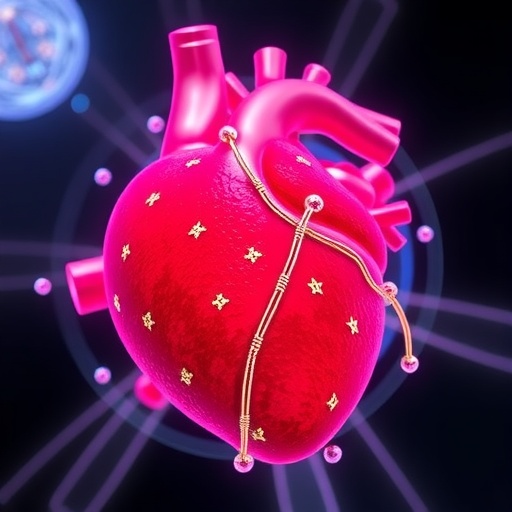
A new drug-delivery coating could transform how paclitaxel is released during balloon-based coronary interventions, according to researchers who have developed a pressure-responsive, pH-triggered layer-by-layer system for drug-coated balloon catheters. The technology is designed to deliver a concentrated dose of paclitaxel directly to narrowed arteries at the moment a balloon expands, potentially addressing one of the central challenges of percutaneous coronary intervention: transporting enough drug to the vessel wall while minimizing systemic exposure. Unlike conventional drug-coated balloons, which may lose a significant fraction of their payload during navigation through the bloodstream, the new coating is engineered to remain attached to the catheter until it encounters the combined mechanical and chemical conditions created during treatment.
Percutaneous coronary intervention is widely used to reopen arteries obstructed by atherosclerotic plaque. In a typical procedure, a catheter carries a small balloon to the narrowed region, where inflation compresses plaque and restores the vessel’s internal diameter. Drug-coated balloons add an antiproliferative compound, most commonly paclitaxel, to the balloon surface. When the balloon expands, the drug is transferred to the arterial wall, where it can suppress the abnormal growth of smooth-muscle cells that contributes to restenosis, the re-narrowing of a treated vessel. Yet this approach presents a delivery dilemma. The coating must be stable enough to survive catheter insertion and movement, but it must also release rapidly and efficiently once the balloon reaches its target.
The newly reported platform addresses that dilemma through layer-by-layer assembly, a technique in which ultrathin films are built by alternately depositing materials with complementary chemical charges or binding properties. Each cycle creates a nanoscale layer, allowing investigators to control the coating’s thickness, composition and drug-loading capacity with considerable precision. Paclitaxel can be incorporated into the multilayer structure rather than simply placed as loose crystals on the balloon. This architecture is intended to reduce premature loss during delivery and produce a more uniform drug reservoir. Because the film is assembled directly onto the balloon, the approach may also be adaptable to existing catheter designs without requiring a completely new delivery device.
The coating’s most distinctive feature is its dual response to pressure and acidity. During storage and catheter navigation, the film is designed to remain comparatively stable under physiological conditions. At the treatment site, however, balloon inflation generates mechanical pressure that can deform, compress or fracture the multilayer structure. The local chemical environment can then provide a second trigger. The pH-sensitive components of the film respond to changes in proton concentration by altering their charge, swelling behavior or intermolecular interactions. These changes weaken the architecture and accelerate the release of paclitaxel. In principle, the system behaves like a protective shell during transport and a rapidly opening drug reservoir during deployment.
This combination of mechanical and chemical triggers is important because balloon inflation is a short procedure. The catheter may remain in the target segment for only a limited period, leaving little time for slow diffusion from a conventional coating. A pressure-responsive coating could use the force already applied during angioplasty to initiate drug transfer, while the pH-sensitive mechanism could help the film disassemble or become more permeable. Such coordinated release may increase the amount of paclitaxel reaching the arterial tissue instead of allowing the drug to disperse into the bloodstream or remain trapped on the balloon surface. The researchers describe the goal as instant, high-dose local delivery, concentrating treatment where cellular proliferation is most likely to threaten long-term vessel patency.
Paclitaxel is particularly suited to this application because it is a powerful inhibitor of cell division. After entering vascular tissue, it interferes with microtubules, structures that cells require to organize chromosomes and complete mitosis. By slowing the proliferation and migration of vascular smooth-muscle cells, paclitaxel can reduce the biological response that follows vessel injury. However, the drug’s limited water solubility makes formulation and controlled delivery difficult. A multilayer coating can help stabilize the compound and position it within a tailored matrix. The film’s nanoscale design may also improve contact between the drug and the vessel wall when the balloon presses the coating against the artery.
The researchers’ strategy reflects a broader shift in cardiovascular-device engineering toward materials that respond dynamically to their surroundings. Traditional coatings are often designed around a compromise between durability and release: a stronger coating survives delivery but may release its cargo inefficiently, while a fragile coating releases readily but can shed drug prematurely. A stimulus-responsive film offers a way to separate those requirements in time. The coating can be mechanically robust during catheter passage and then become labile when pressure and local acidity change. This type of “on-demand” behavior is also attractive from a safety perspective, because a larger proportion of the drug may be delivered to the treated lesion rather than distributed throughout the circulation.
The study presents the coating as a platform for improving drug transfer during coronary intervention, but its eventual clinical value will depend on more than rapid release alone. Future evaluations must determine how evenly the coating covers balloons of different sizes, whether it remains intact during complex catheter navigation, and how consistently it deposits drug in calcified or irregular lesions. Researchers will also need to establish how much paclitaxel enters the vessel wall, how long the therapeutic concentration persists, and whether the material triggers inflammation, thrombosis or unwanted tissue reactions. Manufacturing reproducibility will be equally important: layer-by-layer systems require tight control over deposition conditions, film thickness and drug distribution if every medical device is to perform predictably.
If subsequent laboratory and clinical studies confirm the reported advantages, the pressure-responsive, pH-triggered coating could offer a new route for treating narrowed coronary arteries without leaving a permanent implant behind. Drug-eluting stents remain an important tool, but they place a scaffold in the vessel and may complicate future interventions. Drug-coated balloons provide a temporary alternative, yet their effectiveness depends heavily on how much medicine reaches the arterial wall during a brief inflation. By turning the balloon itself into a triggered nanoscale delivery system, the new approach seeks to make that fleeting moment more efficient. The concept illustrates how smart materials can convert the physical forces of a medical procedure into a precise therapeutic signal, bringing high-dose local treatment closer to the instant it is needed.
Subject of Research: Pressure-responsive and pH-triggered layer-by-layer paclitaxel delivery coatings for drug-coated balloon catheters used in percutaneous coronary intervention.
Article Title: Pressure-responsive pH-triggered layer-by-layer coating of paclitaxel-eluting balloon catheters for instant high-dose drug delivery for percutaneous coronary artery intervention
Article References: Springer Nature research article associated with DOI 10.1007/s12274-024-6979-5.
Image Credits: AI Generated
DOI: 10.1007/s12274-024-6979-5
Keywords: paclitaxel, drug-coated balloon, coronary artery intervention, percutaneous coronary intervention, layer-by-layer coating, pressure-responsive drug delivery, pH-triggered release, restenosis, vascular drug delivery, smart biomaterials
Tags: advanced coating for drug-eluting balloonshigh-dose paclitaxel delivery in angioplastyinnovative drug delivery during percutaneous coronary interventionlayer-by-layer drug-coated balloon technologyminimizing systemic drug exposure in coronary procedurespH-sensitive coating for coronary interventionspressure and pH-responsive drug coating systempressure-pH responsive drug coatingpressure-triggered drug release systempreventing restenosis with pressuretargeted paclitaxel delivery during angioplastyvessel wall targeted drug delivery during balloon angioplasty