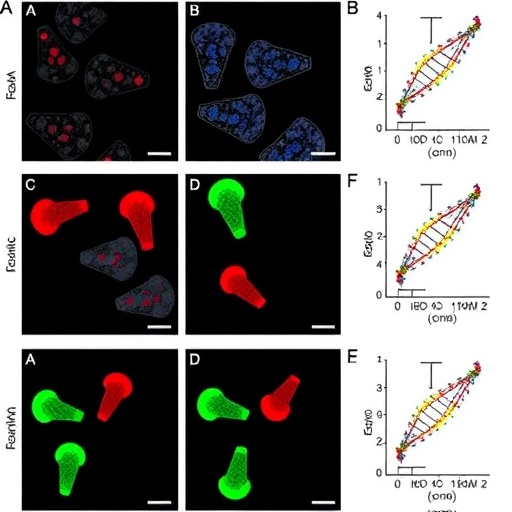
A formal author correction has been published for a study describing an approach to editing RNA inside living organisms by combining engineered APOBEC cytidine deaminases with PUF RNA-binding proteins. The notice, published in Nature Communications, concerns the article titled “Effective in vivo RNA base editing via engineered cytidine deaminase APOBECs fused with PUF proteins.” The paper is authored by W. Han, B. Yuan, X. Fan and colleagues, and the correction is recorded in volume 17 of the journal under article number 8256. Although the citation identifies the publication as an author correction, the information provided does not specify which figures, statements, data elements, or methodological details were amended.
The underlying research addresses a central challenge in molecular medicine: how to alter the instructions carried by RNA without permanently changing the DNA genome. RNA molecules act as temporary intermediaries between genes and proteins, making them attractive targets for therapeutic intervention. Editing RNA could, in principle, correct disease-associated transcripts, adjust protein production, or control cellular functions while allowing the intervention to diminish as the RNA is naturally degraded. This reversible character distinguishes RNA editing from genome editing, where a molecular change can persist for the lifetime of a cell and potentially be inherited by its daughter cells.
The system described in the article is based on APOBEC proteins, a family of cytidine deaminases that chemically convert cytidine, one of the four principal RNA bases, into uridine. In an RNA message, that conversion can change how the sequence is interpreted by the cell’s translation machinery. Depending on the position of the edited base, the result may be a corrected codon, an altered amino acid, or the introduction or removal of a translation stop signal. Because RNA editing operates at the transcript level, the approach does not require cutting both strands of DNA, a feature that may help avoid some risks associated with permanent genome modification.
A major technical component of the reported platform is the use of PUF proteins, which naturally recognize defined RNA sequences. PUF, short for Pumilio and FBF homology domain, can be engineered so that its RNA-binding surface is directed toward a selected nucleotide sequence. By fusing an APOBEC deaminase to a PUF protein, researchers aim to bring the catalytic enzyme into close proximity with a chosen cytidine on a target RNA. The PUF component supplies molecular address information, while the APOBEC component performs the chemical reaction. In theory, this modular design could allow the targeting element to be redesigned for different transcripts without rebuilding the entire editing system.
The phrase “in vivo” is particularly significant because RNA editing tools that function in purified systems or cultured cells face additional barriers in an animal. A therapeutic editor must reach the relevant tissue, enter the appropriate cells, remain sufficiently stable, locate the intended RNA, and act without producing unacceptable levels of unintended editing. The abundance and structure of RNA molecules can also affect performance. RNA-binding proteins may encounter closely related sequences, folded regions that conceal the target base, or many competing transcripts. These biological conditions make specificity, delivery, expression levels, and the duration of editor activity critical factors in evaluating any proposed therapeutic platform.
The APOBEC–PUF strategy also reflects the broader evolution of programmable RNA technologies. Earlier RNA-editing systems have used naturally occurring RNA-binding domains, guide RNAs, or catalytically modified enzymes to direct base conversion. A protein-based targeting architecture may offer advantages in certain settings, including compact genetic designs or direct recognition of a sequence by an engineered binding domain. At the same time, protein engineering introduces its own challenges. Altering binding preferences can affect affinity and selectivity, while increasing enzyme activity may also increase background editing. A useful system must therefore balance catalytic efficiency with precise recognition of the intended transcript and nucleotide.
The publication of an author correction is an important part of the scientific record, particularly for technically complex studies involving engineered proteins, sequencing-based measurements, and experiments in living systems. Corrections can improve the accuracy of a paper by fixing errors in text, figures, affiliations, supplementary information, or other published material. However, the citation supplied for this notice does not describe the nature or scientific effect of the amendment. It therefore cannot establish whether the correction changes the interpretation of the reported editing performance, addresses presentation issues, or clarifies another aspect of the original work. Readers evaluating the platform should consult the correction notice and the amended article directly before drawing conclusions about its quantitative results.
For the field of RNA medicine, the significance of the work lies in the continuing effort to create editors that are programmable, transient, and effective in living organisms. A successful platform would need to demonstrate accurate conversion at the intended site, limited activity at related cytidines and unrelated transcripts, reliable performance across relevant cell types, and a delivery strategy compatible with therapeutic use. It would also need to be assessed for immune recognition, toxicity, dose requirements, and the consequences of repeated administration. The author correction preserves the importance of maintaining a precise and transparent record as these technologies move from proof-of-concept experiments toward potential biomedical applications. The study’s title identifies an ambitious approach, while the corrected publication provides the formal reference researchers must use when following its results.
Subject of Research: In vivo RNA base editing using engineered APOBEC cytidine deaminases fused with PUF RNA-binding proteins.
Article Title: Author Correction: Effective in vivo RNA base editing via engineered cytidine deaminase APOBECs fused with PUF proteins.
Article References: Han, W., Yuan, B., Fan, X. et al. Author Correction: Effective in vivo RNA base editing via engineered cytidine deaminase APOBECs fused with PUF proteins. Nature Communications 17, 8256 (2026). https://doi.org/10.1038/s41467-026-76669-z
Image Credits: AI Generated
DOI: 10.1038/s41467-026-76669-z
Keywords: RNA editing, RNA base editing, APOBEC, cytidine deaminase, PUF proteins, in vivo biotechnology, molecular medicine, gene regulation, transcriptome engineering, Nature Communications
Tags: APOBEC cytidine deaminasesengineered RNA editing toolsgenome editing vs. RNA editingin vivo RNA base editingmolecular medicine advancementsprecision medicine RNA approachesPUF RNA-binding proteinsreversible RNA editing techniquesRNA editingRNA-based therapeuticsRNA-targeted gene regulationtherapeutic RNA modification