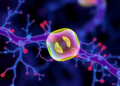
A research team led by Professor Young Seok Cho of Sungkyunkwan University’s School of Medicine, in collaboration with Professor James J. Moon of the University of Michigan, has developed an oral nanomedicine designed to strengthen the immune system’s ability to fight cancer. The treatment is based on a small molecule produced by gut bacteria and is intended to improve the performance and persistence of cancer-killing T cells. The findings, published in Nature Nanotechnology, describe a strategy that links microbiome-derived chemistry, immune-cell metabolism, and nanomedicine in a single therapeutic platform.
The compound at the center of the study is 3,4-dihydroxybenzoic acid, or DHB, a metabolite generated by members of the gut microbiome. The researchers found that DHB can influence the behavior of CD8+ T cells, immune cells responsible for identifying and destroying infected or malignant cells. In cancer, however, these cells can gradually become dysfunctional or “exhausted,” losing their ability to proliferate, survive, and maintain sustained attacks against tumors. This exhaustion is one reason why therapies such as immune checkpoint inhibitors, including anti-PD-1 drugs, work effectively in only a subset of patients.
According to the study, DHB promotes the development of antigen-specific CD8+ T cells with stem-like properties. These cells are not fully differentiated into short-lived effector cells; instead, they retain the capacity for self-renewal and can generate new waves of tumor-directed immune cells. This stem-like state is considered important for durable antitumor immunity because it provides a continuing source of T cells capable of responding to cancer over extended periods. The researchers reported that DHB helped preserve this functional state while enhancing the ability of the cells to recognize tumor-associated antigens.
The mechanism appears to involve the regulation of cellular metabolism. Activated T cells commonly increase glycolysis, a rapid pathway for converting glucose into energy and producing metabolic intermediates needed for growth. Although glycolysis is useful during an acute immune response, excessive or prolonged reliance on it can contribute to T-cell dysfunction in the tumor microenvironment. The study indicates that DHB suppresses this metabolic shift and modulates the Akt-mTORC1-Myc signaling pathway, a network that coordinates nutrient sensing, cell growth, protein production, and metabolic activity. By restraining glycolytic overactivation, DHB may help T cells avoid exhaustion and maintain a more resilient, stem-like identity.
The researchers faced a significant pharmacological challenge when attempting to use DHB as an oral treatment. In its natural form, the metabolite is rapidly degraded after ingestion and may be removed from the body within minutes, limiting the amount that reaches the circulation. To address this problem, the team chemically converted DHB into a more stable prodrug. This modified form was then incorporated into an oleic-acid-based oral nano-emulsion known as Prodrug 201. The formulation was designed to protect the active compound during gastrointestinal processing and improve its absorption into the bloodstream.
Experiments showed that the nano-emulsion substantially increased the compound’s exposure in the body. The researchers reported a 14.3-fold improvement in bioavailability compared with unformulated DHB. In practical terms, this means that a greater proportion of the administered material reached the circulation and remained available to influence immune cells. Oral delivery could also offer advantages over repeated injections, potentially making microbiome-based immunomodulation easier to administer and more compatible with combination treatment strategies.
The team tested the formulation in animal models of colorectal cancer, melanoma, and breast cancer. In these models, treatment promoted the accumulation of stem-like, tumor-reactive T cells at tumor sites and was associated with marked tumor regression. The strongest effects were observed when the oral nanomedicine was combined with immune checkpoint blockade. In the reported test models, the combination eliminated tumors and generated immune memory capable of protecting against subsequent tumor recurrence. These findings suggest that DHB may help overcome one of the limitations of checkpoint therapy: the need for a sufficiently large and functionally competent pool of T cells that can be reinvigorated once inhibitory signals are removed.
The results also highlight the broader therapeutic potential of metabolites produced by the microbiome. Gut bacteria are known to influence immune development and cancer treatment responses, but translating these biological associations into medicines has been difficult. Live bacterial therapies can be complex to manufacture, standardize, and administer, while many natural microbial metabolites have short half-lives or poor absorption. By stabilizing a defined metabolite and packaging it in an oral delivery system, the researchers sought to transform an otherwise fleeting microbial signal into a reproducible pharmacological intervention. The approach could eventually be adapted to other microbiome-derived molecules with immunological activity.
The study remains preclinical, and its results in animal models do not establish whether the treatment will be safe or effective in people. Human tumors, immune systems, microbiomes, and drug responses can differ substantially from those observed in laboratory models. Future studies will need to determine the formulation’s toxicity profile, optimal dosing, interactions with existing immunotherapies, and effects across different cancer types and patient populations. Nevertheless, the work provides a technically distinct route toward cancer immunotherapy: rather than directly activating T cells through a conventional immune stimulant, it modifies the metabolic conditions that help them survive and retain their antitumor potential. If validated in clinical trials, the oral DHB nano-emulsion could represent a new class of microbiome-inspired medicines aimed at making immune checkpoint therapy more durable and broadly effective.
Subject of Research: Gut microbial metabolite DHB, CD8+ T-cell stemness, cancer immunotherapy, and oral nanomedicine.
Article Title: Oral nano-delivery of a gut microbial metabolite enhances T cell stemness for cancer immunotherapy.
Web References: https://doi.org/10.1038/s41565-026-02235-9
References: Han, K., Cho, Y. S., Takahashi, M. et al. “Oral nano-delivery of a gut microbial metabolite enhances T cell stemness for cancer immunotherapy.” Nature Nanotechnology. DOI: 10.1038/s41565-026-02235-9.
Image Credits: Han, K., Cho, Y. S., Takahashi, M. et al.
Keywords: DHB; 3,4-dihydroxybenzoic acid; gut microbiome; CD8+ T cells; T-cell stemness; cancer immunotherapy; immune checkpoint inhibitors; nanomedicine; oral drug delivery; Akt-mTORC1-Myc pathway; glycolysis; tumor immunity.
Tags: cancer immunotherapy and microbiomeCD8+ T cell enhancementdevelopment of microbiome-based nanotherapeuticsgut bacteria metabolites in cancer immunotherapygut microbiome and cancer immunityimmune cell metabolism modulationmicrobiome-derived compounds in cancer therapymicrobiome-driven immune cell activationnanomedicine for immune system boostingnanotechnology in cancer treatmentoral delivery of nanomedicineOral microbiome nanomedicine