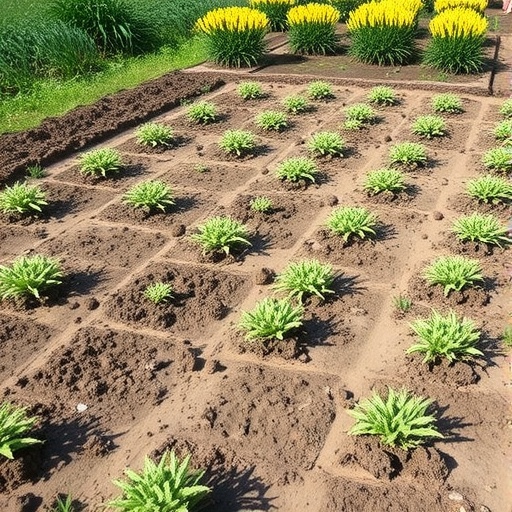
A one-year field experiment in China has revealed that a carefully combined soil-management strategy can dramatically increase organic carbon in albic soil, a difficult agricultural soil type known for compaction, poor aeration and low fertility. Researchers found that no-tillage, retained maize straw and a high application rate of microbial organic fertilizer increased soil organic carbon (SOC) by 22.0% in the upper 20 centimetres of soil and by an astonishing 93.2% in the 20–40 centimetre layer compared with the control. The findings suggest that degraded farmland could store substantially more carbon when soil disturbance, organic inputs and microbial activity are managed together.
The study, published in Agricultural Ecology and Environment, addresses a major challenge for farmers working with albic soils. These soils often have high bulk density, limited pore space and weak organic-matter reserves, conditions that restrict root growth, water movement and nutrient cycling. Their compacted structure can also make it difficult for carbon-rich plant residues to enter and remain in deeper layers. At the same time, intensive ploughing can expose protected organic matter to oxygen and accelerate its decomposition, releasing carbon dioxide into the atmosphere.
The researchers tested whether combining different tillage systems with microbial organic fertilizer could overcome these limitations. The field experiment was conducted between 2023 and 2024 in maize-growing soil in Shulan, Jilin Province, northeastern China. The team compared no-tillage, plough tillage and rotary tillage, while applying microbial organic fertilizer at rates of 600, 1,200 or 2,400 kilograms per hectare. Straw-return treatments were also included, and no-tillage without straw return served as the control. The fertilizer was made from composted livestock and poultry manure and contained beneficial microorganisms including Bacillus subtilis, Bacillus amyloliquefaciens and Trichoderma harzianum.
The physical arrangement of each treatment was central to the experiment. Under no-tillage, the straw and fertilizer remained on the soil surface as a protective mulch. Ploughing incorporated these materials to a depth of 40 centimetres, while rotary tillage mixed them into the upper 15 centimetres. After the maize harvest, soil was collected from the 0–20 and 20–40 centimetre layers. Researchers then measured SOC, microbial biomass carbon, bulk density, porosity, pH, nutrient concentrations and the distribution of soil aggregates, which are clusters of mineral particles and organic matter that help determine how securely carbon is stored.
The strongest increase occurred under no-tillage with the highest fertilizer rate. In the topsoil, SOC reached 14.57 grams per kilogram, 22.0% higher than in the no-tillage control. In the subsoil, SOC rose to 8.75 grams per kilogram, representing a 93.2% increase. The result is particularly notable because carbon accumulation below the surface is usually difficult to achieve over a single growing season. Deeper soil carbon is often constrained by limited organic inputs, high compaction and slow biological activity, making the response observed in this experiment unusually large.
The researchers attribute the improvement to several processes operating at once. Straw supplied carbon-rich material, while the microbial fertilizer added both organic matter and microorganisms capable of transforming complex residues. No-tillage reduced physical disruption and helped preserve soil aggregates. These aggregates can enclose organic compounds within small pores, limiting their exposure to decomposing organisms and oxygen. In effect, the soil structure acts as a form of physical carbon protection. Surface straw may also reduce evaporation, moderate soil temperature and gradually release carbon compounds as it decomposes.
The results also exposed an important trade-off between carbon accumulation and soil structure. No-tillage generally produced the greatest proportion and stability of macroaggregates, the larger soil clusters that are particularly important for protecting organic carbon. Plough tillage, however, helped relieve compaction and promoted carbon accumulation in the subsoil, probably because it physically moved straw and fertilizer deeper into the profile. That benefit came at a cost: repeated soil disturbance frequently weakened macroaggregate stability, potentially leaving stored carbon more vulnerable to decomposition. Rotary tillage reduced topsoil bulk density and stimulated several biological processes, but its stronger enzyme activity did not consistently result in higher SOC.
To understand the mechanisms behind the changes, the team analysed four enzymes involved in carbon decomposition: α-glucosidase, β-glucosidase, cellobiohydrolase and endo-1,4-β-xylanase. These enzymes help microorganisms break down cellulose, hemicellulose and other plant-derived compounds. The researchers also examined microbial biomass carbon and used correlation-network analysis to identify relationships among biological, chemical and structural properties. In the topsoil, SOC was closely linked to microbial indicators and aggregate characteristics. In the subsoil, physical and chemical constraints appeared to exert a stronger influence, showing that carbon management may require different strategies at different depths.
The scientists caution that the findings represent only one year of field observations. A rapid increase in SOC does not automatically mean that carbon will remain stored for decades, and the experiment did not trace the survival or activity of the individual microbial strains added through the fertilizer. Longer-term studies will be needed to determine whether the carbon gains persist, how much carbon is held in stable fractions, and whether the treatment improves maize yields under different weather conditions. Even so, the study offers a potentially powerful blueprint for rebuilding degraded albic soils: disturb the soil less, keep crop residues in place and supply enough organic material to support sustained microbial activity. If confirmed over longer periods and across broader regions, the approach could improve soil resilience while helping agriculture contribute to carbon storage.
Subject of Research: Not applicable
Article Title: Tillage methods and microbial fertilizers synergistically enhance soil organic carbon concentration in albic soil
News Publication Date: 28 May 2026
Web References: https://www.maxapress.com/aee; https://doi.org/10.48130/aee-0026-0013
References: Fan, Wei, Cai, Hongguang, et al. “Tillage methods and microbial fertilizers synergistically enhance soil organic carbon concentration in albic soil.” Agricultural Ecology and Environment. DOI: 10.48130/aee-0026-0013
Image Credits: Agricultural Ecology and Environment
Keywords
Soil organic carbon, albic soil, no-tillage, straw retention, microbial organic fertilizer, soil aggregates, carbon storage, sustainable agriculture, soil health, climate change mitigation
Tags: albic soil carbon sequestrationcarbon storage in degraded farmlandeffects of straw retention on soil healthimpact of tillage on carbon dynamicsmicrobial activity in soilsmicrobial organic fertilizerNo-till farmingno-tillage agricultural practicesorganic matter retentionsoil compaction managementsoil organic carbon increasesustainable soil fertility