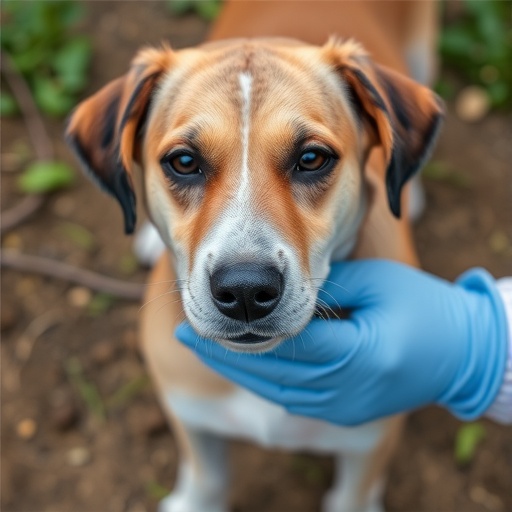
A pioneering study led by Aberystwyth University will investigate how everyday relationships between people and dogs in rural Wales may be helping sustain the transmission of a potentially life-threatening tapeworm. Researchers will focus on agricultural communities in mid-Wales, a region that remains one of the United Kingdom’s most important hotspots for hydatid disease despite decades of public health campaigns aimed at controlling the parasite.
Hydatid disease, also known as cystic echinococcosis, is caused by the tapeworm Echinococcus granulosus. The parasite has a complex life cycle involving dogs and grazing livestock. Dogs act as definitive hosts, meaning that adult tapeworms live in their intestines and release microscopic eggs in faeces. Sheep and other livestock become intermediate hosts when they ingest contaminated material, allowing the parasite’s larval stages to develop into fluid-filled cysts, typically in organs such as the liver and lungs.
The cycle is completed when dogs consume infected sheep tissue, particularly through scavenging carcasses or being fed raw or inadequately processed offal. Inside the dog’s digestive system, larval forms develop into adult worms, which can produce new eggs and contaminate farmland, animal housing and household environments. Because the eggs are highly resilient and can be transferred from contaminated soil or surfaces to the mouth, transmission is not limited to direct contact with visibly infected animals.
Humans become accidental intermediate hosts when they ingest E. granulosus eggs. After passing through the digestive tract, the parasite’s embryos can penetrate the intestinal wall and enter the bloodstream, where they may lodge in the liver, lungs or other tissues. Over years, they can develop into hydatid cysts. The disease may remain asymptomatic for a long period, and symptoms depend on the location, size and condition of the cysts. If a cyst ruptures, it can trigger severe complications, including allergic reactions and the spread of additional parasite stages.
The Aberystwyth-led project will examine how canine movement, feeding practices and human perceptions influence the parasite’s opportunities to move between farms, dogs, livestock and people. Researchers will use GPS collars to track free-roaming farm dogs, generating detailed information about how often animals leave their owners’ properties, enter fields or approach areas where livestock are present. These movement patterns will be assessed alongside environmental evidence collected from faecal samples on farmland.
The faecal analysis is intended to provide insight into what dogs are eating and whether their diets include material that could expose them to infection. Combining movement data with dietary information may allow the researchers to identify behaviours that are difficult to detect through conventional disease surveillance. A dog that regularly roams across multiple fields, scavenges animal remains or receives untreated offal could occupy a very different epidemiological role from a dog that remains on a farm and is fed controlled commercial food.
Keira Washtell of Aberystwyth University said the research would go beyond simply measuring disease prevalence. The project will investigate how people live with and care for dogs, and how those relationships intersect with environmental and public health risks. Researchers will work with farmers, veterinarians, public health specialists and dog-owner groups to understand why earlier health messages may not have produced lasting changes in behaviour.
That social component is central to the study’s One Health approach, which recognises that human health, animal health and environmental conditions are connected. Advice about regular veterinary treatment, preventing dogs from eating raw offal, safe carcass disposal and hand hygiene can be technically sound but ineffective if it does not fit the realities of farm work. Understanding local routines and constraints could help scientists and health authorities design interventions that communities are more likely to use consistently.
Dr Gwenllian Rees, from Aberystwyth University’s School of Veterinary Sciences, said hydatid disease has historical significance in mid-Wales and that evidence of a possible resurgence is concerning in communities where livestock farming and close contact with working dogs remain part of daily life. The project brings together geography, parasitology, epidemiology and behavioural science, allowing the team to study both the biological mechanisms of transmission and the human decisions that shape them.
Dr Andrew Nelson, a senior epidemiologist at Public Health Wales and a member of the project, noted that human cases alone cannot fully reveal the scale of the risk because symptoms may take years to appear. By identifying the environmental and behavioural drivers of infection in communities considered most vulnerable, the researchers hope to support more effective disease control. The work forms part of OneZoo, a UK-wide doctoral training programme funded by UK Research and Innovation that links Aberystwyth University with Cardiff University, the London School of Hygiene and Tropical Medicine and Queen’s University Belfast. Its findings could help strengthen efforts to interrupt the parasite’s life cycle and protect livestock, working dogs and human health.
Subject of Research: Animals
Article Title: Study to investigate how human-dog interactions may spread hydatid disease in rural Wales
Image Credits: Aberystwyth University
Keywords: Hydatid disease, Echinococcus granulosus, tapeworms, zoonotic disease, parasitology, veterinary medicine, working dogs, sheep, rural Wales, disease transmission, public health, epidemiology, One Health, agriculture, disease prevention
Tags: control and prevention of hydatid disease in agricultural communitiesdog-mediated parasitic infectionsenvironmental contamination by tapeworm eggshydatid disease transmission in rural Walesimpact of farm dogs on zoonotic disease spreadlife cycle of Echinococcus granulosuspublic health campaigns against hydpublic health challenges of cystic echinococcosisregional hotspots of parasitic zoonoses in the UKrisks of raw offal feeding to dogsrole of livestock in hydatid disease cycle