Scientists from Aberystwyth University are joining a major conservation project aimed at protecting some of Britain’s rarest orchard species, combining cutting-edge molecular ecology with habitat restoration to uncover where threatened wildlife survives and how it can be helped. The three-year initiative will focus on four highly specialised organisms: the noble chafer beetle, the red-horned cardinal click beetle, the orchard toothcrust fungus and the mistletoe marble moth. All depend, in different ways, on traditional orchards and the old trees that define them—habitats that are disappearing across the UK.
The project brings together researchers from Aberystwyth University, Worcestershire Wildlife Trust, Gloucestershire Wildlife Trust, Herefordshire Wildlife Trust and the People’s Trust for Endangered Species. Its central aim is to improve the ability of conservationists and landowners to identify, monitor and protect species that are often difficult to find through conventional field surveys. The initiative will also support the restoration and creation of orchard habitats, including the retention of veteran trees, dead wood and other features essential to insects, fungi and the wider communities they support.
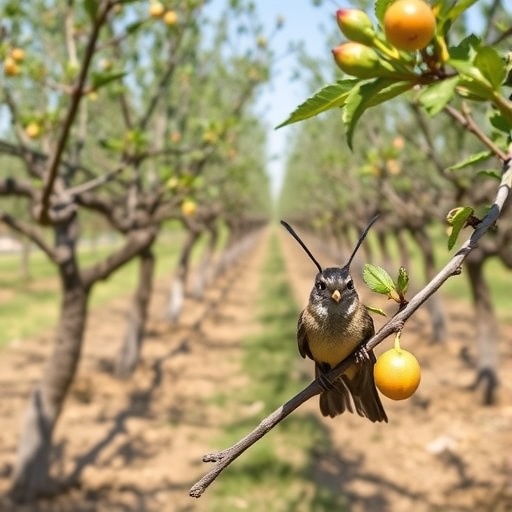
Traditional orchards are among the UK’s most valuable yet vulnerable habitats. Unlike intensive commercial fruit plantations, they typically contain mature and widely spaced trees, decaying branches, cavities, fallen timber, grassland and a diverse understorey. These features create a complex network of microhabitats. As trees age, fungi, beetles, moths and other organisms exploit different stages of decay, while flowering plants and fruit trees provide food for pollinators and birds. When old trees are removed or orchards are abandoned without careful management, this ecological succession can be interrupted, threatening species that may already occupy only a small number of sites.
Researchers at Aberystwyth University will use molecular methods to address one of the biggest challenges in conserving rare organisms: detecting them when populations are sparse or individuals are hidden. The team’s work will include pheromone-based monitoring for the noble chafer and red-horned cardinal click beetle. Pheromones are chemical signals used by insects to communicate, often to attract mates. By deploying synthetic versions of these compounds in carefully designed traps, scientists can improve the chances of detecting insects that may be present at extremely low densities but are unlikely to be encountered during visual searches.
The project will also apply genetic approaches to understand the ecology of these beetles and their relationship with orchard habitats. DNA-based monitoring can provide information that traditional observation cannot. Genetic material may be recovered from insect specimens, environmental samples or traces left in a habitat, allowing researchers to confirm the presence of a species and, in some cases, investigate genetic diversity and connectivity between populations. These data could reveal whether apparently isolated orchard populations are exchanging individuals or whether they have become genetically fragmented, an important consideration when planning habitat corridors and restoration work.
The noble chafer beetle is closely associated with the decaying wood and cavities of mature fruit trees, where its larvae develop over several years. The red-horned cardinal click beetle is similarly linked to old trees and dead wood, but its specialised requirements make it particularly elusive. Both species can be difficult to survey because adults may appear only briefly, while much of their life cycle takes place inside tree cavities or decaying material. More sensitive detection tools could therefore provide a clearer picture of their distribution and help distinguish genuinely unoccupied habitat from sites where populations have simply gone unnoticed.
The project’s scientific value will extend beyond locating individual insects. By combining genetic evidence, pheromone surveys and ecological observations, researchers hope to understand how the target species interact with their surroundings and what conditions allow them to persist. The orchard toothcrust fungus and mistletoe marble moth will also benefit from the wider habitat work, which is expected to support numerous additional species. Protecting old trees, maintaining suitable dead wood, encouraging diverse vegetation and managing orchards as functioning ecosystems could produce gains across entire food webs rather than for four isolated conservation targets.
Dr Niall McKeown of Aberystwyth University’s Department of Life Sciences said the project would generate much-needed insights into biodiversity associated with old wood orchards. He explained that genetic methods would be used to investigate the ecology of the target species and their interactions with orchard habitats, while also developing tools to detect and track organisms that are highly elusive or occur in very small populations. The resulting information should enable conservationists to make more precise decisions about where protection, monitoring and habitat restoration are most urgently needed.
The partnership will work directly with landowners, supporting them in creating conditions under which threatened orchard wildlife can recover. This may involve safeguarding veteran fruit trees, allowing suitable dead wood to remain in place, restoring neglected orchards or establishing new habitat that can eventually connect isolated populations. Worcestershire Wildlife Trust described the initiative as an opportunity to combine practical conservation with research into rare and elusive species. The project is one of 130 initiatives supported through the government’s “Wild Again: Restoring England’s Wildlife” programme, which is investing £60 million in the recovery of 364 threatened species. Funding comes through Natural England’s Species Recovery Programme, with the long-term goal of turning improved scientific knowledge into measurable gains for wildlife across England’s traditional orchard landscapes.
Subject of Research: Conservation genetics, molecular ecology, endangered orchard wildlife and traditional orchard habitat restoration
Article Title: DNA and Pheromones Put Britain’s Rarest Orchard Species Under the Microscope
Keywords: Aberystwyth University, conservation, molecular ecology, DNA monitoring, pheromones, noble chafer beetle, red-horned cardinal click beetle, orchard toothcrust fungus, mistletoe marble moth, traditional orchards, endangered species, habitat restoration, wildlife management
Tags: collaborative conservation projects in the UKendangered insects and fungi in orchardshabitat restoration for orchard ecosystemsmolecular ecology in habitat restorationorchard biodiversity monitoring methodsprotect threatened UK wildliferare orchard species conservationrole of dead wood and old trees in biodiversityspecies-specific orchard habitat needstraditional orchard habitat preservationUK orchard habitat decline and recoveryveteran tree conservation techniques