Rectal cancer can survive one of its most aggressive treatment combinations by turning the tissue around the tumor into a defensive system, according to a study by Park, Shin, Kim and colleagues published in Experimental & Molecular Medicine. The research identifies a linked set of resistance mechanisms involving persistent NF-κB activity inside cancer cells, matrix-producing cancer-associated fibroblasts and an immune environment that suppresses anti-tumor responses. Together, these features may help explain why some tumors fail to shrink after chemoradiation, even when treatment is delivered according to standard protocols.
Chemoradiation is widely used before surgery for locally advanced rectal cancer. Radiation damages tumor-cell DNA, while chemotherapy can interfere with DNA replication and repair, making malignant cells more vulnerable to radiation-induced injury. The strategy can reduce tumor size, eliminate microscopic disease and improve the possibility of complete surgical removal. Yet responses vary considerably. Some tumors regress dramatically, whereas others remain biologically active and retain the capacity to spread. The new findings point to the tumor microenvironment—the ecosystem of stromal cells, immune cells, blood vessels and extracellular matrix—as a major part of that difference.
At the center of the study is nuclear factor kappa B, or NF-κB, a family of transcription factors that acts as a molecular control system for inflammation, cell survival and stress responses. Under normal conditions, NF-κB activity is tightly regulated. In cancer, however, the pathway can become chronically activated. Once switched on, NF-κB can stimulate genes involved in inflammation, proliferation, resistance to programmed cell death and repair of cellular damage. These effects may allow malignant cells to endure the oxidative and DNA-damaging stress created by chemotherapy and radiation.
The researchers describe NF-κB-active tumors as a distinct biological group associated with treatment resistance. This does not mean that NF-κB alone determines the outcome of every patient, but it suggests that sustained pathway activation may mark tumors equipped to withstand chemoradiation. The pathway is also capable of influencing neighboring cells by releasing signaling molecules, including inflammatory cytokines and growth factors. In this way, cancer cells can help reshape their surroundings, creating a feedback loop in which inflammation supports tumor survival and the altered microenvironment, in turn, reinforces NF-κB activity.
A key component of that surrounding tissue is the cancer-associated fibroblast, or CAF. Fibroblasts are connective-tissue cells that normally produce and organize structural proteins. After being reprogrammed by a tumor, CAFs can become highly active and release collagen, fibronectin and other components of the extracellular matrix. The study highlights “matrix CAFs,” a fibroblast state characterized by strong production and remodeling of this structural material. An excessive or abnormally organized matrix can make tumor tissue denser, alter mechanical forces and create physical and biochemical barriers around cancer cells.
The extracellular matrix is not merely scaffolding. Its proteins can bind signaling molecules, activate receptors on tumor cells and affect how immune cells move through tissue. A dense matrix may also interfere with the distribution of therapeutic agents and restrict contact between immune cells and malignant cells. By surrounding the tumor with a protective framework, matrix CAFs could help preserve cancer-cell survival during chemoradiation. The findings therefore place stromal architecture alongside genetic mutations and cancer-cell signaling as an important determinant of treatment response.
The immune landscape described in the study adds another layer of protection. Effective anti-tumor immunity requires immune cells to recognize abnormal proteins, enter the tumor and destroy malignant cells. In a suppressive microenvironment, that process can be interrupted. Tumors may attract regulatory immune populations, promote dysfunctional or exhausted T cells and release signals that dampen immune activation. When combined with a dense CAF-generated matrix, immune suppression may prevent immune cells from reaching viable cancer cells or from maintaining an effective attack after treatment has exposed tumor antigens.
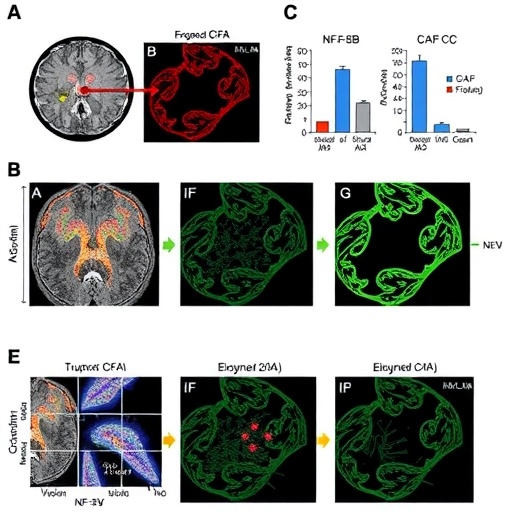
Chemoradiation can produce both destructive and immunological effects. Radiation may kill cancer cells directly, but it can also release tumor-derived material that alerts the immune system. If the surrounding tissue is strongly suppressive, that potential immune benefit may be neutralized. The study’s model suggests that NF-κB-active tumor cells, matrix CAFs and suppressive immunity should not be viewed as isolated features. They appear to form an interconnected resistance network in which inflammatory signaling, extracellular-matrix remodeling and immune dysfunction reinforce one another.
These results could eventually support a more precise approach to rectal-cancer treatment. Patients whose tumors show strong NF-κB activity or a matrix-CAF signature might benefit from additional testing before therapy and from strategies designed to disrupt the protective microenvironment. Potential approaches could include drugs targeting NF-κB-related signaling, agents that modify fibroblast activity or extracellular-matrix organization, and immunotherapies that restore T-cell function. However, these possibilities remain dependent on clinical validation. Blocking inflammation broadly can produce significant toxicity, and interfering with fibroblasts or matrix biology may affect normal tissue repair, including healing after radiation and surgery.
The study ultimately presents chemoradiation resistance as a problem of tumor ecology rather than a defect confined to cancer cells. Its central message is that treatment failure may arise when malignant cells, stromal fibroblasts and immune populations cooperate within a supportive niche. Identifying this network could help researchers develop biomarkers that predict response and combination therapies that attack several resistance mechanisms at once. For patients with rectal cancer, the long-term goal is not simply to intensify treatment, but to dismantle the biological shelter that allows resistant tumors to survive.
Subject of Research: Rectal cancer resistance to chemoradiation
Article Title: NF-κB-active tumors with matrix CAFs and suppressive immunity as key resistance mechanisms to chemoradiation in rectal cancer
Article References: Park, J., Shin, S., Kim, J.W. et al. NF-κB-active tumors with matrix CAFs and suppressive immunity as key resistance mechanisms to chemoradiation in rectal cancer. Exp Mol Med (2026). https://doi.org/10.1038/s12276-026-01792-2
Image Credits: AI Generated
DOI: 10.1038/s12276-026-01792-2
Keywords: rectal cancer, chemoradiation resistance, NF-κB, cancer-associated fibroblasts, extracellular matrix, tumor microenvironment, immune suppression, precision oncology
Tags: cancer-associated fibroblasts in rectal cancerimmune suppression in rectal tumorsmatrix-producing fibroblasts and therapy resistancemicroenvironment-driven rectal cancer progressionmolecular pathways of chemoradiation resistanceNF-κB signaling in cancer therapy resistanceNF-κB tumor activityrectal cancer chemoradiation resistancerole of extracellular matrix in rectal cancerTumor immune evasion mechanismstumor microenvironment and treatment failuretumor-stroma interactions in rectal cancer